Blog

  • The September Advantage: Get On The Bus

    The September Advantage: Get On The Bus

    Another summer is in the books! I hope you enjoyed your holiday weekend. . .

    Because now it’s time to go back to school.

    Whether you’re growing a coaching practice or searching for your next big role, the pace likely slowed down this summer, and let’s be honest, so did the income. Not for everyone, but if you’re looking at your bottom line and feeling anxious, you’re not alone.

    I heard from many clients that things were slow.

    I know the headlines aren’t exactly comforting right now. The economy feels shaky, the job market is awry, and you might be wondering where the heck we’re headed.

    But here’s what I want you to remember:
    The lull of the past few months was seasonal.
    A summer slowdown happens every year.

    Right now, you have a major advantage, if you’re willing to take it.

    Specifically, I call it the September advantage – that unique burst of collective energy that comes with a fresh start. You just had time to rest (even a little). Now you’ve got a clear runway ahead . . . until the holidays hit.

    Presently, we have two solid months to make some serious progress, so treat this like your own personal breakthrough semester and plan to ace it.

    The September Advantage by Laura Berman FortgangEven if you weren’t the kid who looked forward to a new school year, think back to the last time you started something new and exciting with a beginner’s mindset, such as trying out a new fitness class or exploring a new country for the first time.

    Clear your desk. Buy yourself a few office supplies – some nice pens, a new journal, a fall-scented candle – and put on your thinking cap.

    Just like students reviewing their new syllabi, I want you to take a look at your work through fresh eyes:

    What do you want to learnand to grow?
    What skill, system, or shortfall needs your attention?
    What’s one area you know you’ve been avoiding that could change everything if you focused on it now?

    Maybe you need to practice your sales conversations to improve your conversions, or streamline your systems and optimize operations.
    Perhaps you should be working on deepening your relationships, or finally showing up for the visibility you’ve been avoiding.

    It’s time to tap into that back-to-school energy. The holidays will be here before you know it.

    Pick ONE specific thing that’s been lagging. Then give it everything you’ve got with a deadline of Halloween.

    Don’t wait for Q4., tell yourself it’s too late for this year, and
    Don’t let the doomsdayers break your spirit.

    The bus is here. The door is closing. This is your moment to jump on.

    You’ve got this – let’s go!
  • It’s time to end the empty promises

    It’s time to end the empty promises

    Have you ever told yourself you’re going to do something (again and again) only not to do it? In other words – making an empty promise.

    For two years, I struggled to keep my commitment to exercise, but I can finally say I’m doing it. Seven weeks in, it’s a habit. I got tired of selling myself empty promises.

    Empty promises – whether to yourself or someone else – are a surefire path to disappointment.

    Maybe you’ve been meaning to make that sales call. Or finally take your job search seriously. Or send the weekly newsletter you keep talking about. Maybe you keep saying you’ll read something inspiring at night instead of doomscrolling. Whatever it is, every delay is another promise left hanging. And it creates a ripple of disappointment – mostly in yourself.

    What’s the fix?
    Start keeping promises to yourself.
    Easier said than done, sure. But worth every bit of effort.

    You can’t always control what others promise or deliver. But you can control how you show up for yourself. Others following through becomes nothing more than icing on the cake, rather than what you rely on for sustenance.

    So why is it so hard? Because we tend to wait until we’re “in the mood.”

    What we seem to forget is that doing “the thing” changes our mood. Action creates the momentum we crave, not the other way around. Once you’re in motion, feeling stuck disappears.

    empty promises vs. full Don’t wait to feel motivated. Move first and meet the motivation where it already is – in progress.

    That’s when you start seeing results…
    The sales call turns into a dream client.
    The tailored résumé lands the interview.
    The newsletter connects with your next big opportunity.
    The book you picked up reignites your inspiration.

    Momentum builds. Promises get kept.

    Remember, your mood shouldn’t dictate your actions. Your actions will shape your mood.

    Procrastination and avoidance are addictive because they bring temporary relief.

    Cringing at the thought of pitching a potential sponsor for your podcast?
    Anxious about the networking event on your calendar?
    Apprehensive about committing to running a half-marathon next spring?

    Skipping the pitch, ignoring your calendar, and clicking away from the registration form. Whew…*wipes forehead*

    Avoidance feels like a sedative: Quick, easy, and always available. You’ll regret it later, but the short-term comfort keeps you coming back.

    Here’s the twist: Choosing “easy” can still move you forward. Pick the easiest hard. Start small. Break your big goal into the ittiest bittiest possible step. Then do just that.

    I started with 20 minutes of exercise. Small, but challenging. Before I knew it, 30 minutes felt easy.

    You know what’s harder than doing 20 minutes today? Looking back a year from now and still stuck, still waiting, still sitting in the same spot.

    I’ve been there. It’s worse.
    Pick your hard.

    Will it be the hard that gets you closer to your goals?
    Or the hard that keeps you stuck in place?

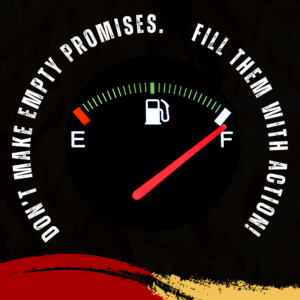
    Don’t make empty promises. Fill them with action!

  • Your legacy matters now more than ever

    Your legacy matters now more than ever

    When was the last time you thought about the legacy you’re going to leave behind?

    I’m asking because, quite frankly, too many of the conversations I’ve had lately are spiraling into survival mode territory. We’re losing sight of things that matter, like meaning, purpose, and impact.

    Of course, I know why…

    You don’t have to remind me that we’re living in tumultuous times. Between the headlines, the uncertainty, and the sheer volume of noise, it’s no wonder we’re distracted by planning for worst-case scenarios.

    But I want to remind you that survival mode is no place to live, regardless of the circumstances.

    Leading with Focus and Not Fear

    If you’re not careful, coping becomes your default. You start leading with fear instead of focus. You begin preparing for basic necessities instead of building for the best. Your biggest goal is no greater than getting through the day.

    Here’s the truth: You still have so much to give.

    Now more than ever, I want you to remember what you’re really here for – not just to hustle, to pay bills, and to scroll headlines. You’re here to create something meaningful; something that lasts.

    That something? It’s your legacy.

    You might think that legacy is just what you leave behind after you’re gone. But it’s also what grounds you right now. It keeps you aligned when the world feels unsteady and helps you stay connected to your deepest values. Leaning into legacy brings your most impactful work to the surface.

    Whether you’re in a corporate role, building a business, or just trying to find your footing, your legacy matters.

    Your legacy matters now more than ever by Laura Berman FortgangTo help my clients reconnect to that long-term vision, I often introduce what I call the Legacy Lens, which is a simple framework for legacy thinking. Think of each potential type of legacy – Treasure, Truth, Purpose, or Touch (TTPT) – as a different angle, forming a prism that shapes your perspective and aligns your vision.
    Treasure What financial gifts or resources might you leave behind? How are you using money to make an impact?
    It could be a foundation funding the arts for generations or a donation to your local food pantry.

    TruthWhat knowledge, ideas, or innovations are you putting into the world?
    It might be a major scientific breakthrough, a bestselling book, a popular TEDx Talk, or a simple framework shared in a newsletter, like this one.

    PurposeWhat causes, missions, or values are you standing for?
    You could be organizing protests in your community, hosting transformational retreats, or choosing to do business only with those you believe to be on the right side of history.

    Touch Whose lives have you shaped? Who will carry your love and influence forward?
    This may be the impact you have on your children, nieces and nephews, classroom students, workplace mentees, the neighbors you teach how to garden, or the friends you host for dinner parties.

    Ask yourself: “If I were 90, would I be proud of how I spent my time? Would I feel good about what I’m leaving behind?”

    I think of Mother Teresa, who said, “Not all of us can do great things. But we can do small things with great love.” She didn’t set out to become a saint; she started with one small act of compassion in response to suffering.

    Your legacy doesn’t need to be grand or flashy. It needs to be real. From the heart and intentional.

    As I always tell my clients: You don’t have to be famous to be unforgettable; you just have to be intentional.

    Don’t let chaos steal your vision. Come back to focus on what makes a difference. Let’s strive to leave a legacy that matters.

  • Do you have a capacity problem?

    Do you have a capacity problem?

    Let me share with you something I’ve observed repeatedly, especially in my most driven clients:
    They have big goals, but all too often, not nearly enough capacity to carry them out.

    Your dreams need room to breathe and to grow. For this reason, that means you need to create the capacity for that to happen.

    Capacity is your ability to handle more: More responsibilities, more opportunities, more failures and wins, more meaning and fulfillment. If your capacity is maxed out before you hit your goal, you probably won’t make it. In the off chance that you do reach the finish line, chances are you’ll be too run down to enjoy it.

    Do you have a capacity problem by Laura Berman FortgangThe good news? It’s even more likely that your capacity has room for expansion.
    Building More Capacity to Achieve Goals and Dreams

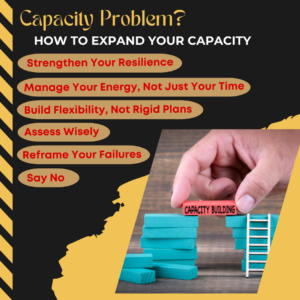
    How do you build more? Here’s what I teach my clients (and practice myself):

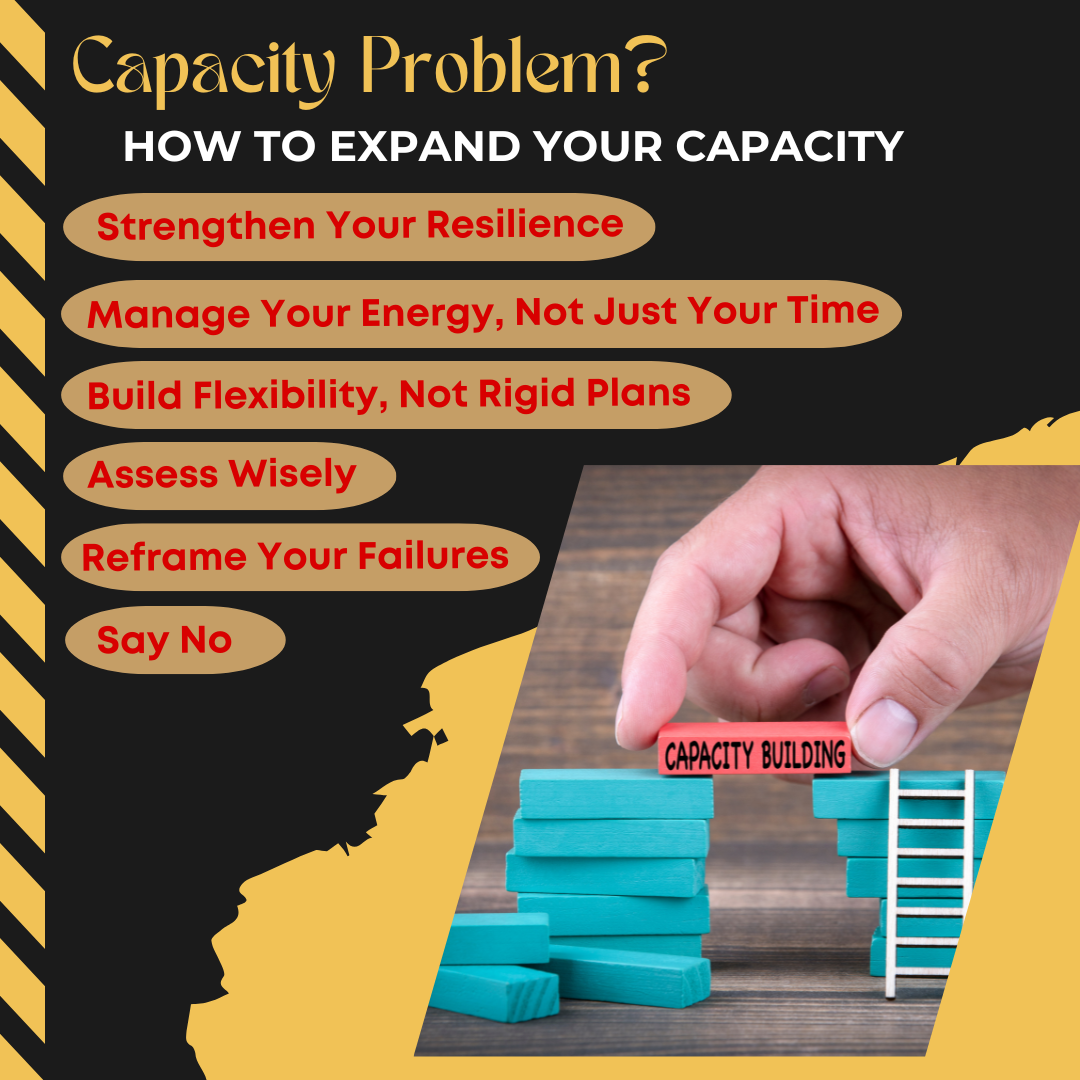
    1. Strengthen Your Resilience
    Your body, mind, and spirit need elasticity and toughness. Healthy habits like meditation, movement, and maintaining a balanced diet keep you from cracking under pressure and help you recover faster when life hits.

    2. Manage Your Energy, Not Just Your Time
    You’ll never create more hours in a day, but you
    can use your energy differently. Prioritize what matters most at any given moment, and protect your energy from distractions that drain you. Accomplishing one paramount thing each day beats attempting to check off a bunch of insignificant to-dos.

    3. Build Flexibility, Not Rigid Plans
    Real life changes. Sometimes pivoting is the only way to avoid hitting a brick wall.
    Having backup resources in place is the best way to create wiggle room – setting aside financial reserves, establishing trustworthy relationships, and developing skills that keep you adaptable.

    4. Assess Wisely
    When you’re overwhelmed, everything feels urgent; it’s not. Building capacity requires discernment. Stop reacting, and start asking yourself questions such as, “What actually matters right now, and what’s just noise?” or “What’s immediately urgent versus non-critically important?”

    5. Reframe Your Failures
    Stop viewing setbacks as defeat. They’re data. Ask yourself: What can I learn from this? Then move forward with your newfound information.

    6. Say No
    No is a complete sentence. Every yes is a tradeoff. Say yes to what matters most and only that.

    In essence, the people who achieve big things don’t just have talent or drive. They’ve built the capacity for what they want.

    In short, if you’re maxed out, it’s time to retool so that capacity can expand. 

  • Do You Trust Yourself?

    Do You Trust Yourself?

    Here’s something I’ve been noticing a lot lately with clients, friends, family, neighbors, and strangers in the checkout line at T.J.Maxx: They’re afraid to make a move because they don’t trust themselves to make the right call.

    Honestly? I get it.

    We’re living in a world where it’s becoming increasingly difficult to know whom or what to trust. The news. Our employers. Political leaders. Technology. (Did you see that the latest issue of Vogue featured an AI-generated model in its Guess ad?)

    Even our own careers and businesses feel like shifting sand.

    Here’s the problem: ​
    ​The one person you should be able to trust is you. And most people don’t.

    Unquestionably, second-guessing has become so normalized you probably don’t even notice it. How many times have you done it just today?

    “I wonder if following up with that prospect tomorrow is too soon.”
    “Should I use this font or that one?”
    “Will this example still resonate with my audience, or is it outdated?”

    I remember being in my 20s, standing in the cereal aisle, so paralyzed between Cheerios and granola that I called my mom for help.

    While these may seem like little decisions, but that pattern of outsourcing our choices runs deep and it goes far.

    I’ve coached brilliant, accomplished professionals who stayed in jobs for years past their expiration date because their spouse, their parents, or even their friends saw them a certain way.

    “You’ve always wanted to be an engineer!”
    “You’re the best teacher I know. You can’t just walk away from that!”

    Unfortunately, they stayed stuck, not because they lacked confidence, but because they lacked clarity.

    Do you trust yourself by Laura Berman FortgangYou know what I’ve figured out? Confidence doesn’t come first. Clarity does.

    Clarity gives you direction. It acts as your True North, your inner GPS. When you know who you are and what matters most, you stop fearing the”wrong” decision. You know you’ll course-correct if needed.

    How do you find that clarity? ​
    ​You start with two things: Your needs and your values.

    Not surface-level needs. I’m referring to emotional needs, such as the desire for creative expression, the need for purpose, and the longing for meaningful connection.

    Your values are the non-negotiables that shape how you want to live: justice, integrity, family, growth.

    These become your scaffolding. Your decision-making structure. The more clearly you can name them, the more confident you’ll feel – not because someone told you what to do, but because you finally started listening to yourself.

    If you’ve been second-guessing, pause. Tune in.​
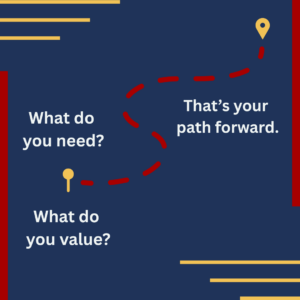
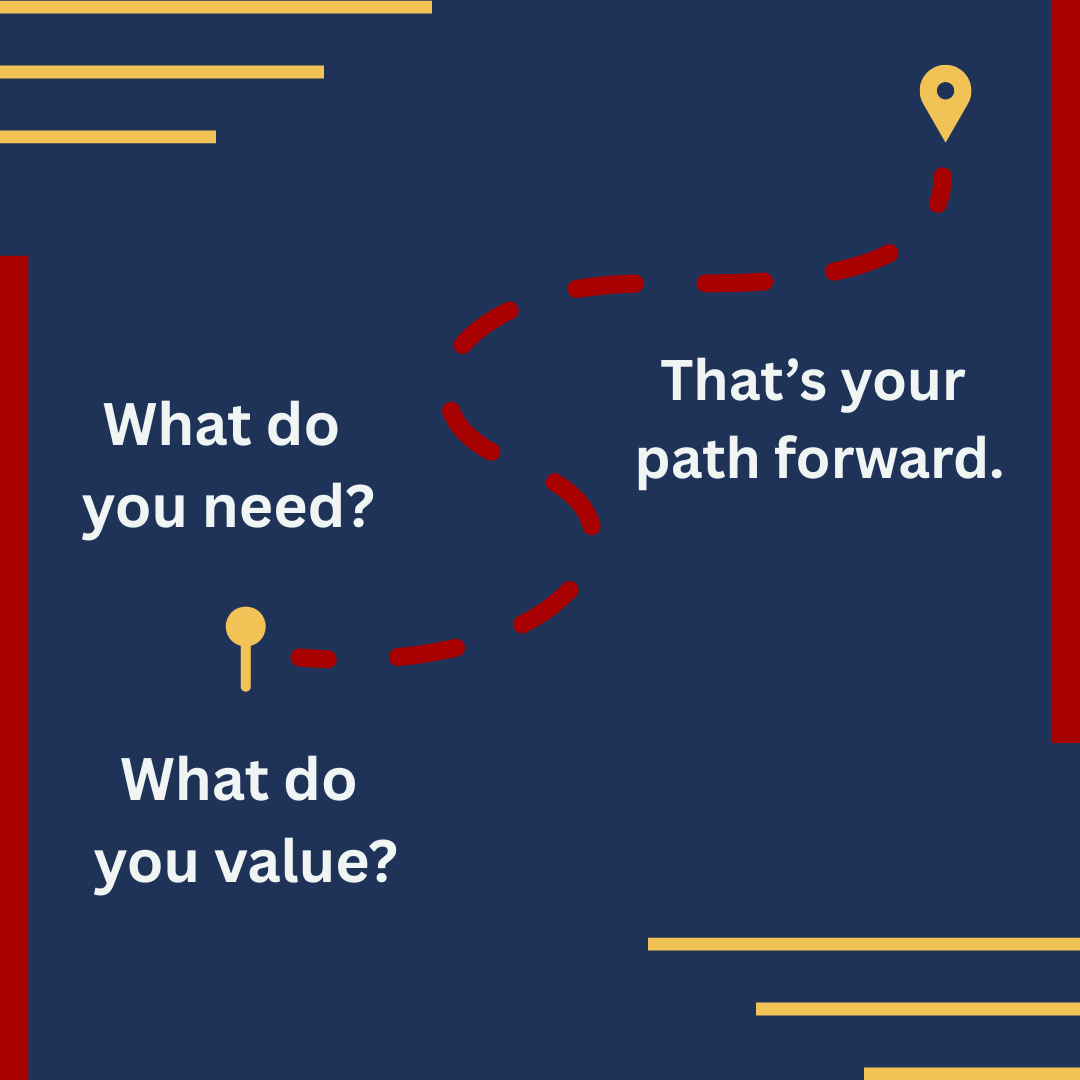
    What do you need? What do you value?
    That’s your path forward.

  • Running Your Business When People Are Running Scared

    Running Your Business When People Are Running Scared

    Running Your Business When People Are Running Scared

    I’ve been hearing the same thing repeatedly lately: “
    No one’s spending any money right now.”

    Coaches, consultants, and business owners … no need to sugarcoat this – they’re freaking out!

    This goes for employers as well, hitting pause on hiring and postponing projects. They’re freaking out too!

    I get it. People are nervous. I’m no stranger to facing facts around here. The economy feels shaky, the headlines are beyond exhausting, and nobody wants to make a bad move.

    Here’s the truth:
    People aren’t broke. They’re scared.
    There’s a difference.

    When a potential client or company says, “I can’t afford it,” what they often mean is: “I can’t afford to make a mistake right now.”

    Running Your Business When People Are Running Scared

    They’re clinging to what they perceive as certainty like a security blanket. That’s human.

    You know what else I’ve observed over the years? The more fearful someone is, the more support they need. The good news is that clarity, focus, and accountability are what we do as coaches and leaders.

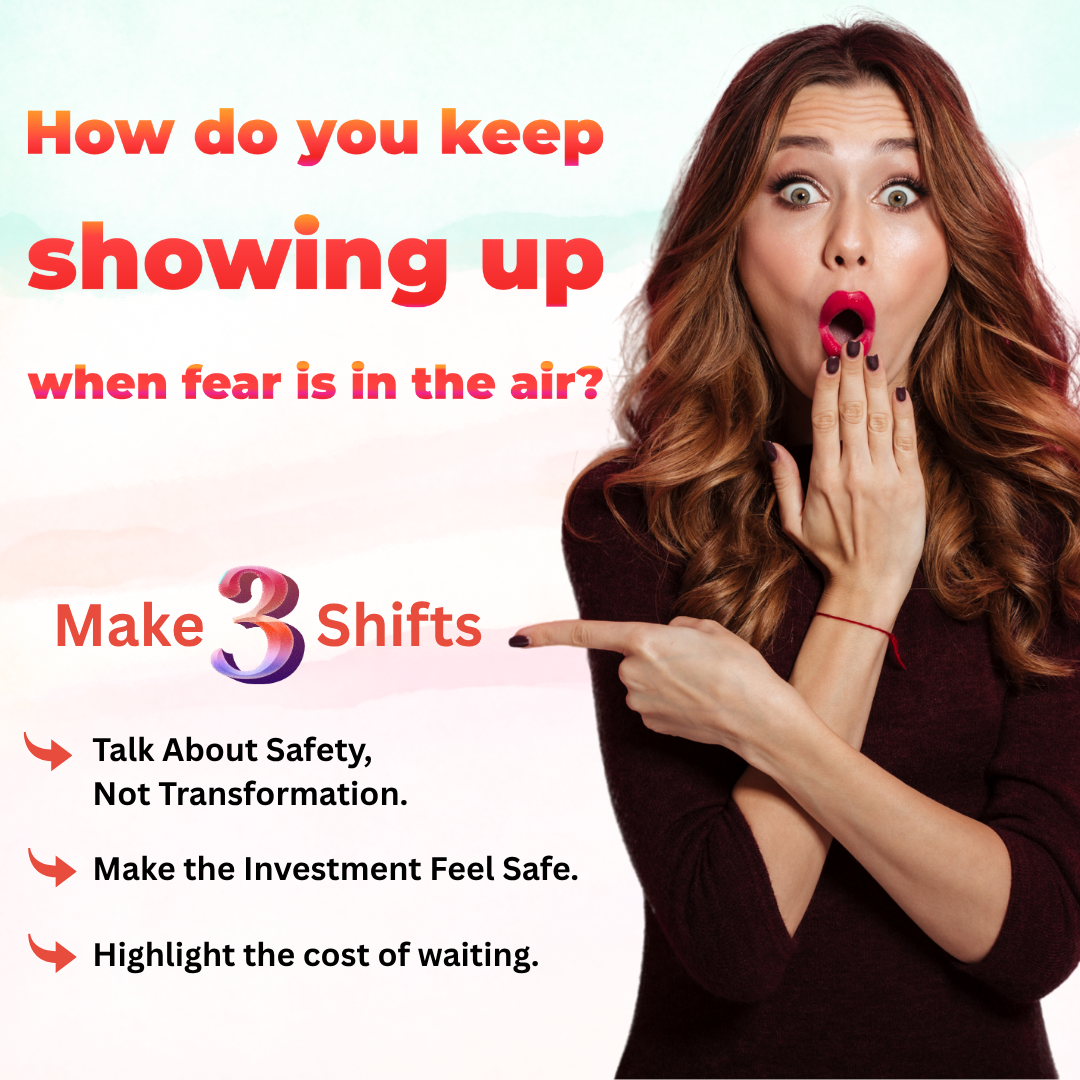
    How do you keep showing up when fear is in the air?

    How do you run your business and navigate your career when people are running scared?

    Start with these three shifts:

    1. Talk About Safety, Not Transformation.
    Normally, I preach the power of selling transformation. But right now, people are seeking relief. Peace of mind. Less anxiety. So shift your message. Instead of “I’ll help you hit six figures,” try “I’ll help you sleep better at night.”

    2. Make the Investment Feel Safe.
    That means pitching smart, strategic offers: payment plans, smaller packages, clear deliverables, risk-reducers. Floating the idea of fractional or contract work in lieu of full-time employment. Not desperation discounts. Not price drops. You’re not cheapening your value; you’re just making the ‘”yes” easier.

    3. Highlight the Cost of Waiting.
    The problems your prospects are facing aren’t going away. Delaying help only compounds the issue. Point out the urgency. Help them understand the real risk is in postponing action.

    The clients and business owners I see thriving right now?
    They’re clear, confident, and grounded; calm in the storm.

    I don’t want fear to take you out of the game. Your work still matters. You’re still needed.

    Tell me: How are you holding up? Post below. Let’s talk.