Category: Life Lessons

  • Stop Trying Harder; Do This Instead

    It seems counterintuitive to stop taking action when you are in pursuit of something you want, but if things are not going your way, it’s time to stop doing and start BEING.

    Where male energy is about action and doing, female energy is identified as receiving or being. (That’s not to say women don’t take action!) For argument’s sake, there is a time to pull back from action and see what emerges. This is not an invitation for sloth. It’s an invitation to slow down, be patient, maybe even circle the wagon of boredom and see what rises to your conscious awareness.

    There is so much we cannot be aware of when we are in “push” mode. It’s too noisy busy, sweaty, and crowded for wisdom to prevail. That nagging ache doesn’t get our attention until it graduates to full-on pain and that echoes how we pay attention to subtle messages – only when they stop us in our tracks or cause us to surrender.

    You can avoid burnout, breakdowns, and derailments by paying attention to the signs. IF all you experience is chaos, slowing down to receive before a SNAFU is called for. You think you have to swat at the chaos like an annoying insect and get it out of your way, but truly, you just may need to let it land on you. Be still, and watch it take off and leave you without a commotion.

    Ask yourself:
    What am I too busy to notice?,
    is the message in the mess?, is trying to emerge?
    What am I too impatient to wait for right now?, and
    What matters?

    Quite down and receive … it’s ok to do so. You may just make a quantum leap after the message comes through. More is not more nor is it necessarily better. Shhhhhh.

    And if you’re in the “SHHHHHH” (as we call it at our house before a full cup of coffee has been imbibed in the morning), try this beautiful meditation I discovered in the Calm App (I don’t get anything for sharing this).


  • How to Make a Tough Career Decision

    How to Make a Tough Career Decision

    Figuring out where to go next on your career path is rarely an easy decision.

    It often keeps people up at night, tossing and turning, wondering what their next best move might be.

    How to make a tough career decisionWhen considering an opportunity, sometimes it’s a clear “hell no!” or “heck yeah!” But more often than not, folks find themselves grappling in the gray — not knowing which way to go.

    We’ve all been there.

    You make a list of pros and cons.
    You ask everyone you know for their input.
    You’ll even start flipping coins if you’re desperate enough.

    But if you really want to find the best answer, here’s what you need to know —

    When you’re nervous about making a career decision, there’s a good chance your brain is working against your best interests.

    Your gut is trying to steer you right.

    The small voice inside that we refer to as instinct or intuition is pretty spot on. If the idea of pursuing the opportunity feels exciting and lights you up, that’s a big hint that you’re onto something.

    But then the fear starts to kick in.

    You’ll recognize it when you hear yourself saying, “yeah, but…”

    Here’s a tip I learned a long time ago from a career counselor:

    “The number of ‘yeah, buts’ you say is in direct correlation to the depth of your fear.” – Adele Scheely

    Your fear is simply trying to put on the brakes to keep you safe, but it can keep you stuck if you let it.

    ‘Yeah, but’ is your logical thinking flexing its muscles.

    Let it help you anticipate the obstacles you may face and chart a clear path forward, but don’t let it stop you.

    Discernment is important because there’s often another tricky conspirator attempting to push you forward while further clouding your decision-making — your emotional needs.

    Are you really excited about this career move because it’s the right thing for you? Or are you doing it in an attempt to fulfill some unmet emotional need — seeking approval, recognition, or validation, for example?

    Your emotional needs are aching to be fulfilled, trying to get your attention because you didn’t get enough of whatever it is as a kid.

    It’s nothing to be ashamed of, but it is something to be mindful of. Don’t let the need to feel loved, heard, or appreciated override good sense.

    See what I mean? Not easy.

    Career decisions come with real consequences.

    Without the ability to work out the decision from a place of awareness and confidence, you can find yourself miles down the wrong path, wondering how you got there.

    You may even find yourself walking in circles or hesitant to take the next step because you are already lost. This is especially true if you’ve made poor decisions in the past that got you to a place where you didn’t want to be.

    You may have lost some trust in decision-making. So let’s work on that.

    In my experience as a coach, I’ve found the best way to reach a healthy decision is to feel your way through it. If you’ve lost touch (or trust) with your gut instincts and intuition, you can learn to tune back in again.

    So if you’re grappling with a big decision and want some guidance feeling your way through it, join us over in the Career Clarity and Direction Community on Facebook.
  • Career Lessons Learned from the Royal Family

    We just witnessed the end of an era.

    After a lifetime of service to her country, the reign of Queen Elizabeth II came to an end — a sad day for so many worldwide.

    We also witnessed a new beginning, as the man we’ve always known as Prince Charles transitioned into his role as King Charles III.

    Career lessons learned from the royal familyAt nearly 74 years old, he’s stepping into a job he’s been planning and training for since childhood. Talk about succession planning!

    As a career coach, I can’t help but find this fascinating.

    While most of us set out to land a job that best suits us, we often make compromises that land us where we never expected to be. We don’t always get to follow the plan we charted from the start.

    When Queen Elizabeth took the throne at age 26, she declared that no matter how long or short her life was, she was committed to being of service.

    If you’ve ever been in survival mode, you might find yourself muttering “must be nice.” Being of service is a whole lot easier if paying the bills isn’t at the forefront of your mind. But hear me out…

    If you’re finding yourself in a career conundrum right now, with no idea where to turn next, you’ll find your answer in their story.

    I know, I know — it might not seem relatable.

    But like Charles, you’ve been preparing for something all these years too. Like Elizabeth, you can answer the call to service too. Sure, you don’t have the royal family’s coffers behind you, but we’re all human, and we all have the ability to make the most of our lot in life.

    Think about it. Ask yourself:

    • What do I have? What are my skills? What is my training?
    • Where are the places I’ve been fortunate enough to be that have prepared me to be of service?
    • What are the experiences that have built my career and life to this point?

    Here’s a hint: The answers aren’t in your resume.

    Think about the big picture. Consider what you’ve overcome. Reflect on the things that made you who you are on a deeper level. This isn’t about job titles or tasks completed; it’s about who you’ve become in the process.

    We opened up registration for our new and improved (and sweetly priced) Now What?® Experience, where participants will do the “soul search” before the job search with our guidance and support. We close registration Tuesday at midnight eastern. You can still join us there!

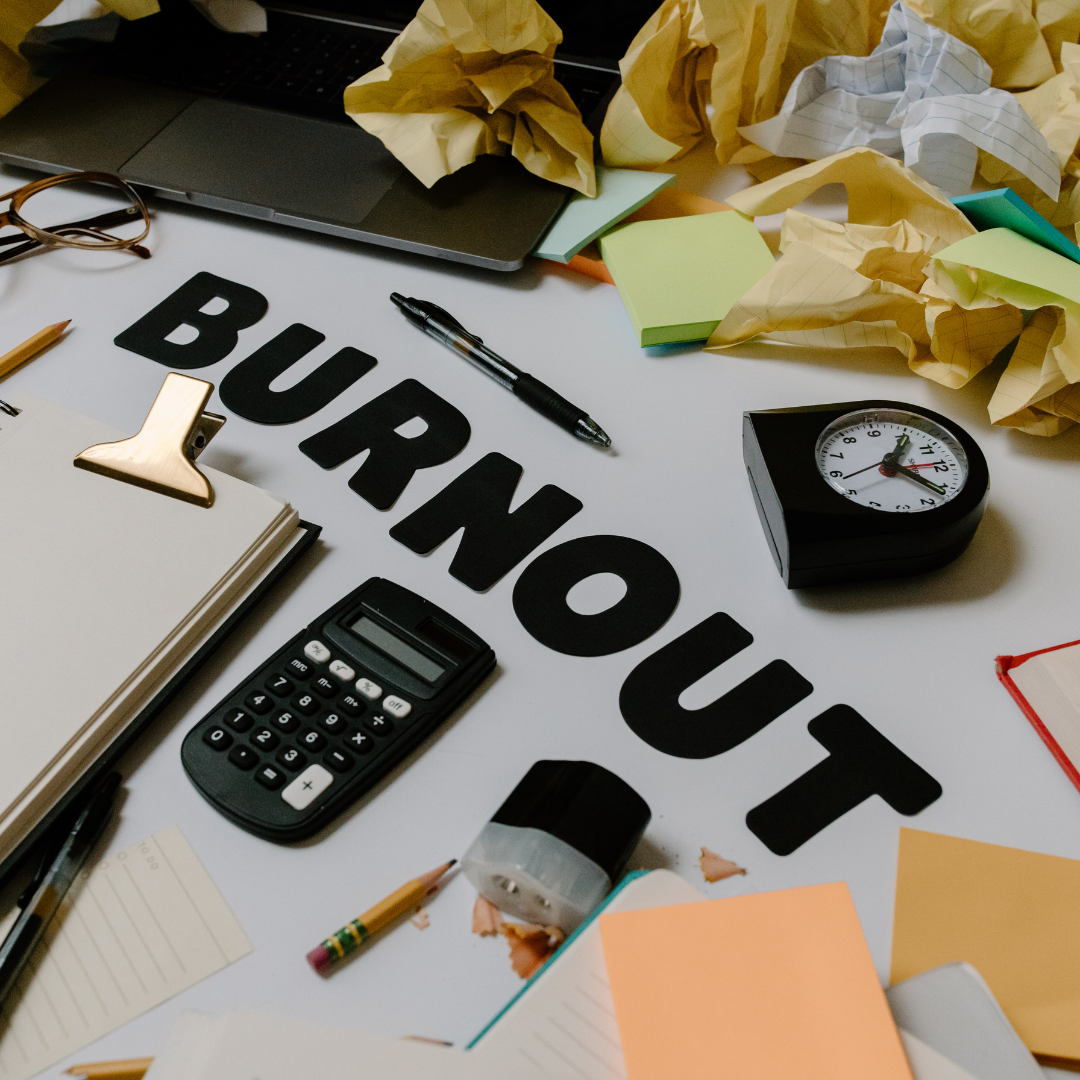
  • How to Bounce Back from Burnout

    How to Bounce Back from Burnout

    There’s been a lot of talk about burnout lately … and rightly so.

    It’s not just some buzzword, but a very real thing that more and more people are dealing with every day.

    We’ve all been through a lot over the past couple of years, and no matter what else was going on in the news or in life, we’ve had to keep pushing — to keep the money flowing in, to keep the bills paid, and to keep our careers intact.

    It’s been intense. Even though things are a little less so now, the after effect of it all is hitting people hard. So if you’re feeling this, you’re not alone.
    In my case, I spent the past year in serious caregiver mode for two different family members. While I’m grateful that my business allowed me the flexibility to do that, I hit burnout mode — big time.

    I knew that if I didn’t pull back, my own health would be on the line. So that’s what I did, and now I’m in bounce-back mode.

    I’ve been here before — at different times, for different reasons — so the good news is, I knew what to do. Now I’ve got some tricks up my sleeve that I thought I’d share with you in case you’re finding yourself heading towards (or trying to recover from) burnout too.

    Best case scenario: Take a break. Use your personal days, medical leave, or whatever you need to do to unplug completely. And do it BEFORE your body forces you to.

    If that’s not an option — and let’s face it, it’s probably not — here’s what to do instead:

    1. Step back from people, activities, responsibilities, and obligations that are not absolutely necessary. You just have to stop, even if it’s hard, even if it ruffles feathers. They’ll get over it … or not; it won’t be the end of the world. If you don’t quit, it could be the end of you. I’m not being dramatic here; your life depends on it.

    2. Start spending more time in nature. This isn’t a nice-to-do, it’s a must-do. Put your feet in the grass and connect with the earth. Sit by the water. Find a park. Look up at the sky. Move your body. Nurturing yourself in nature calms your nervous system like nothing else. You’ll feel so much better.

    3. “Quiet quit” your job — You’re hearing a lot about this right now, and it’s not to be confused with actually quitting. In case you’ve yet to hear about this, just google it. In a nutshell, the idea is to step back and do the bare minimum at work (even if you’re self-employed). That’s one interpretation, and the other, more what the original viral TikTok video was about, is to stop letting your job win. Don’t let it consume you, your energy, your sanity, and your mind space.

    You choose which one you have to do. You won’t want to do the bare minimum forever, but do it while you’re in the process of recovering. No shame. Your survival depends on it. And the other version needs to be normalized. We, as a society, LIVE with work central to our well being.

    Put yourself first for a while, and you’ll be okay. We’re all humans, not machines. We can’t keep grinding along neglecting our self-care. It may take longer than you think, and it might not be easy, but it’s definitely worth it.

    Your career will be waiting for you on the other side — the one you have now or a new one, better suited to your well-being. When you’re ready, I’m here to help you make your next steps clear.

    P.S. Burnout can also be a sign that you’re unfulfilled in your career, or that you don’t feel like you’re doing what you’re meant to be doing. Comment below and let me know if that hits home for you!

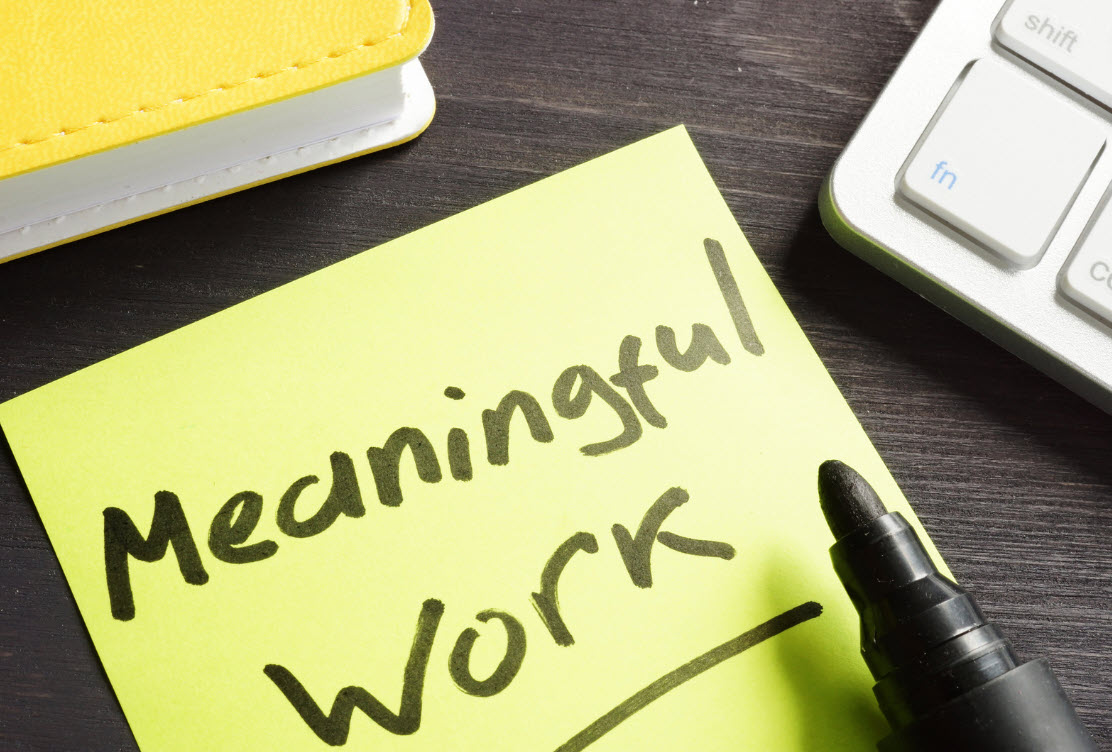
  • Do You Want to Do More Meaningful Work?

    Do You Want to Do More Meaningful Work?

    If you’re anything like most people, you want the work you do to be meaningful.

    Because, hey, if you’re going to spend a good chunk of your day doing something, it may as well be a thing that feels worthwhile.

    Yes, the purpose of your job is to pay the bills. But most of us would like to feel as if we’re fulfilling some sort of purpose beyond that in our daily work.
    At least that’s what I suspected. And that’s what people typically tell me when they come to me looking for career coaching.

    So when I ran a quick poll on LinkedIn recently and my suspicions were confirmed, I wasn’t surprised one bit.

    We asked people who were thinking about making a career change what’s most important to them.

    It wasn’t salary., benefits, and company culture.

    The desire to do more meaningful work was the winner, hands down.

    Here’s why I expected this answer…

    Human beings are meaning-making animals. Don’t take my word for it; you can trace this idea back to the great philosophers and big thinkers throughout history. Meaning is what sets us apart from the deer and the turtles.

    We’re not just out here to survive. We seek to create meaning through how we live our lives.

    We want to do work that feels good. We want to do work that makes a difference.

    We want to spend our precious time doing work that has a positive impact on ourselves and our world.

    It’s a big deal.

    But the problem is, if we’ve just been toiling away at a job that sucks the ever-loving life out of us or we’ve just been puttering along in a ho-hum, “decent enough” career…well, we lose touch with what meaningful work even looks or feels like.

    So here’s a hint —
    What makes you come alive? What lights you up? When do you feel most like yourself? What uses your gifts? When do you feel like you’re being most helpful?

    Do more of that!

    Take some time to explore these answers for yourself. Once you have some clarity, the equation is simple:

    1. Being Yourself + 2. Making an Impact = 3. Doing Meaningful Work

    If you’d like to share, I’d love to know what you came up with. Post your comments below.

  • Social Media Brown Out

    Social Media Brown Out

    August 1st ends my month-long social media blackout. I successfully took a full break from creating any content or outreach via social media or email, and it was an energizing exercise! That part of the break was easy. The harder part was staying off social media altogether. So, honestly, it was a brown out.

    I purposely took the social media apps off my phone, so access was not immediate. Nonetheless, the addiction ran deep. I cut my screen time by more than half, but I still found myself taking the extra steps to access the apps and take a look. I posted a few stories on my Instagram just because it was fun.

    The reason I took a break, which I shared in my last newsletter, was to recover from caregiver burnout. My body was in constant fight or flight mode, and I did find it very helpful to reduce the adrenaline/dopamine hits that checking in constantly can cause.

    What I Learned:
    • Less is More: My Instagram grew more in the month I only posted stories (no reels, no posts) and held followers better than the previous month where we were posting almost daily.
    • Lost My Ability to Sit Still: Although checking social media on my phone was WAY down, I still did it. It was a constant itch I wanted to scratch, and I’m not happy about that. I regularly meditate and take THAT time, but WOW, was it eye-opening to see how I’m addicted to my phone!
    • Social Media is Social: Part of checking in on social media when I said I wouldn’t was because I missed people. Social media has become a way to be up-to-date on people I know and care about (at least the part they share publicly). It is a fact of our society that there just aren’t enough hours in our modern life days to call, write, or spend a lot of time checking in with those we care about. For example, my oldest kid is deep into his new career success, and social media lets me know more than a phone call would yield right now.
    What I’ll Change:
    • I’m not putting the apps back on my phone. Making it harder to access is working in checking less often and being more present.
    • Posting for business can take on a new pace; one that works for me instead of being a slave to the “shoulds” and the algorithms.
    • I will pay more attention to burnout signs like constant “fight or flight” states and an inability to stay on task. I’ll take more unapologetic and full breaks BEFORE it becomes a crisis.

    Like everything I share, I hope this helps you think about your social media consumption, and the load you are carrying during these incredibly challenging times.

    Please know you’re not alone. Here is another article that might interest you on coping with burnout.