Category: Life Lessons

  • How Committed Are You?

    How Committed Are You?

    A wise yoga teacher once said to me:
    Who you are on the mat is who you are in life.”

    She wasn’t calling us a pack of downward dogs. She was holding a mirror to our souls. In the moments when your body’s screaming to quit, when your legs are shaking, when your breath is short – who are you?

    Do you hold the pose and breathe through the fire?
    Or
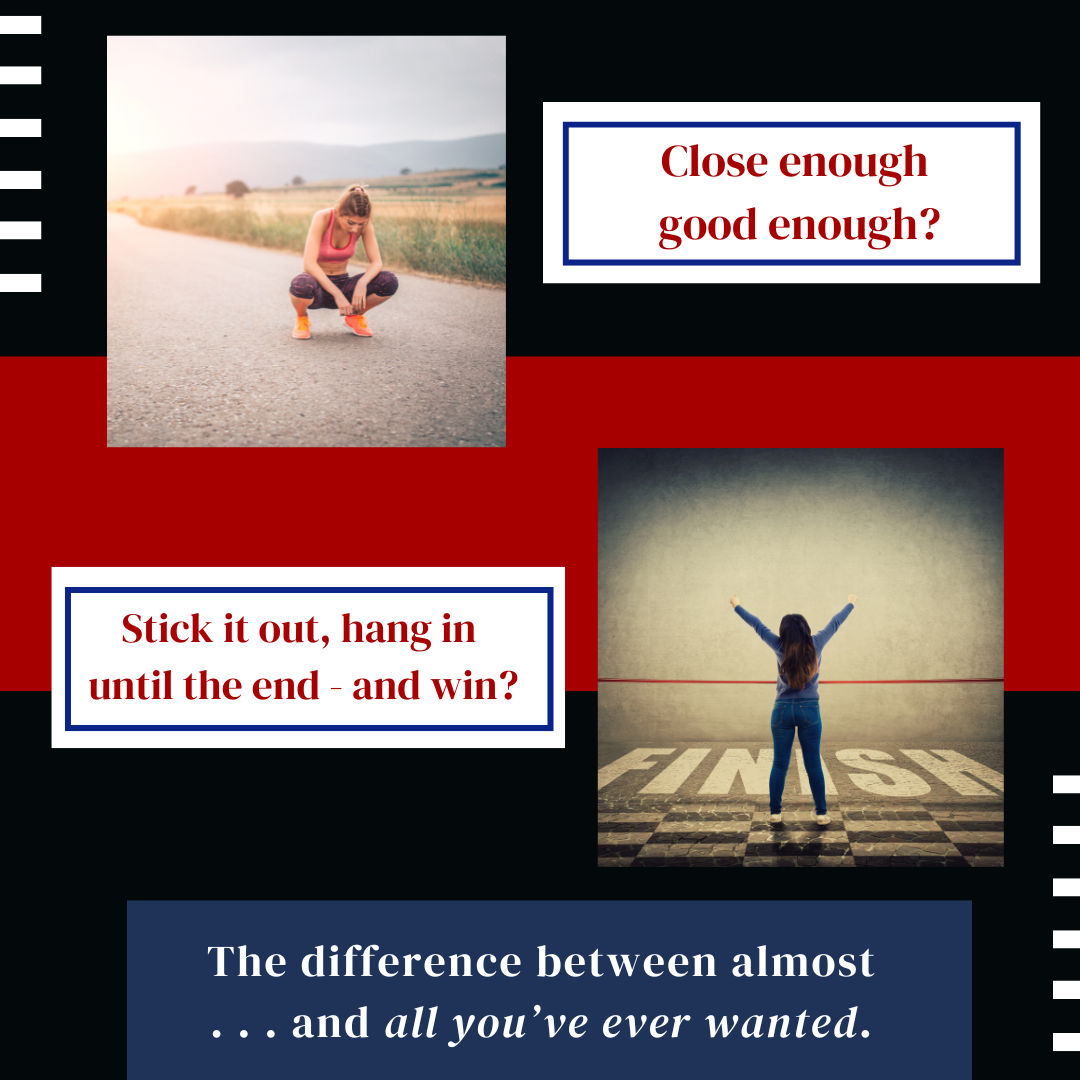
    Do you bow out and tell yourself, “Close enough?”
    How Committed Are You? by Laura Berman FortgangThe same thinking applies:
    When you’re just short of the finish line in your first half-marathon.
    When you’re just shy of your revenue goal.
    When one more call could fill your coaching program.
    When your next move could be the tipping point for your promotion.

    Is close enough good enough? Or do you stick it out and hang in there until the end – and win?

    That decision is everything. It’s the difference between almost . . . and all you’ve ever wanted.

    Your goals don’t care if you’re tired. Your business doesn’t care if you’re scared. Your health doesn’t care if you’re busy. Your bottom line doesn’t care about the wacky headlines.

    The things you want only respond to consistent action; consistent action requires commitment.

    I love inspiration as much as the next person. Passion is wonderful; motivation is great, but they’re fleeting. They go on vacation when things get hard.

    Commitment stays.

    Here’s the best part: When you breathe through the fire, the reward isn’t just another goal checked off.

    The reward is sitting on the beach without guilt, like I did last weekend, knowing you earned that time. It’s being fully present with your family because you’re not worrying about money. It’s letting yourself rest, because your follow-through made room for it.

    Commitment builds the life you want. Not someday – NOW and for the future.

    Mediocrity is a habit, but so is excellence. Every time you hold the yoga pose through the burn, you’re building a commitment muscle. Every time you show up when you don’t feel like it, you’re training your brain to follow through.

    Every time you see something through to the end goal – even when no one’s watching – you’re becoming someone you can count on.

    I’ll ask you this: Are you quitting too early?

    Choose wisely. The mat doesn’t lie. And neither does your life.
  • It’s time to end the empty promises

    It’s time to end the empty promises

    Have you ever told yourself you’re going to do something (again and again) only not to do it? In other words – making an empty promise.

    For two years, I struggled to keep my commitment to exercise, but I can finally say I’m doing it. Seven weeks in, it’s a habit. I got tired of selling myself empty promises.

    Empty promises – whether to yourself or someone else – are a surefire path to disappointment.

    Maybe you’ve been meaning to make that sales call. Or finally take your job search seriously. Or send the weekly newsletter you keep talking about. Maybe you keep saying you’ll read something inspiring at night instead of doomscrolling. Whatever it is, every delay is another promise left hanging. And it creates a ripple of disappointment – mostly in yourself.

    What’s the fix?
    Start keeping promises to yourself.
    Easier said than done, sure. But worth every bit of effort.

    You can’t always control what others promise or deliver. But you can control how you show up for yourself. Others following through becomes nothing more than icing on the cake, rather than what you rely on for sustenance.

    So why is it so hard? Because we tend to wait until we’re “in the mood.”

    What we seem to forget is that doing “the thing” changes our mood. Action creates the momentum we crave, not the other way around. Once you’re in motion, feeling stuck disappears.

    empty promises vs. full Don’t wait to feel motivated. Move first and meet the motivation where it already is – in progress.

    That’s when you start seeing results…
    The sales call turns into a dream client.
    The tailored résumé lands the interview.
    The newsletter connects with your next big opportunity.
    The book you picked up reignites your inspiration.

    Momentum builds. Promises get kept.

    Remember, your mood shouldn’t dictate your actions. Your actions will shape your mood.

    Procrastination and avoidance are addictive because they bring temporary relief.

    Cringing at the thought of pitching a potential sponsor for your podcast?
    Anxious about the networking event on your calendar?
    Apprehensive about committing to running a half-marathon next spring?

    Skipping the pitch, ignoring your calendar, and clicking away from the registration form. Whew…*wipes forehead*

    Avoidance feels like a sedative: Quick, easy, and always available. You’ll regret it later, but the short-term comfort keeps you coming back.

    Here’s the twist: Choosing “easy” can still move you forward. Pick the easiest hard. Start small. Break your big goal into the ittiest bittiest possible step. Then do just that.

    I started with 20 minutes of exercise. Small, but challenging. Before I knew it, 30 minutes felt easy.

    You know what’s harder than doing 20 minutes today? Looking back a year from now and still stuck, still waiting, still sitting in the same spot.

    I’ve been there. It’s worse.
    Pick your hard.

    Will it be the hard that gets you closer to your goals?
    Or the hard that keeps you stuck in place?

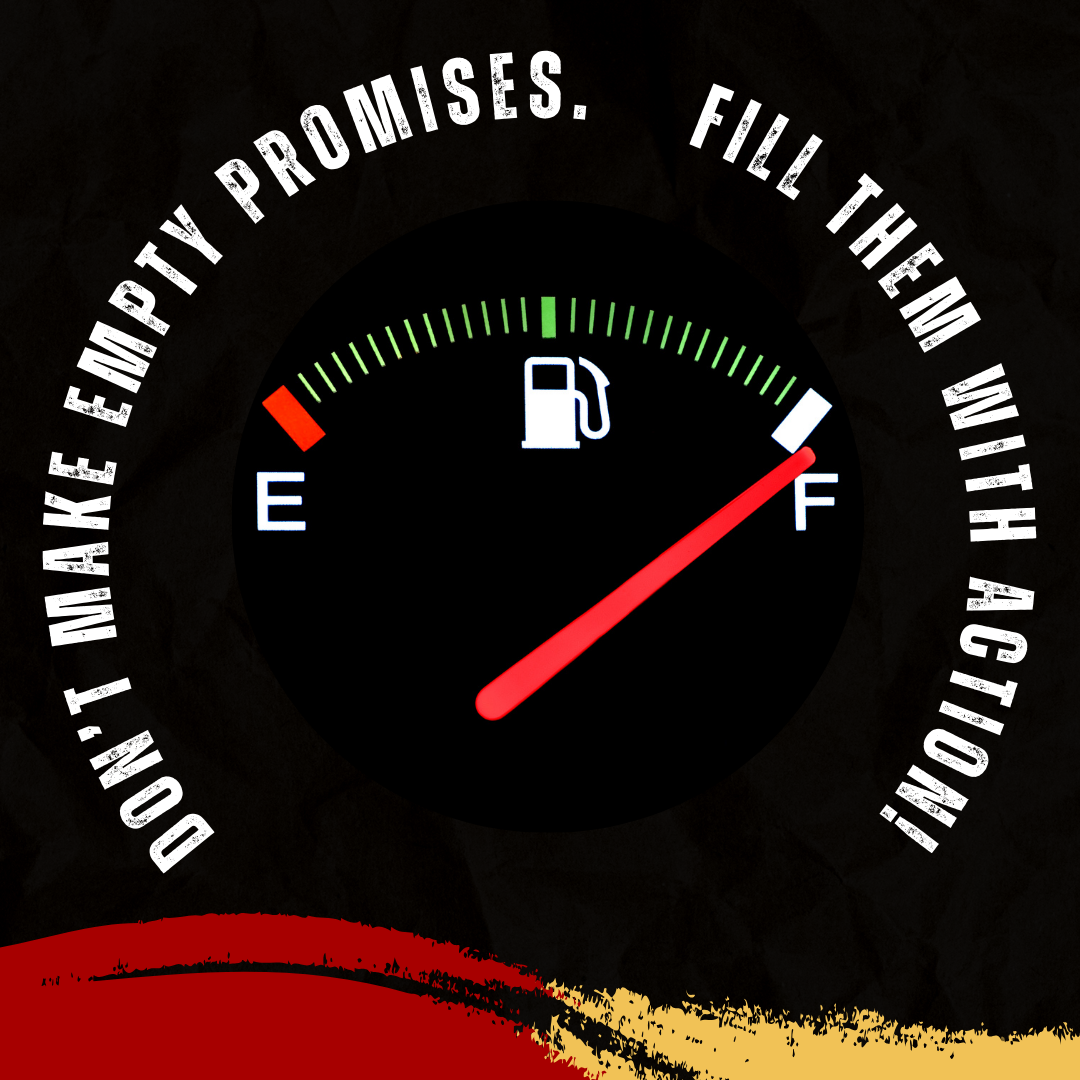
    Don’t make empty promises. Fill them with action!

  • Your legacy matters now more than ever

    Your legacy matters now more than ever

    When was the last time you thought about the legacy you’re going to leave behind?

    I’m asking because, quite frankly, too many of the conversations I’ve had lately are spiraling into survival mode territory. We’re losing sight of things that matter, like meaning, purpose, and impact.

    Of course, I know why…

    You don’t have to remind me that we’re living in tumultuous times. Between the headlines, the uncertainty, and the sheer volume of noise, it’s no wonder we’re distracted by planning for worst-case scenarios.

    But I want to remind you that survival mode is no place to live, regardless of the circumstances.

    Leading with Focus and Not Fear

    If you’re not careful, coping becomes your default. You start leading with fear instead of focus. You begin preparing for basic necessities instead of building for the best. Your biggest goal is no greater than getting through the day.

    Here’s the truth: You still have so much to give.

    Now more than ever, I want you to remember what you’re really here for – not just to hustle, to pay bills, and to scroll headlines. You’re here to create something meaningful; something that lasts.

    That something? It’s your legacy.

    You might think that legacy is just what you leave behind after you’re gone. But it’s also what grounds you right now. It keeps you aligned when the world feels unsteady and helps you stay connected to your deepest values. Leaning into legacy brings your most impactful work to the surface.

    Whether you’re in a corporate role, building a business, or just trying to find your footing, your legacy matters.

    Your legacy matters now more than ever by Laura Berman FortgangTo help my clients reconnect to that long-term vision, I often introduce what I call the Legacy Lens, which is a simple framework for legacy thinking. Think of each potential type of legacy – Treasure, Truth, Purpose, or Touch (TTPT) – as a different angle, forming a prism that shapes your perspective and aligns your vision.
    Treasure What financial gifts or resources might you leave behind? How are you using money to make an impact?
    It could be a foundation funding the arts for generations or a donation to your local food pantry.

    TruthWhat knowledge, ideas, or innovations are you putting into the world?
    It might be a major scientific breakthrough, a bestselling book, a popular TEDx Talk, or a simple framework shared in a newsletter, like this one.

    PurposeWhat causes, missions, or values are you standing for?
    You could be organizing protests in your community, hosting transformational retreats, or choosing to do business only with those you believe to be on the right side of history.

    Touch Whose lives have you shaped? Who will carry your love and influence forward?
    This may be the impact you have on your children, nieces and nephews, classroom students, workplace mentees, the neighbors you teach how to garden, or the friends you host for dinner parties.

    Ask yourself: “If I were 90, would I be proud of how I spent my time? Would I feel good about what I’m leaving behind?”

    I think of Mother Teresa, who said, “Not all of us can do great things. But we can do small things with great love.” She didn’t set out to become a saint; she started with one small act of compassion in response to suffering.

    Your legacy doesn’t need to be grand or flashy. It needs to be real. From the heart and intentional.

    As I always tell my clients: You don’t have to be famous to be unforgettable; you just have to be intentional.

    Don’t let chaos steal your vision. Come back to focus on what makes a difference. Let’s strive to leave a legacy that matters.

  • Do You Trust Yourself?

    Do You Trust Yourself?

    Here’s something I’ve been noticing a lot lately with clients, friends, family, neighbors, and strangers in the checkout line at T.J.Maxx: They’re afraid to make a move because they don’t trust themselves to make the right call.

    Honestly? I get it.

    We’re living in a world where it’s becoming increasingly difficult to know whom or what to trust. The news. Our employers. Political leaders. Technology. (Did you see that the latest issue of Vogue featured an AI-generated model in its Guess ad?)

    Even our own careers and businesses feel like shifting sand.

    Here’s the problem: ​
    ​The one person you should be able to trust is you. And most people don’t.

    Unquestionably, second-guessing has become so normalized you probably don’t even notice it. How many times have you done it just today?

    “I wonder if following up with that prospect tomorrow is too soon.”
    “Should I use this font or that one?”
    “Will this example still resonate with my audience, or is it outdated?”

    I remember being in my 20s, standing in the cereal aisle, so paralyzed between Cheerios and granola that I called my mom for help.

    While these may seem like little decisions, but that pattern of outsourcing our choices runs deep and it goes far.

    I’ve coached brilliant, accomplished professionals who stayed in jobs for years past their expiration date because their spouse, their parents, or even their friends saw them a certain way.

    “You’ve always wanted to be an engineer!”
    “You’re the best teacher I know. You can’t just walk away from that!”

    Unfortunately, they stayed stuck, not because they lacked confidence, but because they lacked clarity.

    Do you trust yourself by Laura Berman FortgangYou know what I’ve figured out? Confidence doesn’t come first. Clarity does.

    Clarity gives you direction. It acts as your True North, your inner GPS. When you know who you are and what matters most, you stop fearing the”wrong” decision. You know you’ll course-correct if needed.

    How do you find that clarity? ​
    ​You start with two things: Your needs and your values.

    Not surface-level needs. I’m referring to emotional needs, such as the desire for creative expression, the need for purpose, and the longing for meaningful connection.

    Your values are the non-negotiables that shape how you want to live: justice, integrity, family, growth.

    These become your scaffolding. Your decision-making structure. The more clearly you can name them, the more confident you’ll feel – not because someone told you what to do, but because you finally started listening to yourself.

    If you’ve been second-guessing, pause. Tune in.​
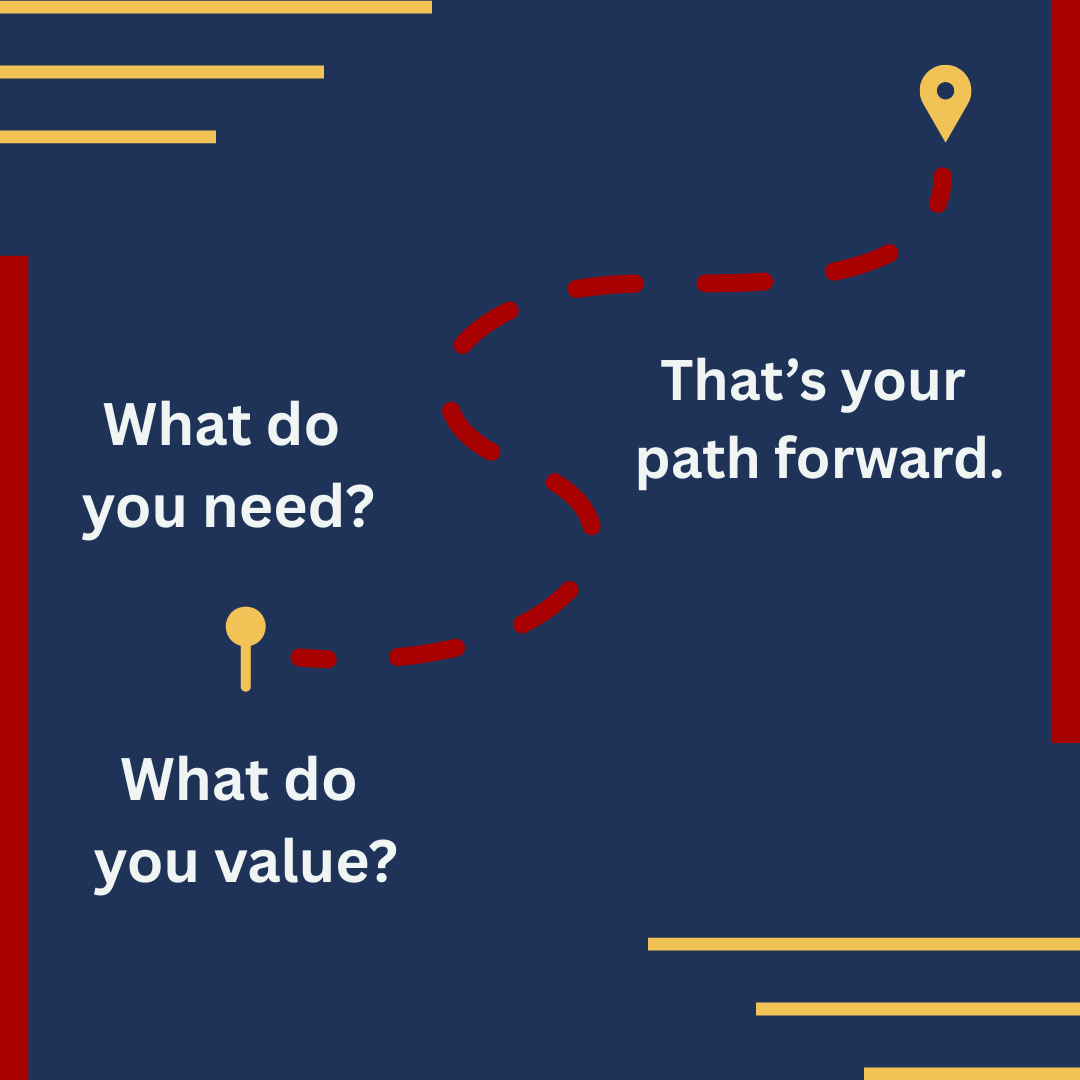
    What do you need? What do you value?
    That’s your path forward.

  • Running Your Business When People Are Running Scared

    Running Your Business When People Are Running Scared

    Running Your Business When People Are Running Scared

    I’ve been hearing the same thing repeatedly lately: “
    No one’s spending any money right now.”

    Coaches, consultants, and business owners … no need to sugarcoat this – they’re freaking out!

    This goes for employers as well, hitting pause on hiring and postponing projects. They’re freaking out too!

    I get it. People are nervous. I’m no stranger to facing facts around here. The economy feels shaky, the headlines are beyond exhausting, and nobody wants to make a bad move.

    Here’s the truth:
    People aren’t broke. They’re scared.
    There’s a difference.

    When a potential client or company says, “I can’t afford it,” what they often mean is: “I can’t afford to make a mistake right now.”

    Running Your Business When People Are Running Scared

    They’re clinging to what they perceive as certainty like a security blanket. That’s human.

    You know what else I’ve observed over the years? The more fearful someone is, the more support they need. The good news is that clarity, focus, and accountability are what we do as coaches and leaders.

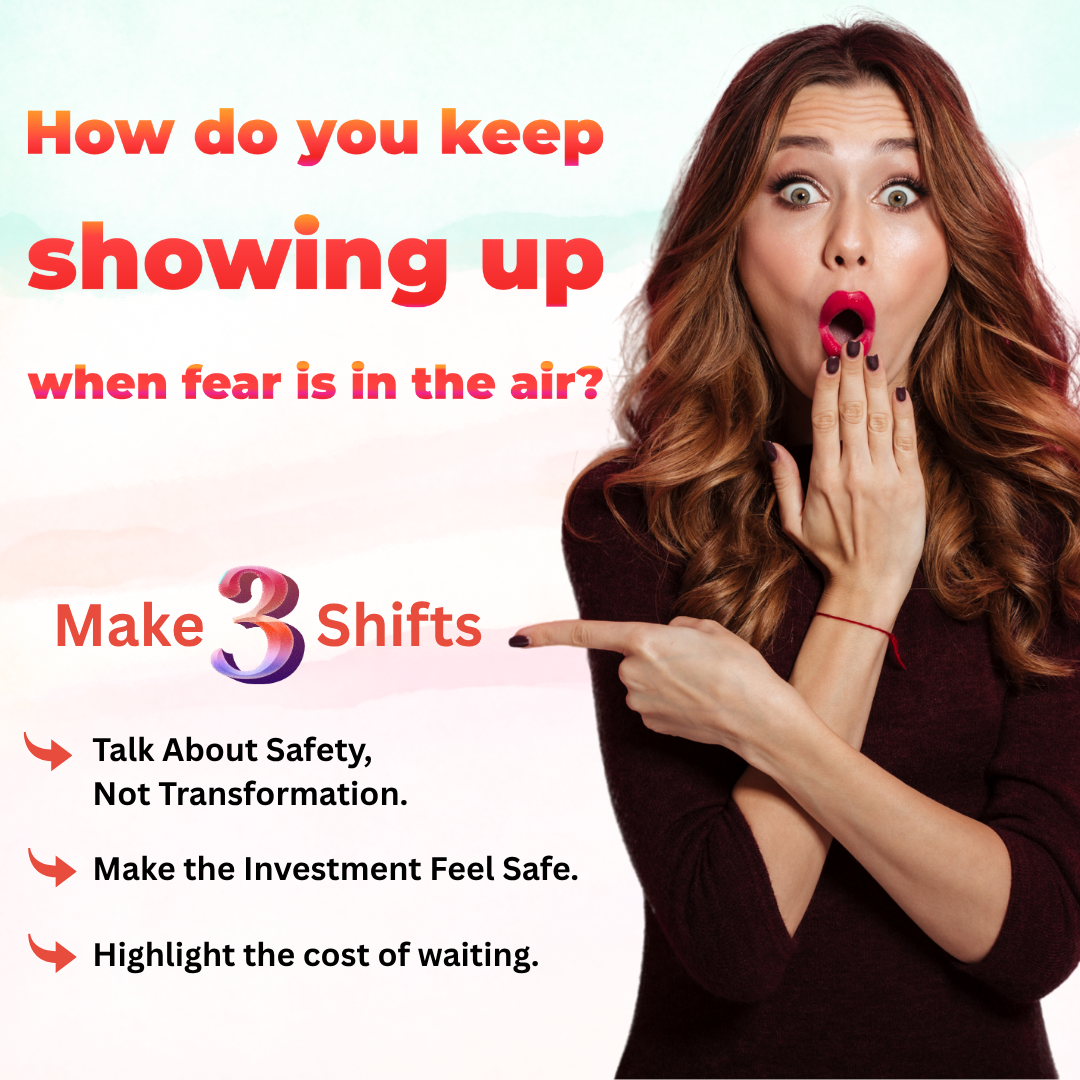
    How do you keep showing up when fear is in the air?

    How do you run your business and navigate your career when people are running scared?

    Start with these three shifts:

    1. Talk About Safety, Not Transformation.
    Normally, I preach the power of selling transformation. But right now, people are seeking relief. Peace of mind. Less anxiety. So shift your message. Instead of “I’ll help you hit six figures,” try “I’ll help you sleep better at night.”

    2. Make the Investment Feel Safe.
    That means pitching smart, strategic offers: payment plans, smaller packages, clear deliverables, risk-reducers. Floating the idea of fractional or contract work in lieu of full-time employment. Not desperation discounts. Not price drops. You’re not cheapening your value; you’re just making the ‘”yes” easier.

    3. Highlight the Cost of Waiting.
    The problems your prospects are facing aren’t going away. Delaying help only compounds the issue. Point out the urgency. Help them understand the real risk is in postponing action.

    The clients and business owners I see thriving right now?
    They’re clear, confident, and grounded; calm in the storm.

    I don’t want fear to take you out of the game. Your work still matters. You’re still needed.

    Tell me: How are you holding up? Post below. Let’s talk.

  • Life, Liberty and the Pursuit of Happiness

    Life, Liberty and the Pursuit of Happiness

    I’m writing this during the July 4th holiday, though you’ll be reading it the week after. To be honest, not everyone felt deeply celebratory this year about America’s birthday. A lot has changed in recent months that makes you wonder about our country’s commitment to those “inalienable rights,” such as life, liberty and the pursuit of happiness.

    Those rights are supposed to come with being human. No government hands them out like permits.

    But let’s be real – the current environment doesn’t exactly feel like fertile ground for that vision.

    So what do you do? Give up? Pack it in?
    Absolutely not.

    Moving Forward with Life, Liberty and the Pursuit of Happiness

    We’ve got to keep our lives and businesses moving forward. Yes, there’s uncertainty swirling around our society. But you know what’s still certain? The sun’s going to rise tomorrow. Plants are still going to grow (at least for now!). That’s our cue that life keeps moving; so must we. Take action that supports the health of democracy AND keeps your business and life going.

    This might be the perfect time to take some chances. Think about it: While everyone else is frozen by uncertainty, there are opportunities just sitting there waiting to be grabbed.

    I did some digging into history, and here’s what I discovered about service-based businesses during tough times.

    Remember the late 1970s? It was a total economic mess – energy crises, inflation through the roof, and many people panicking. But you know who thrived? Service businesses. Companies like H&R Block, Manpower staffing, and those early computer consulting firms were crushing it.

    Why? Because when the world gets complicated, people pay for someone else to figure it out. That’s exactly what service businesses do – we solve problems that other people don’t have time, energy, or expertise to handle.

    Life, Liberty and the Pursuit of Happiness by Laura Berman FortgangHere’s the beautiful part about service businesses:
    We don’t need massive factories or expensive equipment.
    Got cash flow? You can expand fast.
    New market opportunity? You can pivot tomorrow.
    Try doing that when you’ve got millions tied up in manufacturing equipment.

    Here’s something interesting: While 57% of business owners think the economy is weaker than last year, this pessimism is actually creating gaps in the market. When your competitors are pulling back, feeling scared, and playing it safe, that’s when you move in.

    While competitors are hiding under their desks, you can gain their customers, hire their best people, and build market share.

    Onward and Upward With Your Service-Based Business

    Despite all the doom and gloom, nearly three-quarters of small business owners are still optimistic about making it through 2025. Those are the businesses that’ll come out stronger. They’re not waiting for some magical moment when everything feels “safe;” they’re acting now.

    For service-based small businesses, 2025 isn’t about sitting around waiting for political certainty (Spoiler Alert: That might be a long wait). It’s about recognizing that uncertainty itself creates the exact conditions where nimble, solution-focused businesses thrive.

    The question isn’t whether you should act. It’s how fast you can position your services to solve the problems this crazy environment is creating.

    While others are paralyzed by asking, “What if?,” you are the one saying, “What’s next?”