Tag: entrepreneurs

  • Why Rejection Is the Road — Not the Roadblock

    Why Rejection Is the Road — Not the Roadblock

    How many of you have experienced rejection in the last six months?
    Didn’t get the job you wanted.
    Got passed over for the promotion.
    Couldn’t close the sale.
    If your hand went up, you’re in good company, and you’re exactly who this is for.
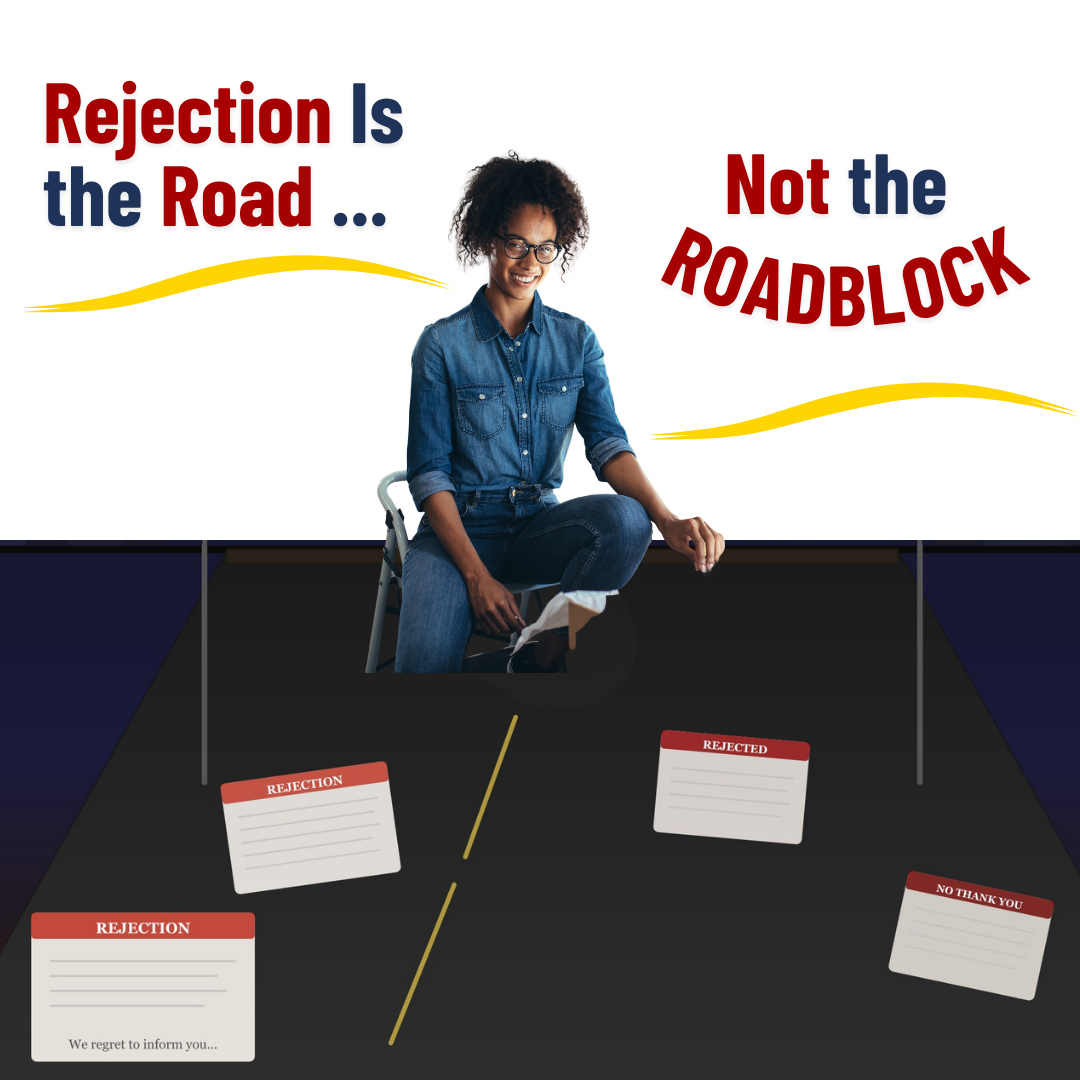
    Here’s the reframe that changes everything:
    Rejection is not the problem. Rejection is the path.

    Michael Jordan did not make the cut for his high school basketball team. Harry Potter was rejected at dozens of publishers before getting a yes.

    Rejection is not the obstacle standing between you and success; it’s the way to success. The most successful people in any field — job seekers, salespeople, entrepreneurs, executives going after the next level — aren’t the ones who avoid rejection. They’re the ones who recover from it the fastest. Let’s talk about how to do that.


    The Two Traps

    Before we get to the recovery, you need to recognize the two traps people fall into when they get rejected.

    Trap One: Taking it personally. You don’t get the job, and suddenly you’re sure you’re on the wrong path. You lose the sale, and you decide entrepreneurship is not the path for you. You get passed over, and you start to spiral and question your worth. Here’s the truth: That’s a story you’re telling yourself — it’s not a fact. There’s a difference between what happened and the meaning you assign to it. When you collapse a single rejection into a verdict on your entire value, you’ve gone from interpreting a moment to building a case against yourself. Don’t do it.

    Trap Two: Brushing it off completely. The opposite problem. You shake it off, tell yourself it was their loss, and move on without extracting anything useful. Resilience is a strength, but not if it means ignoring information that could help you improve. There’s always something to learn. Skipping that step means you’ll face the same wall again.

    The answer is to make rejection useful.


    A Three-Step Recovery Process

    Step 1: Feel it — but set a timer. Rejection is a real emotional experience. Don’t suppress it. Give yourself a window — an hour, a day — to feel disappointed. You’re human, and disappointment is a reasonable response. But when the window closes, close it. You are not your last no.

    Step 2: Mine it for data. Ask yourself one question: What’s the one thing I can learn from this? Not ten things – just one. Were you under prepared? Was your pitch unclear? Did you need stronger follow-through? Do you need more training on closing? One honest insight — without defensiveness — is worth more than a dozen rationalizations. Be direct with yourself.

    Step 3: Recalibrate, then move quickly. Adjust what the data tells you to adjust, and keep everything else. Then get moving. The longer you sit still after rejection, the heavier it gets. Momentum is the cure for rejection paralysis. Don’t let a no turn into weeks of inaction.


    The Number Game Nobody Talks About

    Here’s a concept from the world of sales that applies to every pursuit: The cost per no.

    If you know that you close one in every ten prospects, and each closed deal is worth $1,000, then every single rejection was worth $100 on the way to that thousand. You’re not just tolerating rejection. You’re getting paid for it. Each no is moving you closer to the yes.

    The same math works in a job search, a promotion campaign, or any meaningful pursuit. The job market right now is tough; most people know that. But the answer isn’t to stop putting yourself out there. It’s to understand that every interview that doesn’t land is part of the sequence that eventually does.

    So change the question. Stop asking, “Why did they say no?”
    Start asking,
    “How many more no’s do I need before I get to my yes?”
    That’s not denial. That’s strategy.


    Rejection is part of the game, whether you’re an entrepreneur, a job seeker, or someone gunning for the next level in your career. It’s not a sign you’re on the wrong path. Most of the time, it’s a sign you’re on exactly the right one. You’re just not at the end of it yet.

    Keep going!
  • Faith vs. Fear: What Really Drives Us?

    Faith vs. Fear: What Really Drives Us?

    Today I want to dive into something that’s been coming up frequently in my recent coaching conversations: The tension between faith and fear. I’m not talking about religious faith necessarily (though if that’s your thing, I deeply admire it). I’m talking about something more fundamental – the choice we make every single day about which voice we’re going to listen to.

    The State of Things

    Let’s be real: There’s a lot happening right now. The global economy is doing its unpredictable dance. The world feels heavy with uncertainty. For those of you stepping into entrepreneurship or searching for your next career opportunity, the unknown can feel absolutely overwhelming.

    I work with people every day who are navigating these choppy waters, and I see the fear is real. The questions are legitimate. The worry isn’t unfounded. Here’s what I’ve learned after years of coaching and living through my own entrepreneurial journey; it’s not about whether fear shows up. It’s about your relationship with it.

    Fear: The Blob vs. The Mosquito Bite

    Remember that old 1950s horror movie with the blob? That amorphous glob of goo oozing down the street, consuming everything in its path? That’s what fear looks like when we let it take us over. It becomes this all-consuming force that colors everything we see, every decision we make, every step we take (or don’t take).

    But fear doesn’t have to be the blob.

    What if fear was more like a mosquito bite? You feel it – that little sting, that moment of “ouch, that’s uncomfortable” – and then you acknowledge it, maybe scratch it for a second, and move on with your day. You don’t let it ruin your entire outdoor experience. You don’t run inside and hide because mosquitoes exist.

    The difference between these two experiences?
    Your relationship with fear.

    What Fear Actually Sounds Like

    Here’s the thing about fear:
    It’s sneaky. It disguises itself as “just being realistic” or “protecting yourself.”

    But listen to the voice:
    “You’re not good enough.”
    “Other people do it better; nobody needs to hear from you.”
    “Who are you to think you can do this?”

    That’s fear talking. When we let that voice dominate, we’re operating from a place of scarcity, of lack, of limitation.

    What Does Faith Sound Like?

    Faith (I’m using this word whether you’re spiritual, religious, or neither) is belief in yourself. It’s belief in possibility.

    It’s the voice that says:
    “I’m learning and growing.”
    “My perspective matters.”
    “I’m taking the right actions; it’s just a matter of time.”

    Faith is what you have when you plant a seed in the ground. You don’t dig it up every day to check if it’s growing. You trust that with the right conditions – water, sunlight, time – that seed will find its way to the surface. You have faith in the process.

    If you’re building a business, looking for a job, or pursuing any significant goal, you’re planting seeds. Every action you take, every connection you make, every skill you build, are seeds. Faith is trusting that they’ll grow.

    But What If You’re Deluded?

    Here’s where it gets interesting. Someone always asks: “But what if I’m just fooling myself? What if I’m going down the wrong path, and I’m too deluded to see it?”

    Valid question.
    Here’s the answer: Engage with people who know more than you.

    Work with mentors.
    Consult experts.
    Connect with people who’ve walked the path before you.
    Get feedback.
    Adjust your course.

    Faith vs. Fear: What Really Drives Us? by Laura Berman FortgangWhen you’re taking the right actions and getting guidance from people who know the terrain, you’re not deluded. You’re informed, you’re strategic, and you’re building faith on a foundation of smart decisions.

    The delusion isn’t in believing in yourself.
    The delusion is in thinking you can succeed while ignoring all wisdom and feedback.
    Big difference!

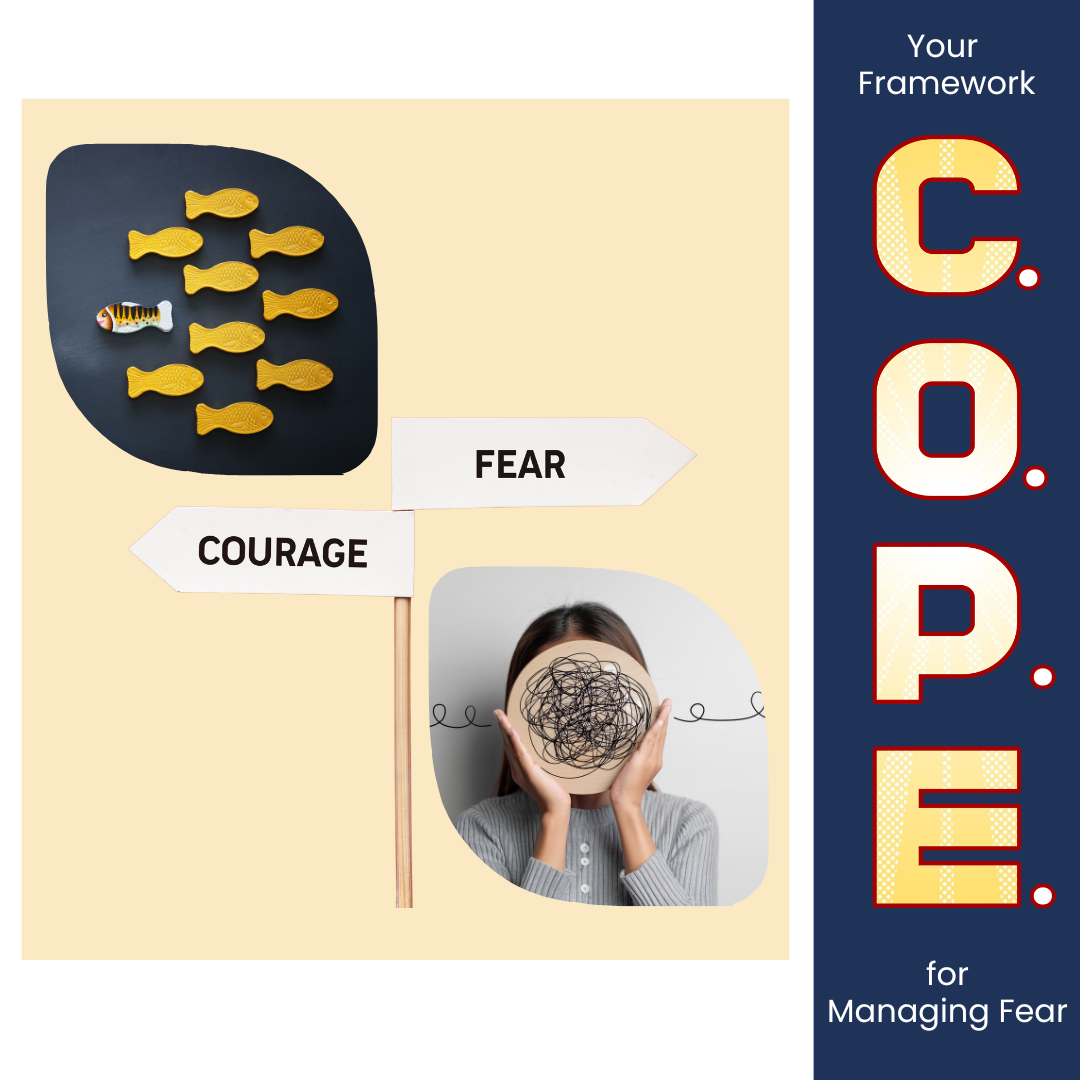
    Introducing COPE: Your Framework for Managing Fear

    Because I’m a coach and I love a good acronym, I’ve developed a framework for working with fear.
    It’s called COPE, and here’s how it works:

    C – Catch Yourself

    The moment you notice fear creeping in, catch it. Name it. Say out loud if you need to: “Oh, that’s just fear. I see you.” Don’t let it become the blob. Turn it into the mosquito bite. Acknowledge it and move on.

    O – Open

    Be open to not knowing. Here’s a wild thought: If you’re going to be convinced of an outcome you can’t actually predict, why are you so committed to believing it will be negative? Why not invest that same energy in believing it could work out? You’re making up a story either way – make it a good one.

    P – Possibility

    Invest in possibility. This isn’t about wearing rose-colored glasses or ignoring reality. It’s about recognizing that if the idea exists in your mind, if the goal calls to you, there’s a reason. Possibility is real. As a coach, I live in the land of possibility because I’ve seen it proven true over and over again. Your dreams wouldn’t exist if they weren’t possible.

    E – Exhale

    Seriously, just breathe. Stop holding your breath. Release the tension in your shoulders. It’s going to be okay. This exhale is what having faith feels like in your body.

    Faith and Fear Can Coexist

    Here’s something important: You don’t have to eliminate fear to have faith. They can exist at the same time. In fact, they usually do. The goal isn’t to be fearless; the goal is to act with intention and faith while acknowledging that fear is along for the ride.

    You can feel scared and still send the email.
    You can worry about the outcome and still show up.
    You can doubt yourself and still take the next step.
    That’s not contradiction – that’s being human.

    Your Challenge

    I want you to pay attention to your internal dialogue. Notice when fear is speaking. Catch it. Open yourself to not knowing the outcome. Invest in possibility and exhale.

    Practice COPE. See what shifts.

    Because here’s the truth:
    You’re doing better than you think. You’re further along than you realize.
    The seeds you’re planting right now? They’re going to grow.

    Have faith.

  • Visibility – Make This Your Year to Be Visible

    Visibility – Make This Your Year to Be Visible

    Visibility creates opportunity. It’s that simple.

    When you show up consistently – whether in meetings, on social media, or at networking events – you put yourself in the right place at the right time. Those “lucky breaks” people talk about? They happen because someone chose to be visible.

    Why Visibility Matters

    Visibility builds trust and credibility over time. When people see you regularly, they begin to recognize your expertise and value. And here’s the thing: visibility compounds. The more you show up, the more opportunities find their way to you. Careers are built on this foundation.

    How to Build Visibility as an Employee

    If you work in a company, visibility starts with speaking up. Make sure you get credit for your great work. Contribute thoughtfully in meetings – not just to be heard, but to add real value.

    Volunteer for high-visibility projects. Not the ones nobody else wants, but the strategic initiatives that will showcase your skills and get you noticed by decision-makers. Build relationships across departments and levels. Your network inside your organization is just as important as the one outside it.

    Visibility - Make This Your Year to Be Visible by Laura Berman FortgangHow to Build Visibility as an Entrepreneur

    Show up on platforms where your ideal clients are, but don’t stop there.
    Get involved in your community.
    Volunteer for opportunities that put you in front of the right people.

    Make it easy for people to understand exactly what you do. I recently worked with a new coach who attended one networking meeting, made themselves visible to the group’s leader, and landed a speaking engagement that will put them in front of hundreds of potential clients. That’s the power of visibility.

    Remember:
    There’s visibility on a small scale (one-on-one relationships) and visibility on a larger scale (platforms and speaking).
    Both matter.

    For Those Who Hate Being Visible

    Let me be honest: Being self-conscious is a little egotistical.
    You’re assuming everyone is judging you probably because you’re judging yourself and others.
    Get straight with yourself.
    Stop judging yourself.
    Stop judging other people.

    You need to adopt a healthy “I don’t care” attitude. Not that you don’t care enough to do good work, but you can’t care so much about what others think that you hide your light.

    Here’s the key: You need a mission bigger than you.
    When you focus on the impact you want to make and the people you want to serve, visibility becomes about that mission, not about you.

    And introverts, I don’t want to hear that you can’t be visible.
    You just need to know yourself, do things your way, and stay connected to your bigger purpose.

    Common Visibility Mistakes

    Assuming good work speaks for itself.
    It doesn’t. You need to share your wins, whether you’re presenting results to your boss or sharing client success stories on LinkedIn.

    Confusing visibility with bragging.
    They’re not the same thing. Sharing your accomplishments and expertise is not bragging; it’s informing people about what you can do and who you can help.

    Being inconsistent.
    Disappearing for long periods and then showing up only when you need something (a sale, a favor, a promotion) doesn’t work. Consistency builds trust.

    Your Action Step

    We’re still in the energy of a new year. Make this your year to be visible.
    Be consistent.
    Put yourself forward.
    Don’t be afraid to be vocal about your accomplishments.

    Visibility creates opportunity, and opportunity is what you’re after.

  • Express Yourself: Turn What You Love Into Your Business Edge

    Express Yourself: Turn What You Love Into Your Business Edge

    Did you watch the Super Bowl halftime show? Bad Bunny brought his full Puerto Rican identity to that stage – the music, the culture, the language, the pride. He didn’t water himself down for the biggest audience in television. He expressed himself completely, and the world leaned in.

    That’s what happens when you stop compartmentalizing who you are and what you do.

    Can you relate to this? You’re a talented service provider or coach with so much to offer, but the business side of your business feels heavy. Not fun. Hard to get motivated for. (Who likes to do sales calls?!)

    I just had this exact conversation with a coach in my A-List Coach Program. She’s in that wonderful position of being a retiree where money isn’t the main driver, but she still wasn’t showing up for her coaching practice the way she wanted to. The entrepreneurial side felt like a grind.

    Then she mentioned something in passing: How much she loved teaching her memoir writing class. It was just a side gig, not even a hustle really. But when she talked about it, her whole energy shifted.

    And that’s when I saw it.

    Those two things didn’t have to be separate.

    “You have people writing about the past,” I told her. “Why don’t you also have them write their future? Then coach them to that future.”

    A light bulb went off. Suddenly, she wasn’t choosing between what she loved and what she “should” be doing. She was bringing what she loved directly into her business. She found a way to express herself through her work, and that changes everything.

    Your Edge Is Already Inside You

    Here’s what I’ve learned after years of coaching entrepreneurs: The things you love doing aren’t distractions from your business; they can BE your business. Or at least, they can become your edge – the thing that makes you different, that no one else does quite like you.

    I had another client years ago who loved knitting. She created a knitting circle where she coached people about their lives while they knitted together. The knitting wasn’t a gimmick; it created the container for deeper conversations and transformation.

    I did this myself. I took my love of performing and theater and created a character – a life coach – and did a one-woman show for four years. It was my original expression of me in my work, and it still had good coaching at its core.

    I’ve met a guy who did pit crew for NASCAR and turned that into a team building exercise. He now sells to corporations everywhere. Nobody else does that.

    What about you? What do you love that you’ve been keeping separate from your “real” business?

    Three Questions to Find Your Expression

    If you want to explore how to bring what you love into your coaching or service-based business, start here:

    1. What makes you lose track of time?

    Cooking? Hiking? Writing? Painting? Reading poetry? Dancing? Gardening?
    Whatever it is, name it. Don’t judge it. Just notice what activities genuinely light you up.

    2. What does this activity unlock?

    Think about the transformation it creates. Does cooking create connection? Does running create clarity? Does writing create self-discovery? Does knitting create calm and community? Name what this thing does not just for you, but potentially for others.

    3. How could your clients experience that transformation?

    This is where it gets practical. Could you coach while walking or hiking? Host a business planning dinner party? Lead a journaling workshop before your group program? Create adventure-based leadership retreats because you love motorcross?

    The memoir writing teacher brought writing into coaching.
    The knitter brought knitting into coaching.
    The performer brought theater into coaching.
    The NASCAR crew member brought pit crew dynamics into team building.

    This Could Be Your Curriculum Or Your Container

    Here’s what’s beautiful about this approach: What you love can become either the content you teach or the environment where you coach. It can be your curriculum or your container. It can work for individual coaches or corporate trainers. It can be intimate one-on-one work or big off-site adventures.

    Express Yourself: Turn What You Love Into Your Business Edge by Laura Berman FortgangThe key is that it’s authentically YOU. It’s not something you’re doing because a marketing guru told you to. It’s not a strategy you copied from someone else’s playbook. It’s your original expression coming through your work.

    Bad Bunny didn’t try to be anyone else on that stage; he brought all of himself and trusted that would be enough.
    And it was more than enough –
    it was magnetic.

    Why This Matters

    When you express yourself through your business, three things happen:

    First, marketing becomes natural.
    You’re not forcing yourself to show up and talk about something that feels boring or heavy.
    You’re sharing what you genuinely love.

    Second, clients feel your energy.
    They can tell the difference between someone going through the motions and someone who’s fully alive in their work.

    Third, you actually enjoy it.
    All that drudgery we have to do as entrepreneurs (the sales, the content creation, the showing up consistently) becomes so much easier and more enjoyable when it’s connected to something you love.

    Your Challenge

    Here’s my thought for you as we wrap up the weekend:
    Take those three questions seriously.
    Sit down with your coffee or tea, and actually answer them.
    What makes you lose track of time?
    What does it unlock?
    How could your clients experience that?

    Your business doesn’t have to feel like a grind.
    What you love isn’t separate from your work; it might be the very key to it.

    Express yourself.
    Let that be your edge.
    Let that be the thing that makes your business unmistakably, authentically yours.

  • The Entrepreneurial Roller Coaster: How to Ride It (And Actually Survive)

    The Entrepreneurial Roller Coaster: How to Ride It (And Actually Survive)

    If you’ve ever been on a roller coaster, you know that moment right before the first drop – you grip the bar, your stomach tightens, you take a deep breath, and you wonder what the heck you just got yourself into.

    Welcome to entrepreneurship.

    Except this ride lasts years instead of minutes. There’s no operator doing safety checks. You can’t see the track ahead. And the drops? They’re steeper than anything at Six Flags.

    After 32 years of running my own business, I can tell you this: The roller coaster never really smooths out. You just get better at riding it. That’s what I want to share with you today – how to not just survive the ride, but actually thrive on it.

    Build Your Reserves (Both Kinds)

    First things first: You need cushions for the falls. I’m talking about two types of reserves that most entrepreneurs overlook.

    Financial reserves are the obvious one, but let me be specific. You need at least six months of operating expenses, plus personal savings. Not the optimistic spreadsheet version where everything goes perfectly. You need the realistic version where your biggest client ghosts you or that investor pulls out at the last minute.

    I run my business on a ten-month year. Not because I take two months off, but because I know things will fluctuate and some months will be lean. Building in that buffer keeps me from making decisions out of desperation.

    Here’s what most people miss: Emotional reserves. This is your hobbies, your relationships, exercise, meditation, therapy – whatever fills your tank. The entrepreneurs who burn out aren’t the ones who work hard; they’re the ones who work hard with an empty emotional tank. When you have people you can talk to, activities that restore you, and a life outside your business, you create an emotional cushion that lets you weather the storms.

    You can’t pour from an empty cup, so protect both reserves like your business depends on it because it does.

    On Low Days: Do ONE Thing That Moves the Needle

    There will be days when you wake up convinced you’ll never get another client.
    When the weight of it all feels crushing.
    When you question everything.

    person on roller coasterOn those days, forget your massive to-do list.
    Pick ONE thing that will actually move the needle and do that.

    Not busy work. Not cleaning your desk or organizing files. One meaningful action: Make that scary sales call, have that critical conversation you’ve been avoiding, fix that tech bug that’s been haunting you, send that partnership proposal.

    Here’s the magic: Mood follows action. We’re often waiting for the mood to hit us before we take action. But it works the opposite way. You don’t need to feel motivated to act; you act and the motivation follows. Take the action first, and watch your mood improve.

    After a Win: Attack, Don’t Relax

    This might be the most counterintuitive advice, but it’s critical. Your most dangerous moment isn’t after a failure; it’s after a success.

    You just closed a major client. You just hit your revenue target. Every instinct tells you to take your foot off the gas, to relax a little, to enjoy the moment.

    Don’t.

    Celebrate that evening, absolutely. But the very next day? Double down. Already in a good mood? Take more action. Make another call. Close another client. Do something that makes a difference while you’re riding that high.

    Here’s why: Wins create momentum, open doors, and boost confidence. You’re never more attractive to potential clients, partners, or investors than right after a visible success. Use that fuel. Don’t let it evaporate.

    Know the Difference: Dip or Dead End?

    Not every low point is worth pushing through. Seth Godin talks about “The Dip,” that valley between starting something and mastering it where most people quit. Winners push through strategic dips because there’s something valuable on the other side.

    But dead ends are different. A dead end is when the market fundamentally doesn’t want what you’re selling, when the economics will never work, when there’s nothing pointing to it coming back.

    The hard part? They feel the same in the moment.

    That’s why you need trusted advisors – friends, coaches, mentors – who can help you see clearly. People who will tell you the truth when you need to hear it because it’s really hard for us to know the difference between a dip and a dead end when we’re the ones on the ride.

    Hold On Tight

    The ride is terrifying.
    The ride is exhilarating.
    For those of us crazy enough to strap in, it leads to something incredible: freedom.

    You get better at riding it.
    You build your reserves.
    You take action when you’re low.
    You attack when you’re high.
    You surround yourself with people who help you know when to push through and when to pivot.

    Buckle up, buttercup.
    This is what you signed up for, and it’s worth every twist and turn.

  • How to Stop Imposter Syndrome in Its Tracks

    How to Stop Imposter Syndrome in Its Tracks

    Do you ever feel like an imposter?

    Are you sometimes afraid that someone’s going to discover you have no idea what you’re doing — that you’re not the expert you proclaim to be, you’re not as skilled as you’ve made yourself out to be, and you’re not quite qualified to be in the position you’ve found yourself in?

    Maybe you’re worried that you don’t measure up somehow, so it makes you feel like you’re pretending to be someone you’re not.

    Here’s what this looks like.

    Them: We’d like to interview you [for a dream job]!
    You: Maybe they didn’t notice I don’t have enough experience.

    Them: Congratulations! We’d like to offer you the [dream] job.
    You: I’ll surely be fired by Tuesday, once they figure out I’m a fraud.

    Them: We’ve selected your proposal to speak at the next conference.
    You: Oh no! I’m probably going to make a fool out of myself.

    Them: I’m looking for a coach, and I’d love to work with you.
    You: But what if I can’t help you get results, and you tell everyone I’m a con?

    I’m not a doctor, but as a Master Certified Credentialed Coach with 30 years of experience, I can confidently assess what’s happening here.

    Imposter Syndrome

    Don’t worry; it’s not fatal to your career or success.

    Most people struggle with it from time to time, and it’s entirely “treatable.”

    If you feel like your Imposter Syndrome is flaring up, here’s what I suggest you do —

    1. How to Stop Imposter Syndrome in its Tracks by Laura Berman FortgangPause and accept what’s happening. No sense in ignoring the symptoms. Denying it only makes things worse by trying to overcompensate.
    2. Learn to recognize your triggers (comparisons, someone else’s recent success) and how you respond, so you can head it off at the pass. Before you go into a full-on panic, tell yourself, “This is just imposter syndrome flaring up again. Nothing alarming. You can do this.”
    3. Notice your self-talk. As soon as you start beating yourself up, STOP. It may sound easier said than done, but you can tell yourself “no.” No more negative self-talk; you’re not listening.
    4. Ask yourself what success looks like. Are you trying to measure up to a perfect ideal? Scratch that and aim for progress instead.
    5. Keep learning. The best way to keep Imposter Syndrome at bay is to continue seeking out new knowledge and ways of doing things, evolving, and growing your skill set.
    6. Celebrate wins! I can’t say enough about this. Remind your brain that you’re doing good things.

    Do this again and again, every time Imposter Syndrome starts to creep up, and you’ll start experiencing it less and less.

    Don’t get caught up in calling yourself an expert. Instead of thinking of yourself as someone who’s supposed to know everything, think of yourself as someone who makes it your business to learn everything you can about your particular topic of choice.

    You’re not an imposter, so keep showing up as the best of who you are. You’ve got this!