• Skip to primary navigation
  • Skip to main content
  • Skip to primary sidebar
Now What?® Coaching

Now What?® Coaching

from Laura Berman Fortgang

  • Login
  • About
    • About Laura
    • Our Philosophy
    • Praise
  • Hire a Facilitator
    • Hire Laura
  • Become a Facilitator
  • Online Courses
    • Career Clarity & Direction
    • Career Clarity & Direction: Self-Guided Course
    • Job Search Academy
  • Products
  • Blog
  • Contact

entrepreneurs

What A-List Coaches Do Differently (It’s Not What You Think)

By Laura Berman Fortgang on April 26, 2026

Here’s the lie the coaching industry sold you:
Get really good at your skills, build the field, and they will come.

So you did everything right. You got certified, then you got certified again. You took NLP training, logged your hours for ICF, participated in mastermind sessions, made a pilgrimage to Sedona, and hung out with the crystals. You came back absolutely brilliant … and still broke.

Here’s what nobody told you; it’s the thing that changes everything once you really hear it:
People cannot hire your skills. They can only hire your reputation.

Then, once they hire you, they get the skills.

Most coaches and consultants are five stars at what they do, and zero stars at being known for what they do. Not because they aren’t good, but because they’re invisible. Invisible doesn’t pay the bills, no matter how talented you are.

What A-List Coaches Do Differently - Skills vs. Reputation (It's Not What You Think) by Laura Berman FortgangWhat do the coaches who ARE fully booked, charging premium rates, and turning away clients actually do differently?

Here’s the infuriating truth —
They are not always the best coaches in the room; they are the most known coaches in the room.

Here are the three things that separate them from everyone else.


1. They Have a Take

Ask the average coach what they do and they’ll say something such as, “I help people reach their potential.”

So does every therapist, yoga teacher, and fortune cookie on the planet.

A-List coaches say something that makes people stop scrolling and go — wait, what? They say things like, “Mindset work alone is keeping you broke.” Or, “Your niche isn’t too narrow. It’s too boring.” They plant a flag. They have a real, specific, and sometimes uncomfortable point of view about why their clients are stuck, and it’s usually not what those clients have been told before.

That point of view polarizes people, which is good. Polarizing is great because neutral is forgettable, and forgettable keeps your calendar empty and your bank account low.

You need a take – a real one. One that actually means something to you, that comes from your experience and your convictions. And yes — one that might make someone a little uncomfortable. Because if they’re uncomfortable, they’re listening, and listening is the first step to hiring you.

If your positioning could belong to anyone, it belongs to no one.

Get specific. Get bold. Say the thing that only you would say.


2. They Sell the After, Not the During

This is one of the most common — and most costly — mistakes I see coaches make. They spend all their time talking about their process when they should be talking about the destination.

Nobody wakes up at 2:00am thinking, “I really need a 12-week transformational container with bi-weekly Zoom calls and a private Slack community.” Nobody. That is not the thought that jolts someone awake in the middle of the night.

You know what is? “I am so tired of second-guessing every decision I make.” “Why did that person get the promotion and not me?” “I cannot keep pricing myself like I’m apologizing for existing.”

That’s the 2:00am thought. That’s what your potential client is wrestling with when lying awake. Your job is to speak directly to that moment — to that raw, honest, middle-of-the-night feeling — and show them what life looks like when that moment is gone.

The difference between “I offer six months of coaching” and “In six months, you will never have to justify your pricing to anyone again” is the difference between furniture and a door. One sits there. The other opens into something.

People don’t buy the journey. They buy what’s waiting on the other side of it. Sell that.


3. They Show Up Like They’ve Already Made It

This one is my personal pet peeve, because I hear it constantly.
“I’m not ready to be visible yet. My website isn’t finished. I don’t have enough testimonials. I need to wait until…”

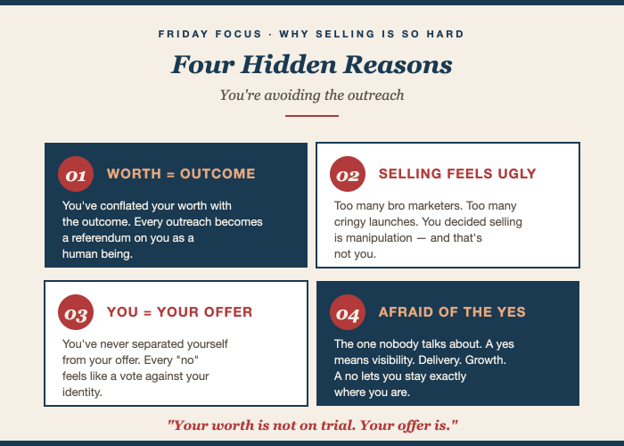
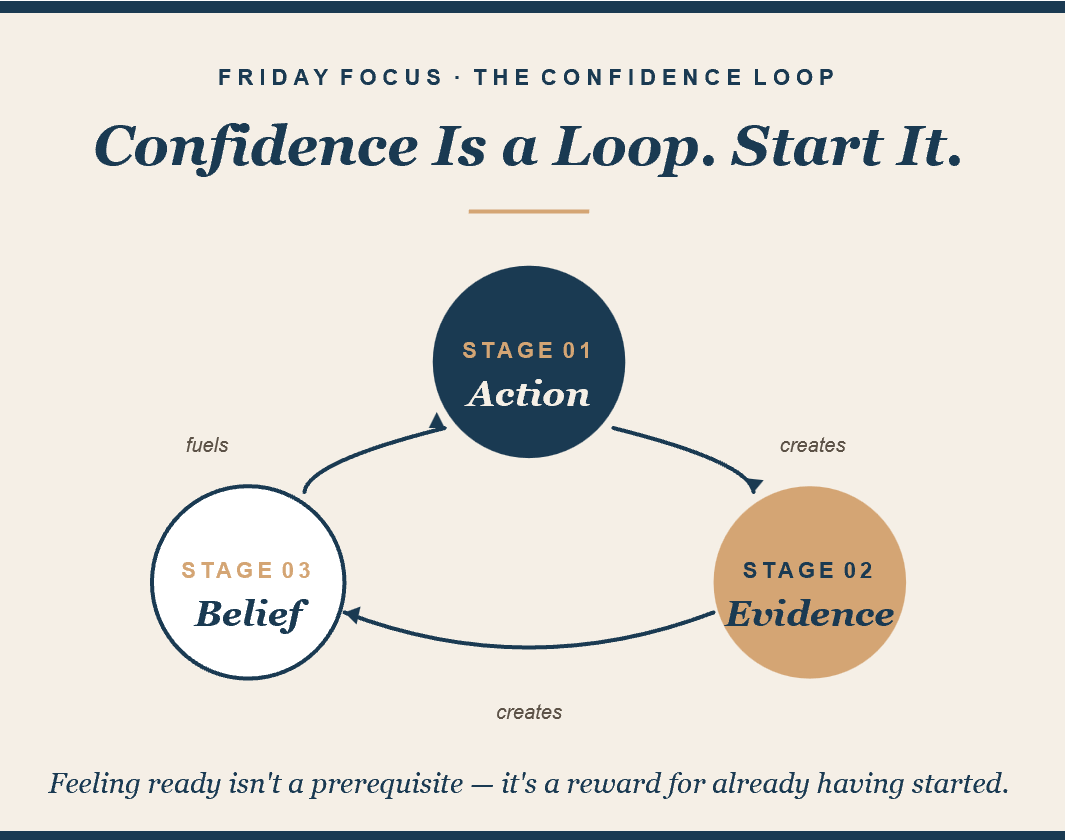
There is no ready. Ready is a myth your fear invented to keep you comfortable and invisible.

Here is what is actually happening while you wait to feel ready: Coaches with half your talent and twice your audacity are posting every day, going live every week, and signing the clients who were meant to be yours. Not because they’re better. Because they showed up and you didn’t.

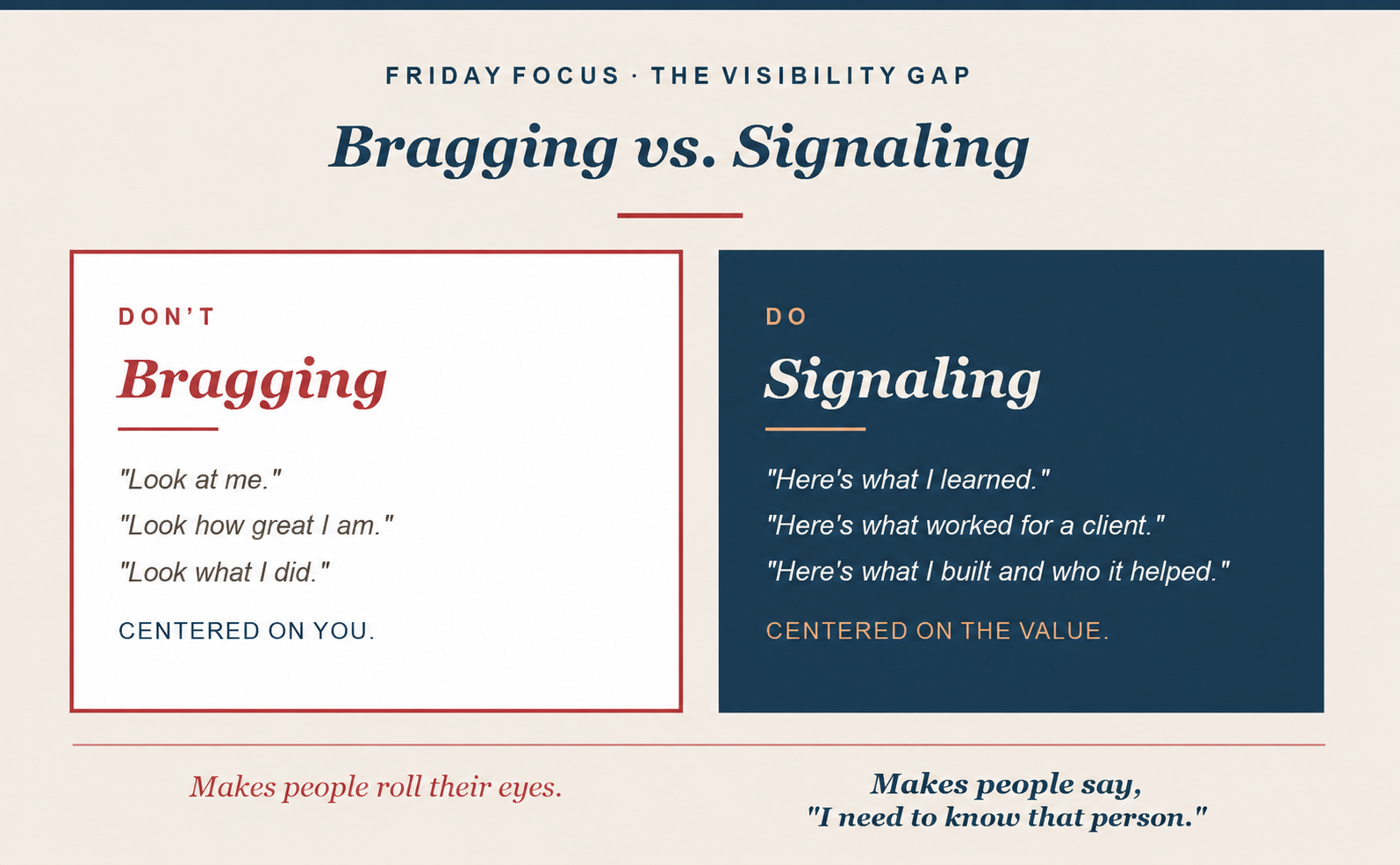
Visibility is not vanity. Visibility is a moral obligation when you have something that can genuinely transform someone’s life. The person who needs you is out there right now, searching for exactly what you offer. If they can’t find you, they will find someone else, and that is not a win for anyone.

You don’t need a perfect website. You don’t need a massive following.

You need to show up, consistently, as the expert you already are.
Start before you’re ready. Start now.


The Gap Between Knowing and Becoming

Let’s be completely candid about something . . .

Reading these three things and nodding along — that’s the easy part. Your brain is probably doing what I call “mental popcorn” right now, going yes, yes, this makes sense, I get it. Maybe it does make sense. But sense-making is not the same as change-making.

Insight without implementation is just entertainment. I am not in the entertainment business anymore. I’m in the business of helping coaches and consultants actually make money by building the kind of reputation that makes clients choose them without hesitation, without negotiation, and without explanation.

Knowing what A-List coaches do differently is step one. Becoming one — building your positioning from the ground up, sharpening your message until it’s magnetic, creating a visibility plan you’ll actually stick to — that requires a room, a real plan, and people around you who will not let you shrink back into hiding the moment it gets uncomfortable.

That room exists, and the A-List seat has your name on it.
All you have to do is come claim it.

Filed Under: Now What? Newsletter Articles Tagged With: A-List, being known, Clarity, coaching, entrepreneurs, Laura Berman Fortgang, Now What Coaching, skills vs. reputation10 Comments

The Entrepreneur You Need to Be (So You Can Be the Coach You Want to Be)

By Laura Berman Fortgang on April 19, 2026

Let me ask you something. Are you a great coach (or service business owner) who’s struggling to build a great business?

If so, you’re not alone – and it’s not your fault. Coaching school teaches you how to coach; it does not teach you how to run a business. And those are two completely different skill sets.

Here’s a number that should stop you in your tracks: 82% of coaches fail within two years of starting their business. Eighty-two percent! That’s not a coaching problem. That’s an entrepreneur problem.

The Entrepreneur You Need to Be (So You Can Be the Coach You Want to Be) by Laura Berman FortgangThe coaches who are earning six figures or more, designing their own schedules, working with clients they love — they didn’t get there by being better coaches than everyone else. They got there by making a decision. The decision was: I am the CEO of my business. It doesn’t matter how small your business is. When you start thinking like a CEO, everything changes.

What do entrepreneurially-minded coaches do differently? Three things.


1. They Build a Lead Machine, Not a Hope Strategy

A full practice doesn’t happen by accident. It doesn’t happen by waiting for word of mouth to kick in, or for referrals to magically fill your pipeline, or for the right moment when you finally feel ready.

It happens because you have a system — a consistent, repeatable way to attract your ideal clients. Whether that’s doing live broadcasts, speaking (which is arguably the most powerful way), podcasting, or building an email list, the key is to pick your lane and show up in it every single week.

Not when you feel like it. Not when inspiration strikes. Every week.

Consistency is your competitive advantage. The market rewards coaches who keep showing up because most don’t.


2. They Price Like a Business Owner, Not an Employee

This one is where so many coaches leave money on the table, and burn themselves out in the process.

Fear is usually at the root of it. Fear that people will say no. Fear of not being “worth it” yet. But here’s what actually happens when you undercharge: You attract clients who undervalue you, you exhaust yourself trying to make up in volume what you’re not making in revenue, and you start to resent the very work you used to love.

Here’s the reframe that changes everything: You are not charging for your time. You are charging for the transformation you create and the results you deliver. That is not an hourly wage; it’s an investment your clients are making in themselves, so price accordingly.

One more thing worth noting — scarcity signals value. When you’re not endlessly available, when people have to get on a waiting list to work with you, that communicates something powerful. It says: This person is in demand and is worth it.


3. They Design Their Business Around Their Life

This might be the most important mindset shift of all.

Too many coaches are afraid to build a big business because they think it will take over their life. Therefore, instead of designing the life and business they actually want, they play small and stay stuck.

Here’s the truth: You are in control. You don’t have to show up on someone else’s schedule anymore. You decide when you work, how many clients you take on, and what your days look like. Want Fridays off? Take Fridays off. Don’t want to work evenings? Don’t. Want to work fewer hours overall? Charge more and take fewer clients.

Your business should be built to serve your life — not the other way around. Design the life you want first, then build the business to match it.


The Foundation That Makes It All Work

Your coaching skills are real, and the value you create is real. But without an entrepreneurial foundation underneath those skills — the systems, the pricing strategy, the visibility, the mindset — you will stay stuck, undervalued, and underpaid.

The good news is that entrepreneurship is a learnable skill, just like coaching is. You weren’t born knowing how to coach — you learned it. The same is true here.

The question is: Are you ready to learn it?

Because the clients who need you most haven’t found you yet – and they’re waiting.

Filed Under: Now What? Newsletter Articles Tagged With: Career coach, Career Coaching, Clarity, coaching, entrepreneurs, Laura Berman Fortgang, Opportunity, take action17 Comments

You Are Not Your Story — But Your Story Is Running Your Life

By Laura Berman Fortgang on April 5, 2026

Most of us hear the word “storytelling” and think of campfires, children’s books, or maybe a TEDx Talk. But veteran coach and one of my early mentors, Jay Perry, has spent decades thinking about something far more fundamental: the stories that are already running inside you, whether you chose them or not.

Perry calls it the “story sphere,” a term he coined to describe the invisible atmosphere of narratives surrounding us at all times: interior stories, media stories, family stories, political stories. According to Perry, AI estimates there may be as many as a trillion stories operating at any given moment. “Like the atmosphere,” he says, “we don’t necessarily see everything that’s going on, but we know if we didn’t have oxygen and hydrogen and all those things, we couldn’t survive. We don’t survive without story. Story actually is what human is.”

This isn’t a metaphor; it’s neuroscience. Our brains are literally wired to function through story — seeking patterns, confirming what they already believe, and above all, protecting us from perceived threat.

The Squatter Stories

That protective function is where things get complicated. Over the course of our lives, we accumulate what Perry calls “squatter stories,” which are narratives that took up residence in the brain and refuse to leave. Things like I’ll never finish anything; I’m always behind; or Just when things get going, everything falls apart. Many people Perry works with are neurodivergent, and for them these stories often coalesce into a single punishing belief: There’s something wrong with me.

The brain doesn’t mean harm. It’s doing exactly what it was designed to do — protecting you based on patterns it has recognized. But the problem is confirmation bias. “Every time something shows up that confirms that I’m stupid, or whatever that story is,” Perry explains, “the brain digs deeper and deeper into it.” The story becomes identity. It becomes the lens through which you see everything.

Simply telling yourself to “change your story” doesn’t work. As Perry puts it: “Easy conceptually, but to actually do that requires lessening the power of those foundational stories and increasing our narrative intelligence.” Trying to override a deep story with sheer logic, he says, is like bringing a knife to a gunfight.

You Are Not Your Story — But Your Story Is Running Your Life by Laura Berman FortgangThe Intelligence We’ve Been Ignoring

Here’s where Perry’s work gets truly provocative. He distinguishes between two modes of thinking. Logical thinking works on data, and AI does that better than any human ever will. But there’s another kind of thinking, what he calls Narrative Intelligence, that operates on something entirely different: imagination, intuition, emotion, wonder, common sense.

“Narrative intelligence works on no data,” Perry says. “Logic works really well when the future is likely to be like the present and the past.” In a world changing as rapidly as ours, that’s a liability. The people who will navigate what’s ahead are those who can think in story and can imagine outcomes not yet in evidence, hold multiple possibilities at once, and pivot when the plan stops working.

We’ve been rewarded our whole lives for getting the right answer. That rewired us toward the logical, computational mode of thinking. Now that machines are taking over that function, the undervalued skill — narrative intelligence — suddenly becomes essential.

How Fascinating

What do you actually do when a squatter story shows up? Perry was inspired by conductor and author Benjamin Zander, who teaches a deceptively simple practice: When something goes wrong, say “how fascinating,” and mean it fully, physically, emotionally.

It sounds almost too simple, but the point is precise. You can’t fight a foundational story with a cognitive argument, because the story has far more emotional force than any counterargument you can muster. What you can do is interrupt the pattern with enough energy and presence to actually stop the loop. “How fascinating” isn’t just words. It’s a full-bodied shift in stance that says: I see you, story. And I’m curious about you, not imprisoned by you.

Perry calls this approach “playful story catching.” The goal isn’t to eliminate the stories or shame yourself for having them. It’s to notice them, to create distance from them, and remember that you are the author, not the character.

One powerful technique is shifting your narrative perspective. Our brains are conditioned to protect “I.” But if you can catch yourself in an “I story” and reframe it, such as Laura is having trouble with this instead of I am having trouble with this — the brain relaxes its grip. The protective mechanism doesn’t guard “Laura” the same way it guards “I.”

The Power of We

Perhaps the most striking idea Perry offers is the shift from “I stories” to “we stories.” No one has ever done anything entirely alone, yet we insist on framing our lives as solo narratives. When you expand your story to include others — a community, a collaborator, an idea, even a place — possibilities open that the I story simply cannot access. “The I story is chained by that protective mechanism,” Perry says. “When we start thinking in we stories, things become possible that aren’t possible for the I story.”

He built his community, Story Sphere Central, around exactly this principle. For $22 a month, members from Thailand to Europe gather for group coaching, co-working sessions, creative workshops, and a course called Heroes of the Story Sphere — a name Perry chose deliberately. “I think it takes bravery,” he says. “It takes heroism to show up and actually look for the truth about what the stories are.”

Be Open to the Plot Twist

Perry closes with what may be his most powerful invitation. In a study by researcher Angus Fletcher, veterans with PTSD were given access to every conventional healing modality available including massage, meditation, and yoga. Only one person in the group made a full recovery. What set them apart? They had experienced a plot twist.

A plot twist isn’t something you manufacture. It’s something you receive — a bankruptcy, a loss, an unexpected phone call, an idea that comes from nowhere. What you can do is stay open to one. “If we can open our consciousness to seeing the gifts that are given to us,” Perry says, “that’s why it’s so important to have we stories — because that multiplies the number of opportunities we have for plot twists.”

You are swimming in a story sphere right now.
The question is whether you’re authoring the story or being authored by it.


Jay Perry’s community, Story Sphere Central, can be found at StorySphereCentral.com.
This article is a synthesis of an interview conducted on March 27, 2026

Filed Under: Now What? Newsletter Articles Tagged With: Career Coaching, entrepreneurs, Laura Berman Fortgang, new direction, Now What Coaching, take action, transition14 Comments

You Don’t Have to Be a Celebrity to Join the A-List

By Laura Berman Fortgang on March 29, 2026

You Don’t Have to Be a Celebrity to Join the A-List
​
But you do have to act like one.

Here’s what I see coaches and entrepreneurs doing every single day. They’re talented. They create genuine transformations in people’s lives. Yet they’re out there hustling, discounting their prices, watering down their message, trying to reach everybody. They’re treating their business like an open audition that never ends.

I want to ask them one question: What are you auditioning for?

Meryl Streep doesn’t send in audition tapes. Denzel Washington doesn’t line up in hope. At a certain level of this game, we’ve got to stop asking, “Will they pick me?” and start asking, “Do I want to work with them?” That shift — right there — is the A-List mentality.

You don’t get on the A-List by earning it.
You get there by deciding you’re on it, and then bringing it into fruition.

THE PROOF

I’ve had some incredible opportunities in my career, and none of them came the way you might expect. I got to be on the Oprah Winfrey Show. I have a TEDx talk with over two million views. My first book? They asked me to write it. I didn’t send a single query letter.

None of it came from spending all my time trying to engineer my way to the next level. It came from one thing: Showing up one hundred percent, every single time.

Not 90% because I was tired. Not 80% because the fee wasn’t what I wanted. A hundred percent, consistently, and without questioning whether I belonged. Look — I’m human. There are moments of doubt. There are moments of “Who am I to be doing this?” But you’ve got to put those thoughts out of your head as fast as possible. Certainty isn’t a feeling that arrives. It’s a decision you make.

THE 6 RULES OF THE A-LIST

The A-List isn’t something other people deem you worthy of. It’s something you deem yourself worthy of. Here’s how A-List coaches and entrepreneurs actually operate:

  1. They own their niche without apology.

Trying to serve everybody is a hiding strategy. When you’re vague, you’re hiding. Pick your lane; plant your flag. The more specific you are, the more magnetic you become, and the easier it is for the right people to find you.

  1. They set their own terms.

A-Listers aren’t auditioning. They ask for money with the same energy they’d order coffee at Starbucks — no doubt, no hype – just matter of fact. The ideal client doesn’t want the cheapest deal; they want the best.

  1. They protect their energy like it’s a contract clause.

Every yes to the wrong thing is a no to the right thing. A-Listers have learned to create a certain amount of scarcity in the market; not because they’re playing games, but because their time genuinely costs something. That’s the signal.

  1. They never question the room.

They don’t walk into a space wondering if they belong. Their energy precedes them. Certainty — and I’ve said this before — is not a feeling that comes to you. It’s a decision you make. You decide you belong. The energy in a room shifts around that belongingness. It is the most underrated business strategy alive.

  1. They build visibility on purpose.

Being excellent in private gives you a hobby business. Being excellent in public gives you a real one. Write the thing. Take the stage. Post the idea. The world can’t ask for you by name if it doesn’t know your name.

  1. They raise their standard of proximity.

You can’t think A-List thoughts in B-List rooms. It’s who you hang out with, who you’re in conversation with, who you mentor with. Put yourself in the environment that matches where you’re going, not just where you’ve been.

THE DECISION

Here’s what all six of those rules have in common: None of them require a publicist. None require a huge following. None require you to wait until you feel ready because the feeling of ready is often the story fear tells you to stay comfortable.

All they require is a decision. A decision that you’re done shrinking. Done discounting. Done explaining yourself to people who weren’t going to get it anyway. Done auditioning for opportunities that should be auditioning for you.

The A-List begins with you deciding you’re on it. It’s not waiting for you. It’s a decision you make.

Here’s the question I want to leave you with:

What would you do differently today if you already knew you were the person people ask for by name?

Go do that. Start now!

Filed Under: Now What? Newsletter Articles Tagged With: career, Career coach, Career Coaching, career reinvention, Clarity, entrepreneurs, life coach, Now What Coaching6 Comments

Why Rejection Is the Road — Not the Roadblock

By Laura Berman Fortgang on March 22, 2026

How many of you have experienced rejection in the last six months?
Didn’t get the job you wanted.
Got passed over for the promotion.
Couldn’t close the sale.
If your hand went up, you’re in good company, and you’re exactly who this is for.

Here’s the reframe that changes everything:
Rejection is not the problem. Rejection is the path.

Michael Jordan did not make the cut for his high school basketball team. Harry Potter was rejected at dozens of publishers before getting a yes.

Rejection is not the obstacle standing between you and success; it’s the way to success. The most successful people in any field — job seekers, salespeople, entrepreneurs, executives going after the next level — aren’t the ones who avoid rejection. They’re the ones who recover from it the fastest. Let’s talk about how to do that.


The Two Traps

Before we get to the recovery, you need to recognize the two traps people fall into when they get rejected.

Trap One: Taking it personally. You don’t get the job, and suddenly you’re sure you’re on the wrong path. You lose the sale, and you decide entrepreneurship is not the path for you. You get passed over, and you start to spiral and question your worth. Here’s the truth: That’s a story you’re telling yourself — it’s not a fact. There’s a difference between what happened and the meaning you assign to it. When you collapse a single rejection into a verdict on your entire value, you’ve gone from interpreting a moment to building a case against yourself. Don’t do it.

Trap Two: Brushing it off completely. The opposite problem. You shake it off, tell yourself it was their loss, and move on without extracting anything useful. Resilience is a strength, but not if it means ignoring information that could help you improve. There’s always something to learn. Skipping that step means you’ll face the same wall again.

The answer is to make rejection useful.


A Three-Step Recovery Process

Step 1: Feel it — but set a timer. Rejection is a real emotional experience. Don’t suppress it. Give yourself a window — an hour, a day — to feel disappointed. You’re human, and disappointment is a reasonable response. But when the window closes, close it. You are not your last no.

Step 2: Mine it for data. Ask yourself one question: What’s the one thing I can learn from this? Not ten things – just one. Were you under prepared? Was your pitch unclear? Did you need stronger follow-through? Do you need more training on closing? One honest insight — without defensiveness — is worth more than a dozen rationalizations. Be direct with yourself.

Step 3: Recalibrate, then move quickly. Adjust what the data tells you to adjust, and keep everything else. Then get moving. The longer you sit still after rejection, the heavier it gets. Momentum is the cure for rejection paralysis. Don’t let a no turn into weeks of inaction.


The Number Game Nobody Talks About

Here’s a concept from the world of sales that applies to every pursuit: The cost per no.

If you know that you close one in every ten prospects, and each closed deal is worth $1,000, then every single rejection was worth $100 on the way to that thousand. You’re not just tolerating rejection. You’re getting paid for it. Each no is moving you closer to the yes.

The same math works in a job search, a promotion campaign, or any meaningful pursuit. The job market right now is tough; most people know that. But the answer isn’t to stop putting yourself out there. It’s to understand that every interview that doesn’t land is part of the sequence that eventually does.

So change the question. Stop asking, “Why did they say no?”
Start asking,
“How many more no’s do I need before I get to my yes?”
That’s not denial. That’s strategy.


Rejection is part of the game, whether you’re an entrepreneur, a job seeker, or someone gunning for the next level in your career. It’s not a sign you’re on the wrong path. Most of the time, it’s a sign you’re on exactly the right one. You’re just not at the end of it yet.

Keep going!

Filed Under: Now What? Newsletter Articles Tagged With: beat the odds, career transition, Career transitions, entrepreneurs, Laura Berman Fortgang, Now What Coaching, rejection6 Comments

Faith vs. Fear: What Really Drives Us?

By Laura Berman Fortgang on March 1, 2026

Today I want to dive into something that’s been coming up frequently in my recent coaching conversations: The tension between faith and fear. I’m not talking about religious faith necessarily (though if that’s your thing, I deeply admire it). I’m talking about something more fundamental – the choice we make every single day about which voice we’re going to listen to.

The State of Things

Let’s be real: There’s a lot happening right now. The global economy is doing its unpredictable dance. The world feels heavy with uncertainty. For those of you stepping into entrepreneurship or searching for your next career opportunity, the unknown can feel absolutely overwhelming.

I work with people every day who are navigating these choppy waters, and I see the fear is real. The questions are legitimate. The worry isn’t unfounded. Here’s what I’ve learned after years of coaching and living through my own entrepreneurial journey; it’s not about whether fear shows up. It’s about your relationship with it.

Fear: The Blob vs. The Mosquito Bite

Remember that old 1950s horror movie with the blob? That amorphous glob of goo oozing down the street, consuming everything in its path? That’s what fear looks like when we let it take us over. It becomes this all-consuming force that colors everything we see, every decision we make, every step we take (or don’t take).

But fear doesn’t have to be the blob.

What if fear was more like a mosquito bite? You feel it – that little sting, that moment of “ouch, that’s uncomfortable” – and then you acknowledge it, maybe scratch it for a second, and move on with your day. You don’t let it ruin your entire outdoor experience. You don’t run inside and hide because mosquitoes exist.

The difference between these two experiences?
Your relationship with fear.

What Fear Actually Sounds Like

Here’s the thing about fear:
It’s sneaky. It disguises itself as “just being realistic” or “protecting yourself.”

But listen to the voice:
“You’re not good enough.”
“Other people do it better; nobody needs to hear from you.”
“Who are you to think you can do this?”

That’s fear talking. When we let that voice dominate, we’re operating from a place of scarcity, of lack, of limitation.

What Does Faith Sound Like?

Faith (I’m using this word whether you’re spiritual, religious, or neither) is belief in yourself. It’s belief in possibility.

It’s the voice that says:
“I’m learning and growing.”
“My perspective matters.”
“I’m taking the right actions; it’s just a matter of time.”

Faith is what you have when you plant a seed in the ground. You don’t dig it up every day to check if it’s growing. You trust that with the right conditions – water, sunlight, time – that seed will find its way to the surface. You have faith in the process.

If you’re building a business, looking for a job, or pursuing any significant goal, you’re planting seeds. Every action you take, every connection you make, every skill you build, are seeds. Faith is trusting that they’ll grow.

But What If You’re Deluded?

Here’s where it gets interesting. Someone always asks: “But what if I’m just fooling myself? What if I’m going down the wrong path, and I’m too deluded to see it?”

Valid question.
Here’s the answer: Engage with people who know more than you.

Work with mentors.
Consult experts.
Connect with people who’ve walked the path before you.
Get feedback.
Adjust your course.

Faith vs. Fear: What Really Drives Us? by Laura Berman FortgangWhen you’re taking the right actions and getting guidance from people who know the terrain, you’re not deluded. You’re informed, you’re strategic, and you’re building faith on a foundation of smart decisions.

The delusion isn’t in believing in yourself.
The delusion is in thinking you can succeed while ignoring all wisdom and feedback.
Big difference!

Introducing COPE: Your Framework for Managing Fear

Because I’m a coach and I love a good acronym, I’ve developed a framework for working with fear.
It’s called COPE, and here’s how it works:

C – Catch Yourself

The moment you notice fear creeping in, catch it. Name it. Say out loud if you need to: “Oh, that’s just fear. I see you.” Don’t let it become the blob. Turn it into the mosquito bite. Acknowledge it and move on.

O – Open

Be open to not knowing. Here’s a wild thought: If you’re going to be convinced of an outcome you can’t actually predict, why are you so committed to believing it will be negative? Why not invest that same energy in believing it could work out? You’re making up a story either way – make it a good one.

P – Possibility

Invest in possibility. This isn’t about wearing rose-colored glasses or ignoring reality. It’s about recognizing that if the idea exists in your mind, if the goal calls to you, there’s a reason. Possibility is real. As a coach, I live in the land of possibility because I’ve seen it proven true over and over again. Your dreams wouldn’t exist if they weren’t possible.

E – Exhale

Seriously, just breathe. Stop holding your breath. Release the tension in your shoulders. It’s going to be okay. This exhale is what having faith feels like in your body.

Faith and Fear Can Coexist

Here’s something important: You don’t have to eliminate fear to have faith. They can exist at the same time. In fact, they usually do. The goal isn’t to be fearless; the goal is to act with intention and faith while acknowledging that fear is along for the ride.

You can feel scared and still send the email.
You can worry about the outcome and still show up.
You can doubt yourself and still take the next step.
That’s not contradiction – that’s being human.

Your Challenge

I want you to pay attention to your internal dialogue. Notice when fear is speaking. Catch it. Open yourself to not knowing the outcome. Invest in possibility and exhale.

Practice COPE. See what shifts.

Because here’s the truth:
You’re doing better than you think. You’re further along than you realize.
The seeds you’re planting right now? They’re going to grow.

Have faith.

Filed Under: Now What? Newsletter Articles Tagged With: beat the odds, Clarity, entrepreneurs, faith vs. fear, Laura Berman Fortgang, Now What CoachingLeave a Comment

  • « Go to Previous Page
  • Page 1
  • Page 2
  • Page 3
  • Page 4
  • Interim pages omitted …
  • Page 29
  • Go to Next Page »

Primary Sidebar

Pinpoint–and plan-a fulfilling "next chapter" of your career with the Now What?® Program

Start Today

Buy Now

Sign up for Laura’s mailing list so you don’t miss a thing!

[gravityform id=”3″ title=”false” description=”false” ajax=”true”]

Disclaimer |
Site Usage and Privacy Policy  |  Facilitator Zone

Copyright © 2026 Now What?® Coaching. All Rights Reserved.

Login

Lost Your Password?