Blog

  • Is Your FOUNDATION Concrete or Sand?

    Is Your FOUNDATION Concrete or Sand?

    In my work, I talk to people every day with big goals, a wealth of knowledge, and exciting ideas about what to do next in their life, business, or career.

    But accompanying their eagerness, I often detect at least a hint of apprehension
    “Will this next phase go as well as I hope?”
    “Am I up for the challenge?”
    “What if something goes wrong?”

    As they make progress along the road to change, this uneasiness often grows. They’re trying to build something different and better, but it’s not going as planned.

    While it’s true that things never quite go as planned, some folks really seem to falter easily.

    As soon as the wind blows in the wrong direction, everything starts to fall apart.

    “I didn’t get the job! I knew I wasn’t director material.”
    *applies for a lower-level role making $30k less*

    “My boss ignored my idea. Guess it wasn’t so great after all.”
    *keeps even better idea to self*

    “That sales call was a disaster! I’m going to end up on the streets.”
    *spends afternoon in bed reading about scammy promises of passive income*

    “I worked so hard on my email newsletter; hardly anyone read it. What a waste of time!”
    *waits six months to send another email, this time asking people to buy something*

    One moment they’re a go-getter, full of hope and fired up about possibilities. The next, they’re ready to give up or whining about how nothing ever works out for them.

    Their mental well-being and outlook on life are completely circumstantial.

    Why? Because they don’t have a strong personal foundation.

    They’re trying to build on shaky ground. No wonder they’re liable to topple over at any moment!

    So here’s the thing —

    Pushing ahead with building plans, desperately trying to stack the pieces of your dreams — isn’t going to work.
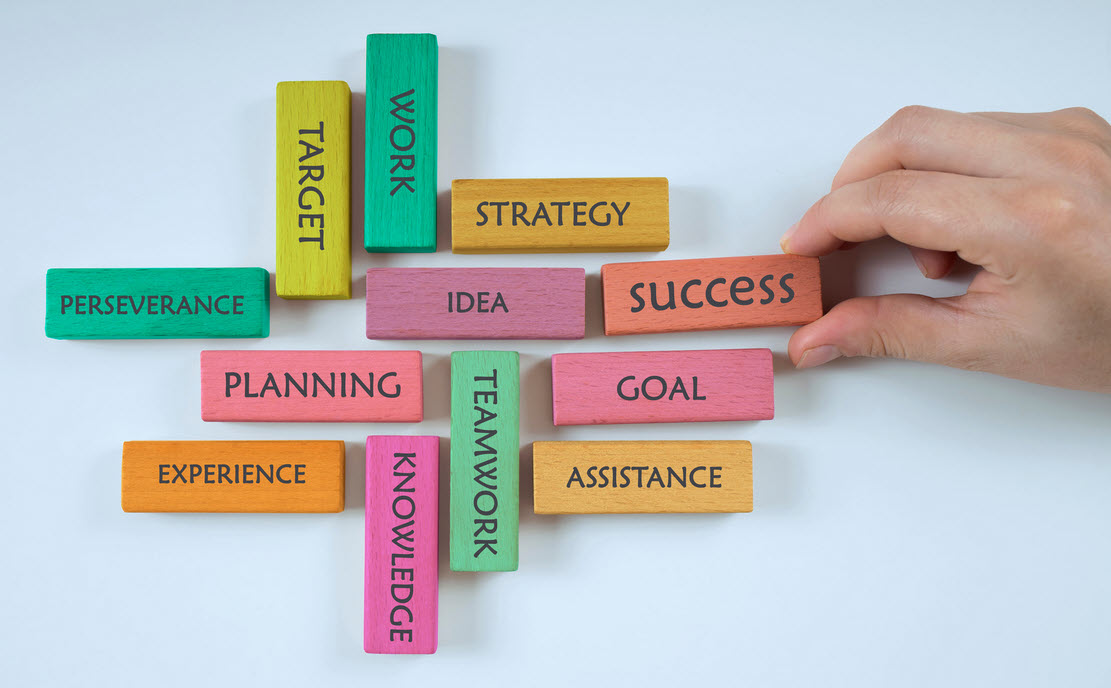
    Is Your FOUNDATION Concrete or Sand?A solid personal foundation is the cornerstone of success.

    When you have a solid foundation in place, you’re less shaken by the bad things that happen. You may have a setback or a rough day, and you may trip or stumble. But when you know your core foundation is concrete, you’re able to brush yourself off, get back up, and keep going.

    No matter the endeavor, building your foundation is THE step that can’t be skipped.

    But when you strike out on your own in the pursuit of building a business, I’ve found that it’s even more critical.

    You need a strong personal foundation AND a strong business foundation. Otherwise, the precariousness of the structure or situation can do you in.

    One sales call went awry?
    ​You need the fortitude to make another and another.

    Nobody read your email newsletter?
    ​Figure out what they want to read and send another and another.

    Your cat threw up on your desk right before your client call?
    ​Wipe it up and keep it moving.

    Found out you need surgery while planning a launch?
    ​Adjust the plan to prioritize your health while keeping your business alive and well.

    When I’m working with my business owner clients, I always look for evidence that they are building their business on shaky ground — and warn them! Because the fallout comes with nasty consequences.

    It typically looks something like this:
    1. Your income is sporadic; you never know what you’re going to make from month to month.
    2. New leads are sparse, so you have no idea where your next client is coming from.
    3. Your mood determines your business-building activities.
    4. Your clients don’t refer to you. They like you ok, but they’re not sending new business your way.
    5. You’re hiding, avoiding business conversations and networking opportunities.

    And it’s all because they don’t have a blueprint for putting the proper infrastructure in place. The foundation is shaky.

    They’re missing stuff like…
    ​Having systems, repeatable processes, and automation in place.
    Packages and programs with compelling offers and clear pricing.
    Plans and scripts for overcoming client objections.

    In other words, they’re flying by the seat of their pants, operating on a whim — stacking assorted building blocks on nothing but sand.

    You simply can’t build a sustainable career or business without a solid foundation.

  • The Neuroscience of Selling

    The Neuroscience of Selling

    I often hear people say they hate selling. It usually sounds something like this —

    “I’d start my own business, but I hate sales. I’m not any good at it…”
    “I’m great at what I do, but I’m bad at selling it. I wish I didn’t have to sell; I hate it!”
    “I hate being sold to, so I hate selling. Nobody likes salespeople; I want people to like me.”

    It always makes me cringe a little bit because — I hate to break it to ya — there’s no way around selling. You can’t avoid it. We’re all selling, all the time.

    Whether you’re selling your services…
    You’re a parent selling your kid on going to bed…, negotiating a raise at work…,
    and trying to get your friends to try a new restaurant…

    You’re selling your ideas, and your point of view.

    But the idea of selling is such a charged thing for people to grapple with. And it all comes down to neuroscience.

    The Neuroscience of SellingWhen you’re the one being sold to, your brain goes into fight or flight mode.


    When you’re the one doing the selling, your brain’s fear of rejection shoots adrenaline into overdrive.

    Our reptilian brain is scrambling for safety, and sales can feel like a threat.

    Personally, when I’m in a situation where someone is trying to sell me something, I want to be in control. It’s my way or the highway. If I want to think about it, my guard is automatically up.

    How do you handle the people you want to sell to?

    The first order of business is to calm your nervous system. Then, think about how you can help the other person get out of fight or flight.

    Think about common objections:
    “I don’t have the time…”,” don’t have the money…”,and  need to go ask my spouse…”

    Don’t go on the offensive and try to convince them to ignore their own defenses. Instead, try this —

    Thank them for sharing their concern with you.

    This will immediately help them feel relieved that they don’t have to fight back.

    Next, use what Dr. David Hawkins calls “green words” (as opposed to the “red words” you want to avoid in a selling scenario). These are the words that invite them to keep talking and keep the lines of communication open.

    The idea is to use the neuroscience of selling to ensure everyone gets their needs met.

  • What does freedom mean to you?

    What does freedom mean to you?

    I’m not sure where you are in the world, but here in the US, we’re in a season of celebrating freedom. We just marked our nation’s independence on the 4th of July and commemorated the emancipation of enslaved people in the US on Juneteenth.

    So “freedom” is in the air…

    But the true meaning of freedom goes far beyond historical triumph and jubilee. We each have a personal definition of what feels free.

    We all strive for the freedom to do, to be, and to have whatever we want.

    What does freedom mean to you?As long as you’re not hurting anyone else, operating in life as you see fit is the ideal measure of freedom.

    Freedom to love and form the relationships you want,
    Create the lifestyle that you want for yourself and your family.
    Freedom to have meaningful work and make the kind of money you want.
    Etc, etc, etc.

    Again, what does freedom mean to you?

    Here’s what it means to me:

    1. Emotional Freedomnot being controlled by my emotions or mood and having the ability to handle things easily, with low stress. Freedom to simply be and do.

    2. Freedom of Timehaving control over my schedule and, most importantly, the ability to work less and make more money.

    I value spending time with family, doing fun things, and focusing on my hobbies and creative pursuits. I can’t do any of that if I’m a servant to my emotions or constricted by time-wasting obligations.

    I love looking at my schedule every day and seeing plenty of room in it while continuing to make the money I want to make. THAT is FREEDOM to me.

  • What’s your story?

    What’s your story?

    In case you haven’t noticed, we’re living in an increasingly disconnected age.

    For all the good technology does in bringing us together, it also adds distance and puts up walls.

    We’re bombarded with information.
    Overloaded with messaging.
    Everyone is vying for our attention.

    As a result, everything sort of gets jumbled together. Sometimes we can’t remember where we heard something or who said what.

    All too often, rather than standing out, we blend into the scenery and become easily forgotten.

    Unless….

    We have a good story, and we all do.

    everyone has storyOur STORY is what sets us apart from the next person. People remember stories.

    If you haven’t seen my TEDx Talk yet about my client, I recommend you go watch it.

    Because I’ll tell you my phone continues to ring because of that story.

    When I get on a call with a potential client, they’re always mentioning “that story you told,” and it lets me know that it really resonated with them.

    They related to it and were able to see that I could potentially help them in the way I helped my client.

    That story has done more for my business in the last five years than anything else I’ve ever done.

    It really drives home a point: in the world we live in, people are craving transparency, authenticity, and truth.

    Whether you’re giving a TEDx Talk, writing for your website, posting on LinkedIn, or engaging in a sales conversation … your story matters.

    Consider this —

    WhyYour audience is constantly asking, why, why, why?


    Why you? now?, this program?, this topic?, and this price?

    There’s a meaningful and genuine answer to every one of those questions, and it can best be conveyed in a story.

    If you’re a business owner, that starts with your BRAND story.

    If you’re not yet sure what that story is or how to tell it, I suggest starting by asking yourself these three questions:

    Q1: What results do I create?​
    Q2: What moves me to do what I do?​
    Q3: What do I do that no one else does? What’s my way?

    Here’s a quick peek into my story:

    Q1: I help people create a career that they love, and I help people start their own businesses.

    Q2: I don’t think anyone should suffer to make a living. Because I grew up with a father who HATED what he did, and he made us all miserable because of it.

    I felt guilty for every dime he spent on me, for going to college, for making him beholden to that job that sucked. I had to overcome that feeling and avoid repeating his mistakes by doing my own thing.

    Q3: I’ve untangled the quandary about what to do with your life and where to find answers.

    Now it’s your turn. Take out a sheet of paper or pull up a blank screen, and jot down what first comes to mind. It doesn’t have to be perfect or polished. Just begin thinking about your story and work on it from there.

    Stories will move you forward and get you to where you want to go.​
  • How to reach your goals without pushing harder

    How to reach your goals without pushing harder

    Do you ever feel like reaching your goals is a nearly impossible feat?

    Like you’re never going to get there, or you’re going to run yourself into the ground trying?

    I think we’ve all felt this way at some point, but it can be especially frustrating when you just can’t figure out why it’s so dang hard.

    You want the thing — the promotion, the new career, a successful business…

    And you’re going after the thing — working your tail off to make it happen…

    But progress is slow, and you honestly feel like giving up.

    Here’s what’s probably happening —

    If I had to guess, I’d say you’re PUSHING too hard.

    You’re in your head, plotting and scheming, and your ego is shouting at you to go, go, go…harder! Or that there’s something wrong with you if you don’t!

    But in my experience, I’ve come to understand that pushing harder is the more difficult way to achieve what you want.

    How to reach your goals without pushing harderWhat would it look like if you were PULLED toward your goals instead?


    I’ve seen it time and time again. When people work toward something bigger than themselves, and they’re compelled to fulfill a vision, it feels easier.

    This doesn’t mean you won’t have obstacles or that things won’t get rough at times.

    It means you’re EXCITED to be challenged.
    You have a big WHY that helps you get out of bed in the morning.
    It keeps propelling you forward when the going gets tough.

    I worked with someone recently who was at a PUSH to the finish line. He was trying to grind it out to retirement and finish strong. And it was like trying to push a boulder up a hill.

    Then he got laid off. Yikes. This can be a scary thing at the tail end of a career.

    However, it turns out this was the best thing that could’ve happened!

    Losing that job opened up space to go after something completely different and set new goals.

    He saw an opportunity to disrupt an industry, went for it — and, wow! Things are going better than ever. He loves what he does so much now, and he’s so engaged in the work, that retirement isn’t even part of the conversation anymore.

    He’ll be able to slow down when he’s ready, but the PULL has reinvigorated his zest for life and legacy and the impact he wants to make.

    But you don’t have to lose your job or find yourself in a bind before making the shift.

    If you’re trying to push for a result right now and it feels hard — stop.

    Think about elevating your goal.

    What’s your larger vision?
    How can you make it bigger than you?
    What difference do you want to make?

    Go deeper to figure out what will compel you to show up with enthusiasm.

    What vision will PULL you into the future?​

  • Could this syndrome be what’s holding you back?

    Could this syndrome be what’s holding you back?

    I don’t know about you, but I’ve been talking to a lot of folks lately who are finding themselves feeling overwhelmed, overworked, and underappreciated.

    Something interesting I’ve noticed is that many of these people seem to share a lot in common.

    As we’re talking, I’m hearing the same complaints again and again. There’s definitely a pattern of symptoms here.

    I’m not a doctor (and I don’t play one on TV…) but I’ve been quietly diagnosing people with what I like to call Hero Syndrome.

    If you’ve been feeling swamped with responsibility, yet undervalued for the work you do or overlooked despite your contributions, keep reading.

    See if any of this sounds familiar —

    Are you someone who…
    …everyone depends on in a pinch?
    …people only call when they have a problem?
    …has a hard time receiving praise?
    …always wants to feel wanted and needed?
    …thinks being “indispensable” is job security?
    …never seems to be recognized for your hard work?

    It might be Hero Syndrome (which is kind of like the opposite of Imposter Syndrome).

    Let me give you an example.

    One of my clients was working in research and development for a quick service restaurant company — the department that came up with new and innovative products.

    She felt like she was doing a great job, but she kept getting overlooked for promotions and had no idea why. So she hired me as her career coach.

    Hero Syndrome It wasn’t long before I discovered her Hero Syndrome.

    She volunteered for all the stuff at work that had nothing to do with her job — the company picnic, fire safety representative, you name it. She was pulled in a million different directions and totally hooked on being the go-to team player around the office.

    By making sure people had to depend on her, it meant HER needs were being met, and it felt GOOD. But it wasn’t doing a thing for her actual career!

    She told me she wanted to be known for coming up with creative and innovative ideas for the company. Instead, she was known for doing a little bit of everything.

    So we put a plan in place to clear the deck, and after about six months, she got the promotion she was seeking.

    If this sounds like you, the good news is you can turn things around too. Here’s how:
    a. Start saying no. Remember NO. is a complete sentence.
    b. Begin setting boundaries. Get clear on what you’ll accept and what you won’t, and make sure everyone else is aware of that too.
    c. Unhook from the need that keeps getting met by saying yes to everything.

    You have to clear the Hero Syndrome up! Only then will you have the time to focus on what you really want to do. This is how you’ll create the space to step into and become known for the thing you want to be known for.