
Category: Lessons Learned

  • Is Being “Coach-like” a Good Thing?

    Is Being “Coach-like” a Good Thing?

    We expect a lot from leaders, and when you’re in a leadership role, a big part of your job is to honor those expectations.

    Just because you’re calling the shots doesn’t mean you’re any good at it. Effective leadership takes skill. It’s not as simple as demanding someone do as you say.

    The best leaders empower others – inspiring them with a clear vision, and encouraging them to take ownership of their part in making things better.

    In other words, the best way to lead is to become coach-like.

    Coaches see what’s possible. They elevate the conversation. They can look beyond the problem to guide the way toward something better.

    If you want to get better at something, work with a coach.

    If you want someone else to get better at something, become more coach-like.

    Notice I said coach-like, not cheerleader-like.

    Don’t get me wrong. Having someone in your corner, giving pep talks, and rallying your success is priceless, but a coach’s work is deeper than that.

    Sometimes rah-rah-rah is nothing but noise and a distraction!

    Far too many people who claim the title of coach promote toxic positivity. They ignore problems and dwell on the bright side, convincing their clients that looking at the issue through rose-colored glasses is all they need to succeed.

    It’s also a common smack at a fellow coach to say they were not “coach-like” in a certain response or behavior. I call BS.

    More to the point, I call it like I see it. Because when the goal is to get better at something, the truth is more potent than a pat on the back.

    When elite athletes are going after a win, you won’t catch their coaches handing out participation trophies.

    To be coach-like means naming what is and what’s wrong.

    To be coach-like requires getting comfortable with discomfort.

    To be coach-like calls us to embrace our humanity and greater potential.

    Being human is messy, especially when working with ambitious, driven humans. Being coach-like asks leaders to take responsibility for that messiness.

    Sometimes the messy truth hurts.
    Sometimes that’s the only way to grow.

    Let’s continue to learn, evolve, and move forward – taking a more coach-like leadership approach.

  • You Can Do Hard Things

    You Can Do Hard Things

    I don’t have to tell you life isn’t easy. We all have to do hard things . . .

    From slogging through icy sludge on a blustery winter morning to drudging through another unproductive meeting about the project from hell – life comes with everyday nuisances.

    From losing a loved one to losing a big client – we have little choice but to power through the worst of it.

    Here’s the kicker . . .

    Sometimes when we do have a choice, things can feel even harder.

    Jumping out of bed every morning to fit in a run before work.

    Making sales calls, even when you’re flush with cash and not sweating the rent.

    Networking, attending events, meeting new people, and checking in with friends.

    Doing it anyway when the consequences of skipping it won’t be felt right away.

    Having the option to take the easy out but deciding to go hard after your goals.

    It’s tough to keep your “get up and go” operational and your internal fire stoked. But you can do hard things.
    When my clients ask me for tips on how to override the urge to take it easy, I like to share my go-to advice with them:


    1. Do the hardest thing first.
    Whatever you’re dreading, get it over with and out of the way.

    2. Make a deal with yourself.
    What’s the reward for getting something done?

    3. Get accountability.
    Hire a coach, ask a friend, or buddy up with a colleague to hold you to it.

    4. Put money on the line, skin in the game.
    Place pressure on yourself to earn a return.

    If it’s still hard to find your motivation, ask the tough questions:

    Why am I doing this?
    Do I really want it?
    Is it time to move on?

    Either find the drive to do what you need to succeed or find something else worthwhile to pursue. Things are going to be hard sometimes, whatever you choose. What’s worth doing the tough stuff? Do that and play to win!

  • WTAF is Happening? And What Can We Do About It?

    WTAF is Happening? And What Can We Do About It?

    Today’s message isn’t a fun one, but it can’t be avoided.

    To say that what’s going on in this country is a distraction is an understatement.

    My coaching clients are scared.
    It’s my job to guide you in finding fulfilling work, creating a business that fires you up, and achieving success on your terms. And yes, it’s my job to help you focus, cultivate a growth mindset, and stay focused on your goals. But it’s also my job to be real with you.

    I’m not here to pretend everything is fine when it isn’t.

    We’re dealing with a dangerous situation in the United States, and the world is watching.

    If you’re anything like me, you’re shaking your head and asking yourself, “WTAF?!” multiple times daily. What…The…Actual…🤬… is happening?

    Corruption is rampant in our country’s highest office.

    Illegal actions are gutting our institutions.

    We’re dealing with the hostile takeover of our government.

    We may have read about times like this in history books or watched similar scenes unfold in faraway places, but we’ve never experienced it. Not in our lifetime, not in what has been the most powerful country in the world for a long time.

    THIS isn’t what most people voted for, even if they voted for this guy. The last thing I want to do is add to the divisiveness.

    My coaching clients are talking about this.

    Understandably, people are feeling despair.

    I won’t insult your intelligence with feel-good platitudes, but I do want to talk about how to cope.

    Should you act normal? Keep things running? Pretend like nothing’s happening?

    Not exactly, but we also can’t allow them to get the best of us.

    We have to forge on. Do our work. Stay engaged.

    If you feel called to do more, find the courage to step up.

    You may not know this about me, but I’ve run for office twice. I needed to fight for healthcare for my family and couldn’t think of a better way to do it than to put myself out there.

    My kids asked me why I was sticking my neck out for people to step on it. I pointed at them and said, “I’m doing this for you!”

    Ask yourself, WHO are you working for? Use your distress to motivate you. WHAT more can you do?

    It’s not time to give up or give in. It’s time to get behind what matters most.

    You could contribute by funding charitable organizations, causes, or candidates.

    Volunteer your time and skills to uplift your community.

    Write letters, call, and show up at your representative’s offices.

    Or maybe your best service is in the work you do with clients.

    We must stop saying, “Why doesn’t somebody do something?” and do something!

    Love yourself to keep standing up for what’s right.

    Our careers and businesses and all we hold dear depend on us — caring enough to do something and keep doing something.

    I’ll leave you with a helpful exercise we use in improv: “Yes, and …”

    It’s simple; someone says something outrageous, and you continue with “Yes, and…” For example, if I say, “Wow, I just bought a magic car!” You say, “Yes, and… I’ve always wanted to drive from New Jersey to Paris. Let’s go!”

    Now, let’s try it —

    Things are chaotic in our government right now, I’m scared, AND I can keep showing up in my work, career and business.

    Your turn. What’s your “Yes, and…” today?

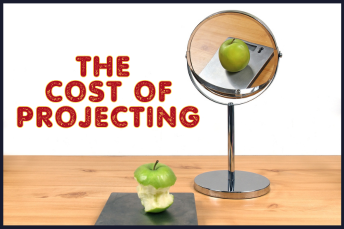
  • Are You Projecting Again?

    Are You Projecting Again?

    I’ve noticed a pattern with clients lately: They’re doing a lot of projecting.

    With fear and anxiety running high, it’s no surprise that projecting is rampant. People are assigning their own thoughts or feelings to others in an attempt to avoid emotional distress. It’s a coping mechanism.

    No matter what’s going on in the world, everyone has their own “stuff” that gets projected into conversations or situations:

    • Anticipating what a client might say.
    • Making assumptions about how a coworker will react.
    • Suspecting what a prospect is thinking or feeling.
    • Presupposing the outcome of a sales call.
    • Inferring the meaning behind a colleague’s remark.
    • Speculating on the intent behind a social media post, an offhand comment, or even a facial expression.

    It’s all based on our past experiences, emotions, values, cultural lens, current state of mind, and much more — rooted in the subconscious. When things get scary and the stakes feel higher, projecting gets kicked up a notch.

    Here’s how it looks —

    Going into a consult: “How would I respond if a coach quoted me this price?”

    Launching a marketing campaign: “How would I feel if I got this email?”

    Setting boundaries with a client or manager: “How would I react if someone asked this of me?”

    Then you assume that the other person would react the same way.

    “I can’t afford the package I’m selling, so I better lower my rate; nobody will pay this amount.”

    “I don’t want to be annoying, so I’m going to send fewer emails, despite what the data says.”

    “My boss only respects those who can handle tight turnaround times. I’ll keep staying late to meet last-minute requests.”

    But here’s the thing: Your assumption usually isn’t true. Just because you feel a certain way doesn’t mean the other person does.

    You’re stopping yourself from taking action and selling yourself short — for no sound reason. Get it? You’re making stuff up!

    How do you correct this?

    1. Start by identifying your thoughts and feelings, and what the other person is most likely thinking and feeling. Where is the line? Sort it out.

    2. Let other people be responsible for their own reactions.
    Stop doing it for them.

    3. Check in.
    If you don’t know, ask. Be direct.

    For example, are you wondering what your prospects might be willing to pay? Remember, it doesn’t matter what you would pay, only what they would pay. Don’t worry about undercharging. Don’t waste your time working on a proposal with pricing that far exceeds their expectations. Ask about their budget and take action based on their response.

    Now I want you to think about:

    Where do you stop yourself because you’re projecting? What is it costing you?

  • How to Get Better at Operating in a Crisis

    How to Get Better at Operating in a Crisis

    Don’t take this the wrong way, but we are in crisis.

    What I mean by this is, as human beings, we’re in crisis — often.

    I’m not trying to bum you out here, just facing facts. The human condition includes the positives and negatives of the human experience.

    The reality is we’re in trouble sometimes. At times (like now!), it seems we’re in a lot of trouble.

    Lately, you may feel like you’re seeing a crisis everywhere you look — in your personal life, the lives of your loved ones, in politics, on the news: storms, wildfires, plane crashes, leadership decisions, family emergencies, business mishaps, technological glitches, economic downturns . . . you name it!

    You might be thinking, “Tell me something I don’t know!” So here goes . . .

    We have to get better at crisis management. Not just the head honchos in charge, but every single one of us. We can’t just expect “somebody” to do something. How?


    1. Start by dealing with what’s REAL. There is no need to catastrophize and make the crisis bigger than it already is by projecting the “worst case scenario” into the atmosphere. What’s actually happening right in front of you? (there is plenty of REAL bad stuff–just don’t make it worse.)
    2. Focus on what you CAN do. What can you control? That’s where you look; it’s where you take action.
    3. Keep things in perspective. Remaining calm matters. We don’t do our best thinking in a chaotic brain.

    Take one thing at a time. One day at a time. That is not to make light of anything that is going on personally for you or in the US and the world.

    Use your imagination for solutions, not for worsening the problem.

  • What Makes an A-Lister?

    What Makes an A-Lister?

    If you want to win at business, bringing your “A-Game” isn’t enough anymore. You have to be an A-Lister.

    This isn’t Hollywood, of course. You don’t need the star power of Julia Roberts or George Clooney, but you must be a star in your field.

    Top-tier. A cut above. Premier.

    I know, I know . . . it can feel like a lot to ask of yourself, especially if you’re not one for the spotlight.

    This isn’t about achieving celebrity status, but the right people should be asking for you by name.

    Here’s what becoming an A-Lister in your field means:

    • You’ve established a reputation — for results!
    • You’ve created something people want, and they keep coming back for it.
    • You’re known as the go-to person for the thing you do.

    Think about it. A-Listers don’t have to audition for roles anymore. Writers, directors, and producers had their names in mind from the earliest stages of a film.

    A-Listers are bankable, considered a sure thing.

    I want YOU to be the one who comes to mind – here’s what it takes:

    1. Identify the results you create. What is your best service, program, or strategy in your area of expertise?
    2. Nail your messaging about those results. Make it compelling.
    3. Get visible. Speak in person or online, or both. Let people see you!
    4. Establish authority. Write a book. Teach a course. Position yourself as the expert.
    5. Lift as you rise. Bring people up with you by coaching, mentoring, and collaborating.

    Becoming an A-Lister is how your inbox fills with opportunities. It’s how you get the phone to ring. It’s the way to reach your goals and dreams.