
Tag: Following your passion

  • How to Stop Imposter Syndrome in Its Tracks

    How to Stop Imposter Syndrome in Its Tracks

    Do you ever feel like an imposter?

    Are you sometimes afraid that someone’s going to discover you have no idea what you’re doing — that you’re not the expert you proclaim to be, you’re not as skilled as you’ve made yourself out to be, and you’re not quite qualified to be in the position you’ve found yourself in?

    Maybe you’re worried that you don’t measure up somehow, so it makes you feel like you’re pretending to be someone you’re not.

    Here’s what this looks like.

    Them: We’d like to interview you [for a dream job]!
    You: Maybe they didn’t notice I don’t have enough experience.

    Them: Congratulations! We’d like to offer you the [dream] job.
    You: I’ll surely be fired by Tuesday, once they figure out I’m a fraud.

    Them: We’ve selected your proposal to speak at the next conference.
    You: Oh no! I’m probably going to make a fool out of myself.

    Them: I’m looking for a coach, and I’d love to work with you.
    You: But what if I can’t help you get results, and you tell everyone I’m a con?

    I’m not a doctor, but as a Master Certified Credentialed Coach with 30 years of experience, I can confidently assess what’s happening here.

    Imposter Syndrome

    Don’t worry; it’s not fatal to your career or success.

    Most people struggle with it from time to time, and it’s entirely “treatable.”

    If you feel like your Imposter Syndrome is flaring up, here’s what I suggest you do —

    1. How to Stop Imposter Syndrome in its Tracks by Laura Berman FortgangPause and accept what’s happening. No sense in ignoring the symptoms. Denying it only makes things worse by trying to overcompensate.
    2. Learn to recognize your triggers (comparisons, someone else’s recent success) and how you respond, so you can head it off at the pass. Before you go into a full-on panic, tell yourself, “This is just imposter syndrome flaring up again. Nothing alarming. You can do this.”
    3. Notice your self-talk. As soon as you start beating yourself up, STOP. It may sound easier said than done, but you can tell yourself “no.” No more negative self-talk; you’re not listening.
    4. Ask yourself what success looks like. Are you trying to measure up to a perfect ideal? Scratch that and aim for progress instead.
    5. Keep learning. The best way to keep Imposter Syndrome at bay is to continue seeking out new knowledge and ways of doing things, evolving, and growing your skill set.
    6. Celebrate wins! I can’t say enough about this. Remind your brain that you’re doing good things.

    Do this again and again, every time Imposter Syndrome starts to creep up, and you’ll start experiencing it less and less.

    Don’t get caught up in calling yourself an expert. Instead of thinking of yourself as someone who’s supposed to know everything, think of yourself as someone who makes it your business to learn everything you can about your particular topic of choice.

    You’re not an imposter, so keep showing up as the best of who you are. You’ve got this!
  • If Work is Your Identity

    If Work is Your Identity

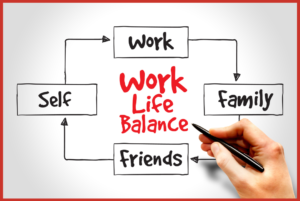
    For some people, work is their identity. It’s how they measure their worth, and that works for them. It gets a bad rap, but there’s nothing inherently wrong with deriving meaning from the work you’re called to do.

    Being driven by your goals can serve you quite well … until it doesn’t!

    Let’s face it —

    You’re never going to succeed by sitting on your laurels.

    Establishing yourself is going to come with some late nights, missed birthday parties, and sacrifice.

    But there’s a limit to how much good it does you to burn the WiFi at both ends and stay glued to your phone.

    Making your identity all about work is likely costing you, even more than you know.

    If you’re thinking of yourself as “Ms. CPA Extraordinaire” or “The best SAHM Return to Work Career Coach” or “my company’s next SVP of Marketing” 24/7/365, you might want to take a breather every now and then.

    If your family and friends are constantly teasing you or complaining about your job, it can be frustrating … but they might have a point.

    If Work is Your Identity by Laura Berman Fortgang“All you ever do is work.”

    “You always cancel on us.”

    “When are you ever gonna take a vacation?”

    There’s a good chance you’ve let workaholism creep in and take over.

    Here’s the thing —

    Even if you love what you do…

    Even if you think doing more of it is your ticket to ride…

    What got you here won’t necessarily get you to the next level.

    Instead, you may hit a brick wall of disappointment.

    Ignoring the voices – both internal and external – that say you’re working too much is a sure way to burnout.

    Ignoring your personal desires and the people around you, putting everything off to a later date, means something is missing.

    Maybe it’s time to reexamine what’s driving you.

    Why are you making your identity about work? Look for the origin.

    Did you make a vow to yourself to succeed at all costs?
    Is being rewarded at work fulfilling a personal need?
    Is work your source for love, acceptance, and self-worth?

    What happens is work gives us all something good, but if something’s missing, that hit can become an addiction like anything else.

    Once you’re aware of this, the hard part starts — lowering your standards. Yikes!

    Once you know what’s lacking, you can start practicing acceptance of yourself without adhering to the highest standards.

    If your identity is all about work and it’s COSTING you, this is what you need to do. It won’t be easy, but it’ll be worth it.

    Because here’s the kicker: Eventually, you will achieve MORE by doing LESS.

  • What does freedom mean to you?

    What does freedom mean to you?

    I’m not sure where you are in the world, but here in the US, we’re in a season of celebrating freedom. We just marked our nation’s independence on the 4th of July and commemorated the emancipation of enslaved people in the US on Juneteenth.

    So “freedom” is in the air…

    But the true meaning of freedom goes far beyond historical triumph and jubilee. We each have a personal definition of what feels free.

    We all strive for the freedom to do, to be, and to have whatever we want.

    What does freedom mean to you?As long as you’re not hurting anyone else, operating in life as you see fit is the ideal measure of freedom.

    Freedom to love and form the relationships you want,
    Create the lifestyle that you want for yourself and your family.
    Freedom to have meaningful work and make the kind of money you want.
    Etc, etc, etc.

    Again, what does freedom mean to you?

    Here’s what it means to me:

    1. Emotional Freedomnot being controlled by my emotions or mood and having the ability to handle things easily, with low stress. Freedom to simply be and do.

    2. Freedom of Timehaving control over my schedule and, most importantly, the ability to work less and make more money.

    I value spending time with family, doing fun things, and focusing on my hobbies and creative pursuits. I can’t do any of that if I’m a servant to my emotions or constricted by time-wasting obligations.

    I love looking at my schedule every day and seeing plenty of room in it while continuing to make the money I want to make. THAT is FREEDOM to me.

  • So, what do you do?

    So, what do you do?

    Whether you’re at a cocktail party, networking event, business mixer, or your kid’s baseball practice, it never fails…

    Someone’s going to ask you THE question: “So, what do you do?”

    Considering I’m a career and business coach, you’d think I LOVE this question. But no. It bugs me too.

    Call it PTSD from when I first started out in the coaching industry — long before most people ever heard of coaching that didn’t involve Olympic gymnasts or football teams…

    Or chalk it up to the countless hours I’ve spent reassuring anxious career changers and budding business owners that
    a) their work isn’t their worth
    and
    b) their career doesn’t define their identity.

    But I think asking it at every turn is an unfortunate social norm.

    I’d much rather answer, “So, who ARE you?”

    And go deep with:
    “I’m someone who cares deeply about X.”
    “I’m someone who has devoted my life to Y.”
    “I’m someone who is driven by Z.”

    We are so much MORE than what we DO.

    You’re more than a copywriter, real estate agent, or coach. You’re a whole person with a whole life and meaning and value that has nothing to do with how you earn your living.

    But, hey — we live in the real world with real bills, and nailing our answer to “What do you do?’” can open doors and opportunities.

    Here’s the thing —

    You’re boring yourself and your new acquaintance with the same old “copywriter,” “real estate agent,” “coach” answer. We have the opportunity to share so much MORE about how we are and what we bring to the world through our work.

    So, what do you do? by Laura Berman FortgangA better way to think about it is this: what RESULTS do you create? In other words, talk about outcomes.

    My quick answer? Depends on who I’m talking to.
    “I help people figure out what they want to do with their lives.”
    – or –
    “I help coaches to raise their income and impact.”

    This makes me feel good about the difference I’m making to the world, but more importantly — it piques interest and starts a conversation.

    And it works for any job.

    Copywriter: “I wordsmith products into profit.”
    Real Estate Agent: “I help people find their dream home.”
    Coach: “I help leaders look forward to Monday morning.”

    Now you’ve got people’s attention. Throw out your title, and they’ll probably change the subject or possibly even make incorrect assumptions about what you truly do.

    Offer them a results-focused teaser, and you’re inviting them to ask more.

  • Is It Good Guilt vs. Bad Guilt?

    Is It Good Guilt vs. Bad Guilt?

    If you’re anything like most people, you’re no stranger to feeling guilty.

    For some folks, guilt is a frequent companion. They feel bad about seemingly anything and everything — whether they have a good reason to or not.

    But for most of us, guilt simply creeps in more often than we’d like.

    Quitting a job.
    Setting boundaries in a friendship.
    Refusing a request.

    It doesn’t take much to feel at least a little uncomfortable, sheepish, or ashamed about a choice we’re making, especially when we feel like we’re letting someone down.

    But here’s something we often miss —

    There’s GOOD guilt and there’s BAD guilt … and the difference matters.

    Is It Good Guilt vs. Bad Guilt? by Laura Berman FortgangGood guilt is the kind of guilt that’s telling you you might regret a decision. Maybe you’re not prioritizing the things that mean a lot to you. It’s a nudge to keep you honest and spur positive action.

    Bad guilt, on the other hand, is a nag. You’re putting yourself down: I’m not a good friend, I suck at my job, I shoulda done this, I’m bad at that — nothing but a bunch of mishegoss! It’s senseless, not doing you or anyone else any good, and just trying to keep you living by someone else’s set of rules.

    I was working with a client recently and this issue came up.

    This person is perfectly set up to step out of her job into a business that’s primed for success.

    But she feels guilty for leaving the job because other key players have jumped ship. She doesn’t want to leave her team behind, holding the bag, or leave the company in a lurch.

    Would leaving make her a bad person? Of course not!

    Bad guilt is raging here and yet, there could be an opportunity at hand. Perhaps she can work something out that’s win-win. For example, she could continue to work as a part-time contractor while she gets her bearings in her new business. But ultimately, it’s not her responsibility, and she doesn’t need to sell her dream short just to avoid that guilty feeling.

    Here’s the thing —

    You are NOT responsible for somebody else’s reaction to something that you want to do.

    Obviously, I’m not giving you the okay to do someone harm, but I am telling you to get clear about what’s happening and why you’re letting someone else’s issues interfere with your next move.

    You may have to face circumstances or deal with the fallout of your decisions or actions, but don’t let bad guilt stop you from moving forward.

  • What are you scrappy and hungry for?

    What are you scrappy and hungry for?

    I don’t know about you, but I am “scrappy and hungry, and I’m not throwin’ away my shot…”

    If you’re one of the millions of people who enjoyed the hit sensation Hamilton, you may recognize this tune. Consider it our theme song for today.

    I believe being scrappy and hungry is one of the under-appreciated keys to success. Sure, we say things like “hard work pays off,” but we tend to look at the people who’ve “made it” as capable, confident, and poised, forgetting they were once just getting started — scrappy, hungry, and willing to take a shot!

    Their goals were worth it to them. Going after their dreams was worth the risk of being judged, getting it wrong, and putting in the work.

    What about YOU? What are you scrappy and hungry for?

    My clients often tell me they want to serve people, make an impact, grow a business, create change in the world, further a cause, make more money…the list goes on. They claim to really want it, but they’re not doing anything about it.

    What are you scrappy and hungry for?So my question for them and for YOU is this: If not now, WHEN?

    Because I’ve asked it so many times, I have a pretty good idea what your answer is: “I don’t know.” And there’s a good chance you’ll follow that up with, “HOW do I know?”

    I’ve noticed we humans have a hard time recognizing when we’re ready. There’s no clear-cut way to know for absolute certain, of course, but there are some telltale signs —

      • You’re miserable.
      • You have an “itch” that keeps nagging at you that something isn’t right.
      • You’re daydreaming a lot, scrolling social media, envying folks who are doing what you want to do.

    This is the universe, your internal guidance system, or whatever you believe whispering (or shouting!) at you that it’s time to TAKE YOUR SHOT.

    But here’s the sign you most likely won’t get: an undeniable sense that you absolutely, without a doubt, feel ready. If you’re waiting for that, you’ll be waiting forever.

    You’re going to have doubts. That’s normal. DO. IT. ANYWAY.

    Get scrappy, listen to your hungry desire, and give it a real shot. Make your dream a priority.

    Want to write a novel? Wake up every morning and write 1,000 words before getting out of bed.

    Want to grow an audience on social media? Start posting valuable content every day; learn what they want from you.

    Want to build a business? Focus on getting ONE customer or ONE client, and grow from there.