Category: Lessons Learned

  • Do you have a capacity problem?

    Do you have a capacity problem?

    Let me share with you something I’ve observed repeatedly, especially in my most driven clients:
    They have big goals, but all too often, not nearly enough capacity to carry them out.

    Your dreams need room to breathe and to grow. For this reason, that means you need to create the capacity for that to happen.

    Capacity is your ability to handle more: More responsibilities, more opportunities, more failures and wins, more meaning and fulfillment. If your capacity is maxed out before you hit your goal, you probably won’t make it. In the off chance that you do reach the finish line, chances are you’ll be too run down to enjoy it.
    Do you have a capacity problem by Laura Berman FortgangThe good news? It’s even more likely that your capacity has room for expansion.

    Building More Capacity to Achieve Goals and Dreams

    How do you build more? Here’s what I teach my clients (and practice myself):

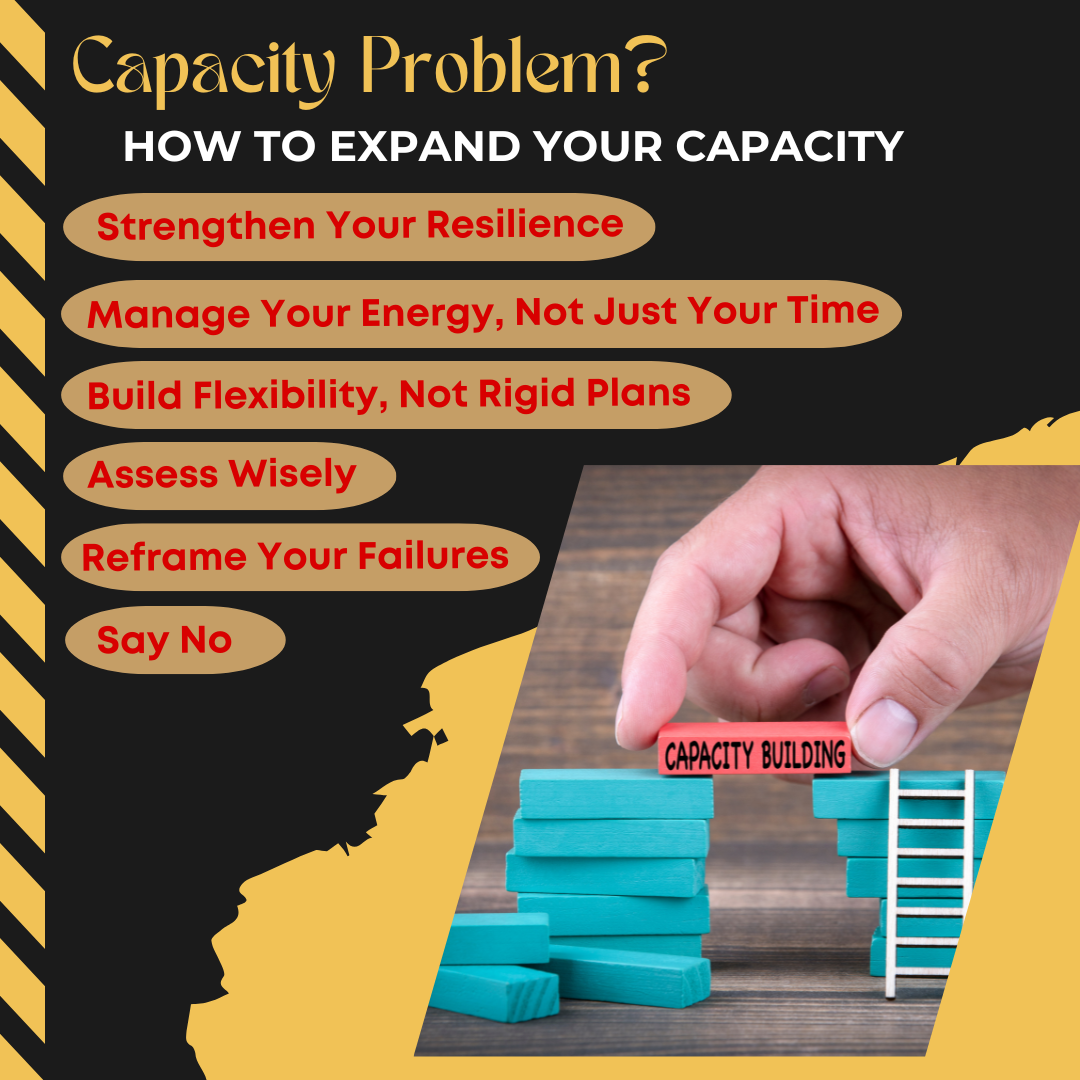
    1. Strengthen Your Resilience
    Your body, mind, and spirit need elasticity and toughness. Healthy habits like meditation, movement, and maintaining a balanced diet keep you from cracking under pressure and help you recover faster when life hits.

    2. Manage Your Energy, Not Just Your Time
    You’ll never create more hours in a day, but you
    can use your energy differently. Prioritize what matters most at any given moment, and protect your energy from distractions that drain you. Accomplishing one paramount thing each day beats attempting to check off a bunch of insignificant to-dos.

    3. Build Flexibility, Not Rigid Plans
    Real life changes. Sometimes pivoting is the only way to avoid hitting a brick wall.
    Having backup resources in place is the best way to create wiggle room – setting aside financial reserves, establishing trustworthy relationships, and developing skills that keep you adaptable.

    4. Assess Wisely
    When you’re overwhelmed, everything feels urgent; it’s not. Building capacity requires discernment. Stop reacting, and start asking yourself questions such as, “What actually matters right now, and what’s just noise?” or “What’s immediately urgent versus non-critically important?”

    5. Reframe Your Failures
    Stop viewing setbacks as defeat. They’re data. Ask yourself: What can I learn from this? Then move forward with your newfound information.

    6. Say No
    No is a complete sentence. Every yes is a tradeoff. Say yes to what matters most and only that.

    In essence, the people who achieve big things don’t just have talent or drive. They’ve built the capacity for what they want.

    In short, if you’re maxed out, it’s time to retool so that capacity can expand. 
  • Do You Trust Yourself?

    Do You Trust Yourself?

    Here’s something I’ve been noticing a lot lately with clients, friends, family, neighbors, and strangers in the checkout line at T.J.Maxx: They’re afraid to make a move because they don’t trust themselves to make the right call.

    Honestly? I get it.

    We’re living in a world where it’s becoming increasingly difficult to know whom or what to trust. The news. Our employers. Political leaders. Technology. (Did you see that the latest issue of Vogue featured an AI-generated model in its Guess ad?)

    Even our own careers and businesses feel like shifting sand.

    Here’s the problem: ​
    ​The one person you should be able to trust is you. And most people don’t.

    Unquestionably, second-guessing has become so normalized you probably don’t even notice it. How many times have you done it just today?

    “I wonder if following up with that prospect tomorrow is too soon.”
    “Should I use this font or that one?”
    “Will this example still resonate with my audience, or is it outdated?”

    I remember being in my 20s, standing in the cereal aisle, so paralyzed between Cheerios and granola that I called my mom for help.

    While these may seem like little decisions, but that pattern of outsourcing our choices runs deep and it goes far.

    I’ve coached brilliant, accomplished professionals who stayed in jobs for years past their expiration date because their spouse, their parents, or even their friends saw them a certain way.

    “You’ve always wanted to be an engineer!”
    “You’re the best teacher I know. You can’t just walk away from that!”

    Unfortunately, they stayed stuck, not because they lacked confidence, but because they lacked clarity.

    Do you trust yourself by Laura Berman FortgangYou know what I’ve figured out? Confidence doesn’t come first. Clarity does.

    Clarity gives you direction. It acts as your True North, your inner GPS. When you know who you are and what matters most, you stop fearing the”wrong” decision. You know you’ll course-correct if needed.

    How do you find that clarity? ​
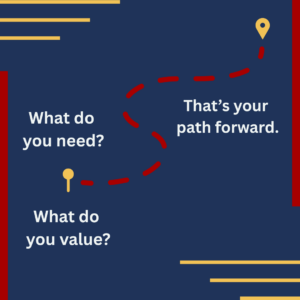
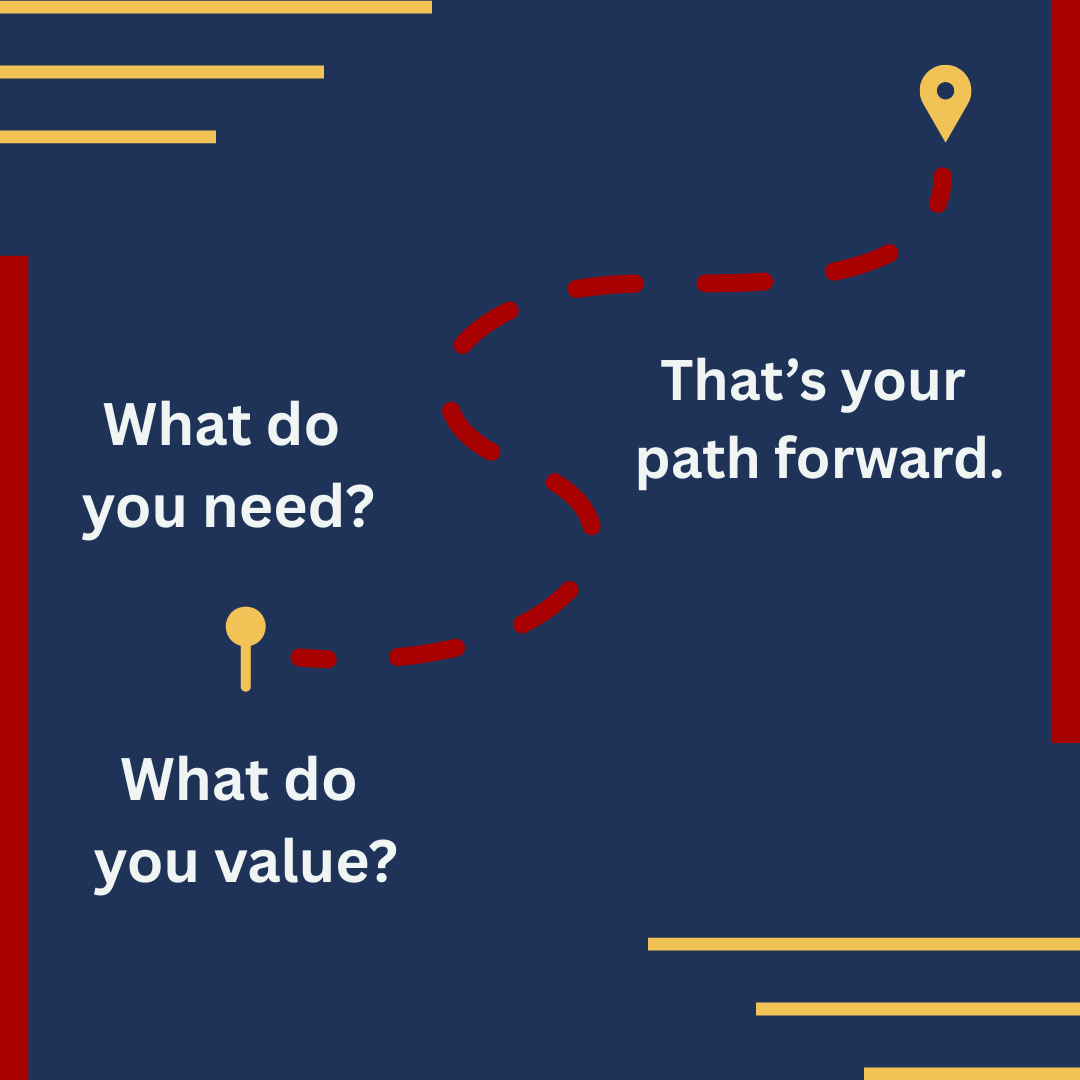
    ​You start with two things: Your needs and your values.

    Not surface-level needs. I’m referring to emotional needs, such as the desire for creative expression, the need for purpose, and the longing for meaningful connection.

    Your values are the non-negotiables that shape how you want to live: justice, integrity, family, growth.

    These become your scaffolding. Your decision-making structure. The more clearly you can name them, the more confident you’ll feel – not because someone told you what to do, but because you finally started listening to yourself.

    If you’ve been second-guessing, pause. Tune in.​
    What do you need? What do you value?
    That’s your path forward.

  • Running Your Business When People Are Running Scared

    Running Your Business When People Are Running Scared

    Running Your Business When People Are Running Scared

    I’ve been hearing the same thing repeatedly lately: “
    No one’s spending any money right now.”

    Coaches, consultants, and business owners … no need to sugarcoat this – they’re freaking out!

    This goes for employers as well, hitting pause on hiring and postponing projects. They’re freaking out too!

    I get it. People are nervous. I’m no stranger to facing facts around here. The economy feels shaky, the headlines are beyond exhausting, and nobody wants to make a bad move.

    Here’s the truth:
    People aren’t broke. They’re scared.
    There’s a difference.

    When a potential client or company says, “I can’t afford it,” what they often mean is: “I can’t afford to make a mistake right now.”

    Running Your Business When People Are Running Scared

    They’re clinging to what they perceive as certainty like a security blanket. That’s human.

    You know what else I’ve observed over the years? The more fearful someone is, the more support they need. The good news is that clarity, focus, and accountability are what we do as coaches and leaders.

    How do you keep showing up when fear is in the air?

    How do you run your business and navigate your career when people are running scared?

    Start with these three shifts:

    1. Talk About Safety, Not Transformation.
    Normally, I preach the power of selling transformation. But right now, people are seeking relief. Peace of mind. Less anxiety. So shift your message. Instead of “I’ll help you hit six figures,” try “I’ll help you sleep better at night.”

    2. Make the Investment Feel Safe.
    That means pitching smart, strategic offers: payment plans, smaller packages, clear deliverables, risk-reducers. Floating the idea of fractional or contract work in lieu of full-time employment. Not desperation discounts. Not price drops. You’re not cheapening your value; you’re just making the ‘”yes” easier.

    3. Highlight the Cost of Waiting.
    The problems your prospects are facing aren’t going away. Delaying help only compounds the issue. Point out the urgency. Help them understand the real risk is in postponing action.

    The clients and business owners I see thriving right now?
    They’re clear, confident, and grounded; calm in the storm.

    I don’t want fear to take you out of the game. Your work still matters. You’re still needed.

    Tell me: How are you holding up? Post below. Let’s talk.

  • Life, Liberty and the Pursuit of Happiness

    Life, Liberty and the Pursuit of Happiness

    I’m writing this during the July 4th holiday, though you’ll be reading it the week after. To be honest, not everyone felt deeply celebratory this year about America’s birthday. A lot has changed in recent months that makes you wonder about our country’s commitment to those “inalienable rights,” such as life, liberty and the pursuit of happiness.

    Those rights are supposed to come with being human. No government hands them out like permits.

    But let’s be real – the current environment doesn’t exactly feel like fertile ground for that vision.

    So what do you do? Give up? Pack it in?
    Absolutely not.

    Moving Forward with Life, Liberty and the Pursuit of Happiness

    We’ve got to keep our lives and businesses moving forward. Yes, there’s uncertainty swirling around our society. But you know what’s still certain? The sun’s going to rise tomorrow. Plants are still going to grow (at least for now!). That’s our cue that life keeps moving; so must we. Take action that supports the health of democracy AND keeps your business and life going.

    This might be the perfect time to take some chances. Think about it: While everyone else is frozen by uncertainty, there are opportunities just sitting there waiting to be grabbed.

    I did some digging into history, and here’s what I discovered about service-based businesses during tough times.

    Remember the late 1970s? It was a total economic mess – energy crises, inflation through the roof, and many people panicking. But you know who thrived? Service businesses. Companies like H&R Block, Manpower staffing, and those early computer consulting firms were crushing it.

    Why? Because when the world gets complicated, people pay for someone else to figure it out. That’s exactly what service businesses do – we solve problems that other people don’t have time, energy, or expertise to handle.

    Life, Liberty and the Pursuit of Happiness by Laura Berman FortgangHere’s the beautiful part about service businesses:

    We don’t need massive factories or expensive equipment.
    Got cash flow? You can expand fast.
    New market opportunity? You can pivot tomorrow.
    Try doing that when you’ve got millions tied up in manufacturing equipment.

    Here’s something interesting: While 57% of business owners think the economy is weaker than last year, this pessimism is actually creating gaps in the market. When your competitors are pulling back, feeling scared, and playing it safe, that’s when you move in.

    While competitors are hiding under their desks, you can gain their customers, hire their best people, and build market share.

    Onward and Upward With Your Service-Based Business

    Despite all the doom and gloom, nearly three-quarters of small business owners are still optimistic about making it through 2025. Those are the businesses that’ll come out stronger. They’re not waiting for some magical moment when everything feels “safe;” they’re acting now.

    For service-based small businesses, 2025 isn’t about sitting around waiting for political certainty (Spoiler Alert: That might be a long wait). It’s about recognizing that uncertainty itself creates the exact conditions where nimble, solution-focused businesses thrive.

    The question isn’t whether you should act. It’s how fast you can position your services to solve the problems this crazy environment is creating.

    While others are paralyzed by asking, “What if?,” you are the one saying, “What’s next?”

  • Are You Addicted to Your Reality?

    Are You Addicted to Your Reality?

    I recently had a powerful conversation with Shiraz Baboo, author of ​How to Rewrite Reality​, on my Friday Focus livestream. (If you’re not following me there yet, you can catch future episodes on​ LinkedIn​ or ​Instagram​. He calls himself a reality interventionist, and after hearing what he shared about being addicted to your reality, I can see why.

    What Purpose Being Addicted to Your Reality Serves

    Here’s the short version:
    Most of us are addicted to our reality – even when it’s uncomfortable or even when it’s holding us back – because it gives us something we crave. Even if that seems unthinkable (i.e., “Why would I WANT this mess?”)

    I see it all the time in my work with clients. They’re stuck in patterns – under-earning, overworking, chasing impossible standards, feeling “not ready” to make the next move – and what we discover is that those patterns aren’t just habits; they’re serving a purpose. There’s a payoff, even if it’s subconscious.

    Shiraz gave the example of a client who complained that he was constantly solving problems. His life and business were overrun with problems. But he also owned it, with pride, as an identity: “I’m an amazing problem-solver.”

    The Issue with Being Addicted to Your Reality

    The issue? To feel valuable, he had to create problems to solve. That identity gave him a dopamine hit. When he let go of the identity, the problems disappeared . . . but then he got anxious without his daily dose of validation. He was addicted to the reality he’d created, even though he no longer wanted it.

    Are You Addicted to Your Reality?This isn’t just about “problem-solver” types. It shows up in heart-centered professionals, too, particularly when it comes to money.


    Some people stay under-earning because, deep down, they believe wealthy people are selfish or unethical. If that’s your belief, you’ll subconsciously make sure you never become one of them. You’ll seek evidence to prove you’re right and get a little dopamine hit every time you find it.

    But here’s the thing: Just because a reality feels familiar doesn’t mean it’s true or permanent.

    Changing Being Addicted to Your Reality

    My philosophy is simple: Your purpose lives in who you already are. Sometimes that purpose is buried under outdated beliefs or old stories about what’s possible. But I’ve coached enough people through big transformations to recognize most of us already know what we want. We’re just afraid to want it out loud.

    That’s the work. Not pushing harder. Not ignoring your feelings. But being honest about the identity, story, or belief you’re clinging to, and choosing something different.

    You can become addicted to ease, to peace, to fulfillment.
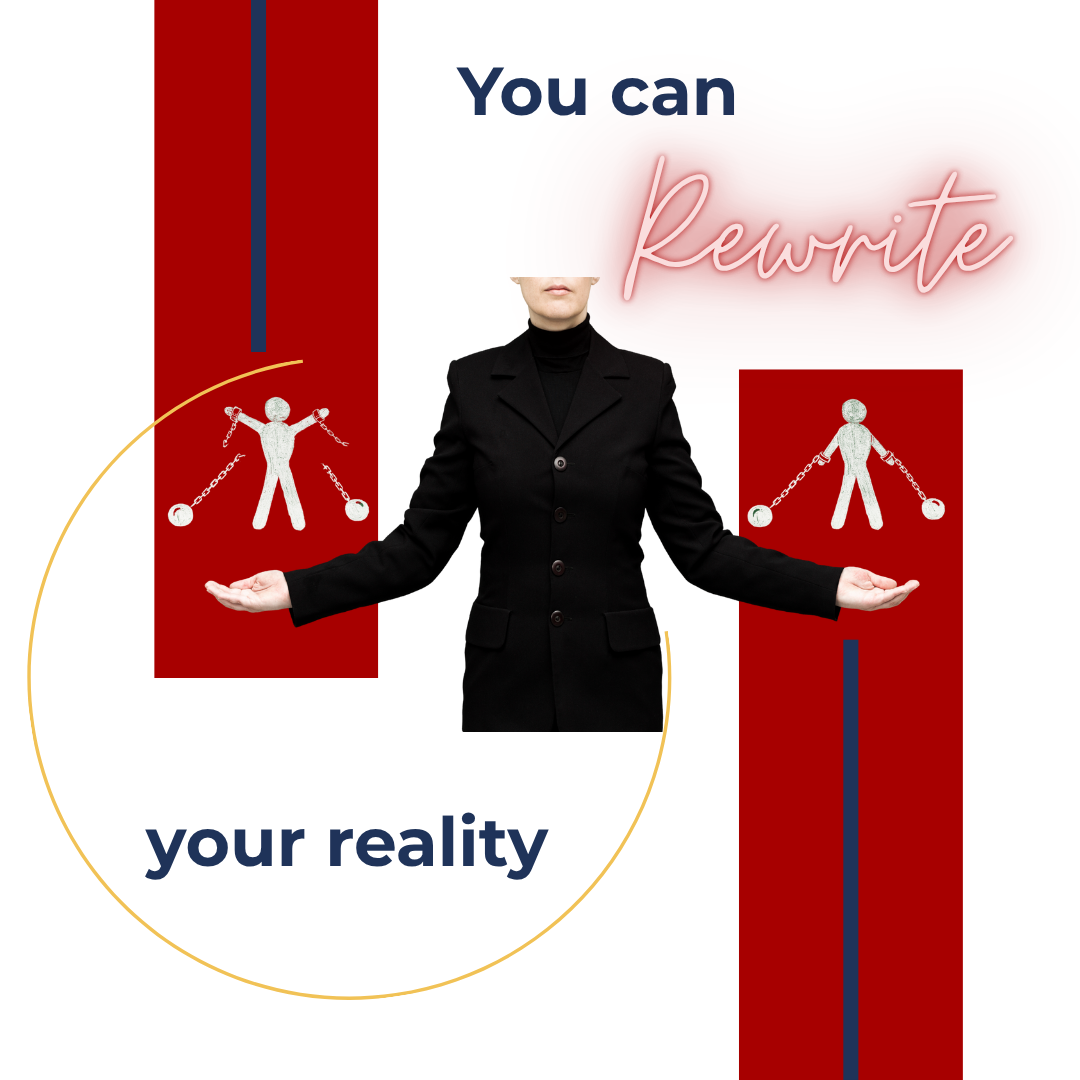
    You can rewrite your reality.

    If you’re ready to step out of the old script and into something better, I’d love to help you find your “Now What?”

  • Grace Under Fire (When the Pressure’s On)

    Grace Under Fire (When the Pressure’s On)

    Lately, I’ve been having a familiar conversation with clients over and over again.

    They’re stepping into new roles, new markets, and new strategies, and they’re feeling the heat.

    They’re hopping on sales calls for the first time, making high-stakes presentations, testing new offers, and launching new things – all in this wildly unpredictable world.

    The pressure is real.

    The truth is, we’re not operating in the same reality we were a year ago. The job market has shifted. Business as usual is gone. With AI disruption, chaotic leadership, and a volatile economy, the ground keeps moving under our feet.

    We have to approach our work – and ourselves – differently to meet the moment, and do it with grace under fire.

    Trying something new always comes with risk. The offer could flop, the meeting could go sideways, and the prospect, on the verge of signing that big contract you poured everything into, could ghost you.

    But avoiding that risk by playing it safe keeps you stuck. Cozy, sure. But stuck.

    While we know the biggest wins come from stepping up and making bold moves, fear can still hijack the system. It’s human. The moment something gets hot, we pull back,  panic, overthink, and we shut down.

    Here’s what I tell my clients:

    When the pressure’s on, pause.
    Breathe. Calm your nervous system. Get out of fight-or-flight mode so you can think clearly.

    Then, assess your reality.
    What’s real, and what’s just fear talking? Are you reacting to facts, or to a story you’re telling yourself?

    Next, check your intentions.
    Are you staying on mission, or veering off course because you’re uncomfortable? Stick with your purpose. That’s where the power is.

    Finally, act with focus.
    Not perfection. Focus. What’s the next right move, not the flawless one? Do that.

    Grace under fire doesn’t mean you’re emotionless. It means you’re purposeful. It means you lead with intention, even when the heat is on.

    And yes – people are watching. In high-pressure moments, your response matters. It defines outcomes, shapes reputations, and opens (or closes) doors.

    Here’s my challenge to you: The next time the pressure builds, pause. Breathe. Choose what’s next with clarity.