Category: Now What? Q & A

  • Are You Counting Yourself Out Before You Try?

    Are You Counting Yourself Out Before You Try?

    As a coach, I could talk all day about the many ways I’ve seen people hold themselves back, but today I’m diving into one of the most common.

    I have to come right out and say it: Far too many of you are putting yourself through the wringer for no good reason!

    You’re placing obstacles in your own way, adding steps that don’t need to be there, and slowing down your progress unnecessarily.

    I’ve figured out one reason why.

    If you’ve ever gone to college or pursued some sort of formal qualification (or you’re simply familiar with the process), you’ve heard the term prerequisites (or prereqs for short).

    It refers to the classes you take or another requirement you need to meet before you’re eligible to enroll in a program or class to move on to the next level.

    We’ve come to believe this is the way it must be — moving up step by-step-by-step. But it doesn’t have to be that way. Here’s what I mean:

    Are You Counting Yourself Out Before You Try by Laura Berman FortgangI was working with a client who was gunning for an executive career. He’d proven himself an effective leader with a track record of results. But when his dream division VP role opened up, he almost counted himself out. At the time, he was a senior director and figured he needed to go after an assistant VP role first … still, the division leader opportunity was calling his name.

    Instead, we developed a game plan, and I encouraged him to go for it. He landed the job! Skipping the make-believe interim step. Waiving his imaginary prereq.

    The topic came up again this week. I had a client who wanted to coach corporate clients, but she didn’t have a corporate background, so she counted herself out.

    How could she knock on the doors of these big corporations without the portfolio and qualifications to back up what she was selling? She assumed she’d never land a contract.

    Instead, we developed a plan for her to skip the closed doors altogether and go straight for the people who work at these corporations. Corporate leaders are deciding to work with her, individually, some even using their professional development perks to get reimbursed.

    She skipped the make-believe interim step. Waived her imaginary prereq.

    Soon enough, she’ll be able to knock on enterprise doors pointing to the results she got for leaders at megacorps, and she’s building her corporate prospect network in the process.

    Now it’s your turn.

    Look at the roadblocks you put in the way, thinking you need X before you can achieve the Y you want.

    What do YOU really want? Go for it now!

  • Who Are You When Your Shell Cracks?

    Who Are You When Your Shell Cracks?

    Whether you’re a passionate professional or a business owner, what you do for a living is a big part of your identity. It’s part of what defines who you are.

    I’m not saying your career is the most important thing in your life, but I don’t tend to attract people who think a job is something that doesn’t matter. If you’re reading this email, you’re not likely to be someone who clocks in, slogs through the day, and clocks out — just to pay the bills, year after year. (There’s nothing wrong with that; it’s just not how some of us are wired!)

    Your work is meaningful in some way and tied to how you see yourself and your place in the world.

    Therefore, when the place you find yourself changes, the identity change that comes along with it can be challenging.

    Maybe you’re on a career pause to raise your kids, you’ve decided to step out of an executive role into entrepreneurship, you’ve been laid off, or you’re winding down for retirement or semi-retirement.

    Who you are in these moments can be tricky. It can feel uncertain and even a little scary.

    The ground feels shaky as you lose and gain, negotiating shifting realities.

    You might be gaining freedom, time, or the opportunity to pursue new things, while simultaneously losing who you are, who you were, or who you considered yourself to be. Talk about confusion!

    As a career and business coach, I help clients navigate this process all the time.

    Here’s the thing:

    You have to reconcile the loss and create a new identity.

    Who Are You When Your Shell Cracks by Laura Berman FortgangThink of it like an egg.

    The shell is your job, along with the salary, perks, respect, admiration, etc. that make up this aspect of your identity.

    But it’s what’s inside that counts — the golden center! YOU are the yolk.

    Once you break out of the shell, you can take on many new forms. It’s the substance that matters: wisdom, experience, hard knowledge, soft skills.

    Focus on what you bring with you when the shell cracks away. What new identity will you create?

    Let us know if we can help.

  • The Energy of Action

    The Energy of Action

    Happy Father’s Day to all those who are fathering out there in every way. Such an important role!

    In honor of this day, I want to put your attention on action. An action is a thing that is done, not just spoken or thought about. While thinking and planning are crucial, they only form the groundwork for what truly counts—taking action.

    Understanding action involves looking beyond traditional dichotomies of masculine and feminine energies.

    While the feminine is often associated with receiving energy, such as intuition and allowing, the masculine is typically linked with doing and achieving energy, characterized by logic and assertiveness. However, these energies are not confined to any gender. (So, cool your jets if this is triggering).

    Each one of us possesses a unique blend of these energies, which we can harness to break from inertia and assert action into the playing field called life.

    The Energy of Action by Laura Berman FortgangThe First Step: Identifying the Necessary Action

    When we talk about breaking from inertia, what comes to mind? Perhaps it’s the lingering project you’ve postponed, the fitness routine you’ve neglected, or the heartfelt conversation you’ve avoided. What is an action you know it’s time to take?

    The first step towards effective action is clear identification. Reflect on your current state and recognize the areas where action is overdue. This could be in your personal life, career, health, or relationships. Identifying this need for action sets the stage for movement.

    Overcoming Inertia: The Power of the First Move

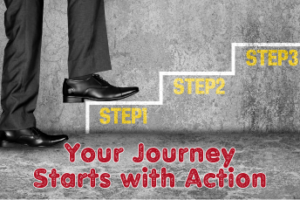
    Inertia is a powerful force. It’s the resistance to change that keeps us in our comfort zones. Remember, the hardest part of any journey is often the first step. Once you make the initial move, momentum takes over.

    Think of a rocket launch—the massive amount of energy required to lift off. Yet, once it breaks through the atmosphere, it can travel with much less effort. Your first step is your lift off. Whether it’s making that phone call, starting that exercise routine, or drafting that business plan, initiate the action.

    Breaking Actions into Manageable Steps

    One effective strategy for taking action is breaking down your goal into smaller, manageable steps. Large goals can feel overwhelming and paralyze you with indecision. By dividing them into bite-sized tasks, each step becomes less daunting.

    For instance, if your goal is to write a book, start with an outline. Then, commit to writing a page a day. These small, consistent actions accumulate into significant progress over time.

    Harnessing the Balance of Energies

    Balancing the intuitive, receptive energy (feminine) with the logical, assertive energy (masculine) is key to effective action. Intuition can guide you towards the right actions to take, while logic and assertiveness help you execute them efficiently.

    For example, trust your gut feelings about which project to prioritize, then apply logical planning to break it down into actionable steps. This harmonious blend of energies ensures that your actions are not only well-directed but also grounded in strategic planning.

    Accountability: The Secret Weapon

    Another powerful tool in the art of taking action is accountability. Sharing your goals with someone you trust can provide the necessary push to keep you on track. This could be a friend, family member, or coach. Regular check-ins create a sense of responsibility and encourage consistent progress.

    Celebrating Small Wins

    Be sure to celebrate your small victories! Each action you take, no matter how minor it seems, is a step towards your larger goal. Acknowledging and celebrating these wins boosts your motivation and reinforces positive behavior.

    In conclusion, taking action is about moving from intention to execution. It’s the bridge between dreaming and achieving. By identifying necessary actions, overcoming inertia, breaking goals into manageable steps, balancing energies, leveraging accountability, and celebrating progress, you can master the art of taking action.

    What is an action you know it’s time to take? Seize this moment, take that first step, and propel yourself into a future shaped by your actions. Your journey towards more of what you want starts NOW.

  • The Cost of Becoming the Boss

    The Cost of Becoming the Boss

    If you’re anything like most ambitious people, you had big dreams of becoming the boss one day.

    You wanted to be the one to call the shots.

    You couldn’t wait for your ideas to take center stage.

    The idea of one day answering only to the big shots (or no one at all!) fired you up.

    But then . . . it happened!

    You became the boss. Now what?

    If you’re anything like most ambitious people, you soon realize those big dreams of becoming the boss left out a few important details.
    Being in charge changes things.

    Getting promoted from colleague to manager . . .

    Starting with a new company at the next level up . . .

    Hiring the first employees or contractors in your business (often someone you know!) . .

    Whoa!

    If you haven’t experienced this yet, fair warning: it can be more challenging than you expect.

    The dynamic shifts and relationships take on a new shape. People you’ve been friendly with suddenly see you in a new light. People you expect to be friendly with have their guard up. Those bonds that you would’ve sworn wouldn’t be affected will evolve.

    You can’t ignore this or put your head in the sand. It’s time to take the lead and embrace your new identity.

    The Cost of Becoming the Boss by Laura Berman Fortgang1. Set some ground rules.
    Make sure your team knows you can remain friends, but they also have to respect the role. Business is business and things must get done.

    This might mean signaling when you’re shifting in and out of colleague or friend mode into boss mode. You can still let your hair down sometimes, but everyone needs to know when it’s time to roll up your sleeves.

    2. Set aside your feelings.
    Feeling awkward about being a step ahead in your career or business? Or maybe guilty about beating a friend out for a promotion? Bitter that your colleagues haven’t been congratulatory? You need to process this personally and keep things professional. Not everyone is going to like you as a boss, and that’s par for the course.

    3. Accept that things have to change.
    You might have to cut out some things you did before. Going out for drinks together after work or meeting up in the break room for quiet gossip sessions will have to become a thing of the past.

    Distancing yourself might be an awkward dance at first and can take some getting used to, but you’ll adjust; it’s worth it!

    Managing colleagues and friends can be a wonderful opportunity for everyone to grow together. But it’s not going to happen without concerted effort. You have to be willing to take the initiative as you take on the new role to do what it takes.

    Being the boss really can be everything you dreamed it would be and more!

  • How Chaos Leads to Opportunity

    How Chaos Leads to Opportunity

    I was reflecting on conversations I had with a couple of my executive coaching clients last week, and I was reminded of something you may find surprising.

    Chaos gets a bad rap.

    Quieting, containing, and calming chaos is important, but you can’t avoid it altogether and expect growth.

    Both of these clients are dealing with a major shakeup in their respective organizations. Navigating change has their teams in a tizzy.

    People are questioning what’s going on, wondering about the safety of their jobs, and worried about what’s to come. Understandably so.

    Some leaders make the mistake of getting caught up in the drama. When the people looking to you for answers are concerned about their lives and livelihood, emotions run high.

    But skilled leaders rise to the occasion.

    How Chaos Leads to Opportunity by Laura Berman FortgangWhether leading an organization or leading your own life, good leadership means looking beyond the present to see brighter possibilities for the future.

    When you view chaos as a temporary, but necessary, measure for sorting things out into something better, it will give you an edge under any circumstances.

    A leader’s job is to focus on the vision for where you’re headed and guide the way. Both of my clients know that their jobs are secure for now, so granted, it does make it easier for them to see the opportunity in the disorder to step up their leadership ability.

    All things considered, a preoccupation with avoiding chaos is short-sighted. It keeps you stuck in one spot. Progress requires change, which comes with varying degrees of disorder.

    The past few years have brought a lot of disruption to business and to the workplace, and we’re all dealing with more and more unknowns. Recognizing and seizing the opportunity to step up in the face of chaos has become essential for success.

    Great things can happen, as long as you keep your cool, and don’t buy into the panic!

  • Try This Spring Cleaning Mind Trick

    Try This Spring Cleaning Mind Trick

    Spring has sprung in my part of the world, and new beauty is blooming all around us.

    The weather is not exactly cooperating with my sunny disposition this week, but, I’m ushering in new beginnings nonetheless.

    It’s that time of year again to clear the clutter!

    You might’ve guessed it, but I’m not just referring to spring cleaning your closets. Instead, it’s time to spring clean your mind – get rid of all the junk that’s no longer serving you.

    When things aren’t going the way we want them to go — like the on-again-off-again dreary weather in the Northeast or the new business you can’t get off the ground — we tend to spend a lot of time thinking about what we don’t want.

    Whatever is causing you stress or anxiety stays top of mind. It’s all about the problems. But here’s the thing —

    Try This Spring Cleaning Mind Trick by Laura Berman FortgangThese problems aren’t going anywhere unless you pull them out, take a good look, and get them sorted, step by step.

    1. Take out a sheet of paper or pull up a spreadsheet on your computer.
    2. First, make two columns: A) “What I Don’t Want” and B) “What I Want”
    3. Then start with what you don’t want. Dump it all out in the first column.
    4. Subsequently, in the second column, rewrite the dumped item into something you DO want.
    Let’s take a look at an example:

    Column A: I can’t stand my long commute.
    Column B: I want no more than a 5-minute commute from my house.

    Column A: I can’t stand my boss.
    Column B: I want to work for someone who respects my ideas.

    Everything you can’t stand points to what you really want.

    Thinking about it this way changes the energy in your body. Instead of focusing on “NO, NO, NO, I don’t want this!” you’re picturing “Ah, yes, let me make room for that thing over there.”

    Sweep out the old, dusty, no-good yuck, and prepare to replace it with renewed motivation to go out and get something better.

    Sweep and shift, and you’ll start moving forward, with less burden, toward the life and career or business you want.