
The Authority Paradox: Why the Most Powerful People in the Room Talk the Least
Think about the most powerful person you’ve ever been in a room with.
A CEO. A senior leader. Maybe a celebrity, or a founder you admire.
Somebody whose presence you could just feel.
Now ask yourself — Were they the loudest person in the room or the quietest?
I’m willing to bet they were the quietest. That’s what I call the Authority Paradox: the person in the room with the most power is almost always the one saying the least.
I want to take everything you’ve been told about commanding a room — whether it’s a boardroom, a sales call, a pitch meeting, or a networking event — and turn it on its head.
What Most People Get Wrong
Most people think executive presence is about talking more.
Speaking up at every meeting. Taking up space. Being the smartest voice in the room and having an opinion every time.
They believe volume creates value.
This is especially true if you’re a founder or entrepreneur. You don’t have a Fortune 500 title backing you up, so you feel like you need to prove you belong. You over-explain. You over-pitch. You fill every silence because silence feels dangerous when you’re trying to sell an idea.
But the most powerful people in any room are doing the opposite.
They’re listening.
They’re observing.
They’re letting other people fill the silence and reveal themselves in the process.
When you talk constantly, you give your power away. You’re broadcasting data, and people can read you, position against you, or talk you down on price.
But when you hold space, when you choose your words with intention, every sentence you say carries weight.
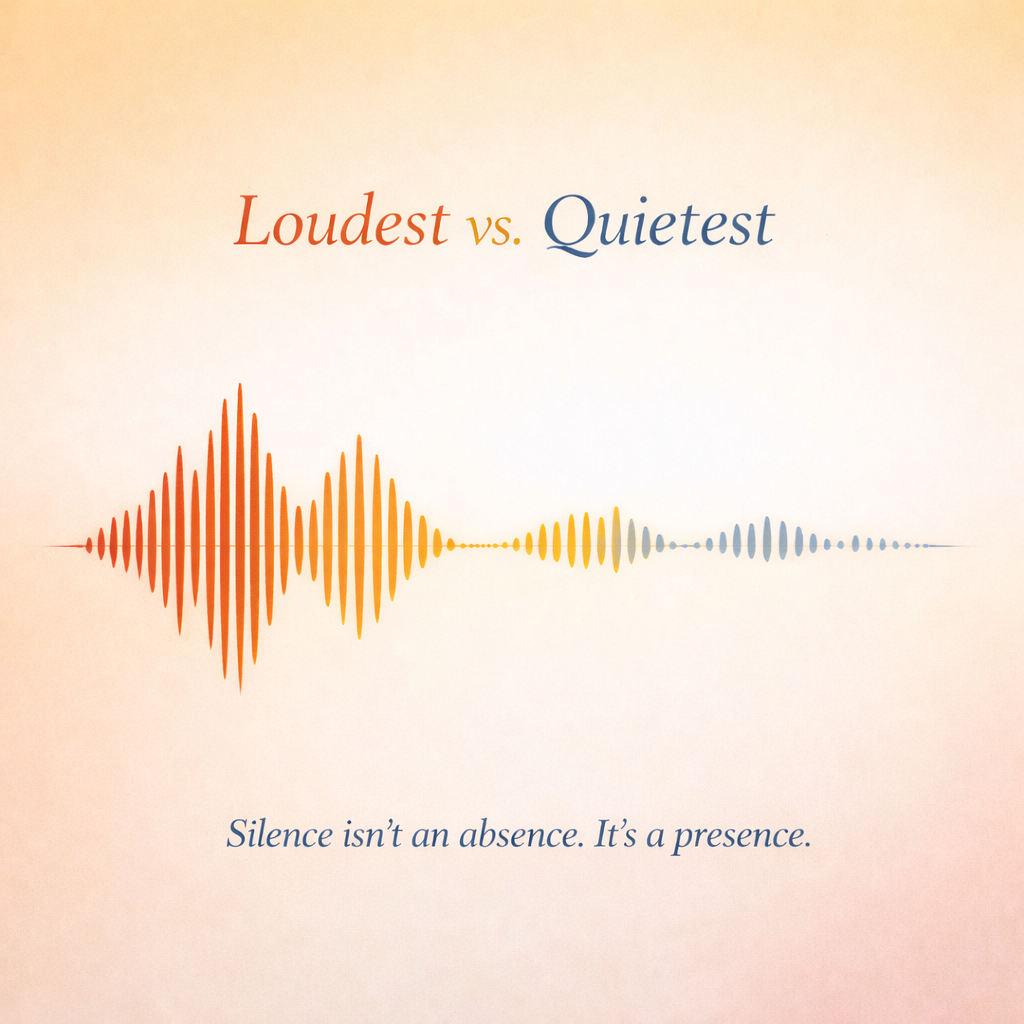 Silence isn’t an absence. It’s a presence. And the people who understand that own every room they walk into.
Three Reasons Quiet Authority Wins
Silence reads as confidence.
When you don’t rush to fill every gap, people assume you’re comfortable, and comfort signals power. The person who needs to talk is the anxious one. The founder who keeps pitching after the client already said yes just talked themselves out of the deal. The person who can sit in the pause is the person in control.
Listening gives you information.
When you’re not filling every bit of space, you have time to observe what people are saying, and what they’re not. By the time you speak, you know exactly what to say and exactly who needs to hear it.
Restraint creates anticipation.
When you don’t weigh in on everything, people lean in when you finally do. Your opinion becomes scarce, and scarcity creates value. The executive who speaks once and reshapes the entire meeting. The founder who says three sentences and gets the deal. That isn’t an accident; that’s strategy.
Three Practices to Start Monday
The three-second rule. Pause for three seconds before you respond. Take a breath. Don’t say anything. Often the other person will fill the silence and tell you exactly what they need, which means whatever you say next will land with far more accuracy.
Ask one great question instead of making three okay points. Powerful people don’t dominate conversations; they direct them. A well-placed question puts you in control without putting you on display. Try: “What would make this an obvious yes?” Watch the room shift.
When you do speak, speak with weight. Drop the hedging. Drop the apology language. Don’t say, “I was kind of wondering if maybe we should consider possibly looking at the budget again.” Just say, “We need to look at the budget again.”
Entrepreneurs, this next one is for you: Stop saying “My fee is twenty-five hundred, but I can be flexible.” Just say, “My fee is twenty-five hundred.” Then zip your mouth.
The Mindset That Makes It Stick
Here’s what I want you to internalize: You don’t need to prove you belong in the room.
The fact that you’re in it is the proof.
The client took the call. The prospect showed up. Your boss invited you.
You’re already in.
The people who feel like they have to constantly demonstrate their value are the ones who quietly suspect they don’t have any. The people who know their value don’t need to perform it; they embody it.
Your silence isn’t a weakness. It’s a presence. It tells the room: I’m secure enough not to need your attention every moment. Paradoxically, that’s exactly when you have it.
Your Challenge This Week
In your next meeting, sales call, pitch, or networking conversation, talk less than you normally would. Not because you have nothing to say, but because you’re practicing restraint as a skill.
Notice what you observe when you’re not busy talking.
Notice how people respond when you finally do speak.
Notice how it feels in your body to hold space instead of fill it.
Because the most powerful people in the world have figured out something most of us miss.
Authority isn’t loud. Authority is calm. Authority is chosen.
And so are you.