
In today’s fast-paced business environment, the ability to deliver compelling presentations can make or break a deal. Whether you’re pitching to potential clients, presenting at a company meeting, or competing in a finalist round for a major contract, your presentation needs to do more than simply convey information. It needs to connect, to engage, and to inspire action (and ideally, it shouldn’t put anyone to sleep, though we’ve all sat through presentations that could double as a cure for insomnia).
Yvonne Lines, a former creative director in telecom who now specializes in sales presentations and proposal finalist pitches, emphasizes one fundamental principle that transforms ordinary presentations into powerful communication tools: being audience-centric. “As long as you’re making everything that you say relevant to your audience, as opposed to talking all about yourself, you’re going to come across with that executive presence that you need,” Lines explains. In other words, nobody wants to hear your company’s origin story dating back to when your founder had an epiphany in a garage.
Start From Scratch Every Time
One of the most counterintuitive, yet critical, pieces of advice is to start every presentation from scratch. Lines uses a kitchen renovation metaphor to illustrate why retrofitting old presentations rarely works. Just as pulling out old cabinets and installing new ones around an existing island creates an awkward, ill-fitting space (and probably some colorful language from your contractor), trying to customize a generic slide deck for a new prospect never quite feels right.
 This doesn’t mean recreating every single element. You’re not reinventing the wheel here, just making sure it actually fits the car you’re driving. Rather, it means beginning with an outline—your blueprint—and determining what key messaging needs to be included and what the main takeaway should be. Only after establishing this foundation should you consider incorporating elements from previous presentations that truly fit the current audience’s needs.
The Human Connection in an AI World
As artificial intelligence becomes increasingly prevalent in business, the human element of presentations has become more important than ever. While AI serves as an excellent tool for researching audiences and gathering information (and Lines admits she loves AI “at least like now, while it’s a great tool before maybe the robots take over or whatever”), it cannot replace authentic human connection, strategic thinking, and genuine storytelling.
AI can help you discover not just demographic information and job positions, but also personal details about your audience members. If you know a prospect enjoys baseball, you might weave in a relevant baseball analogy. However, the creativity and strategic decision to make that connection remains distinctly human. AI might help you find out they love baseball, but it won’t nail the perfect “three strikes and you’re out” metaphor for your competitor’s approach.
The Power of Strategic Storytelling
Stories are what audiences remember long after the presentation ends, unlike that third slide about your company’s mission statement that everyone immediately forgot. Lines identifies three types of stories that can elevate your presentation: explainer stories, case studies, and testimonials.
When crafting case studies, avoid simply presenting a problem and solution. Instead, include three essential elements: the challenge, your solution, and—most critically—the impact for the client. Did your solution increase their utilization by a specific percentage? What measurable difference did it make? These concrete impacts make stories resonate and demonstrate real value. Don’t just say “and then we did this and that’s the end”—that’s like ending a mystery novel with “and then some stuff happened. The end.”
Ensure every story is relevant to your current audience. A case study should reflect challenges similar to what your prospect faces. If you’re using a baseball analogy but your client doesn’t follow sports? Well, as Lines points out, maybe you expand it to all sports or risk striking out entirely.
Design Considerations for the Digital Age
With audiences increasingly viewing presentations on small screens or even smartphones (yes, someone is definitely watching your carefully crafted pitch on their phone while waiting for coffee), visual design has become crucial. Avoid cluttering slides with excessive text. If people wanted to read an essay, they’d visit a library. Font sizes must be large enough to read on any device, and images should support, rather than distract, from your message.
The old-school approach of building relationships through coffee meetings and schmoozing has given way to more efficient, direct communication. Modern presentations must balance being concise with building meaningful business relationships—delivering value quickly while still creating authentic human connections.
The Bottom Line
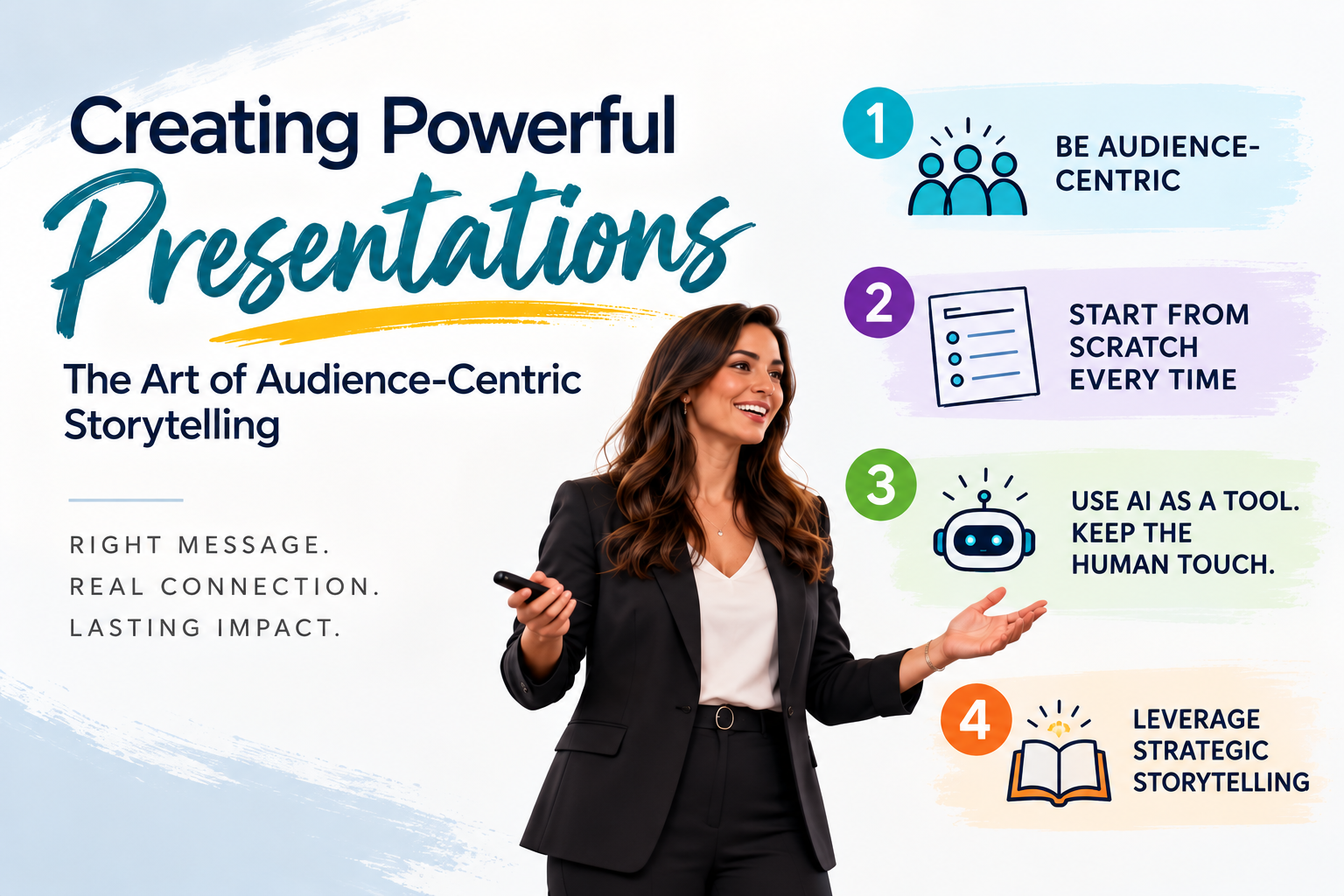
Creating powerful presentations requires starting with a clear understanding of your audience, crafting a customized message from the ground up, incorporating relevant stories that demonstrate impact, and maintaining the human elements that AI cannot replicate. By following these principles, you’ll deliver presentations that not only inform, but inspire, action and build lasting business relationships. And who knows? You might even keep everyone awake.