
The holiday season arrives with twinkling lights and promises of joy; yet for many, it brings an unwelcome companion: Regret. As we gather with family or scroll through social media images of picture-perfect celebrations, old wounds can resurface. We remember the relationships we damaged, the opportunities we missed, the words we wish we could take back. The contrast between cultural expectations of happiness and our internal reality can make regret feel especially heavy this time of year.
 But regret, while painful, isn’t inherently destructive. It’s actually a sign of growth – evidence that your values have evolved and you now see situations with greater wisdom. The question isn’t whether you’ll experience regret, but how you’ll respond to it.
Acknowledge Without Dwelling
The first step in processing regret is simple acknowledgment. Name what you’re feeling: “I regret how I handled that conversation with my sister” or “I wish I’d taken that job opportunity.” This clarity prevents vague, overwhelming guilt from consuming your thoughts. However, acknowledgment doesn’t mean rumination. Set a mental timer – give yourself ten minutes to fully feel the regret, then consciously redirect your attention.
Dwelling keeps you stuck; acknowledging allows you to move forward.
Distinguish Between Regret and Shame
Regret says, “I made a mistake.” Shame says, “I am a mistake.” This distinction matters profoundly. Regret focuses on behavior you can change; shame attacks your core identity. When regret spirals into shame, challenge it. Ask yourself: Would I speak to a friend this way? What would I tell someone else in this situation? Usually, we extend far more compassion to others than ourselves.
Practice self-compassion not as self-indulgence, but as a practical tool for healing.
Extract the Lesson
Every regret contains information. What does this particular regret teach you about your values? If you regret missing important moments with loved ones, perhaps presence matters more to you than career advancement. If you regret staying silent during a crucial conversation, maybe authenticity has become non-negotiable. Write down the lesson in one clear sentence.
This transforms regret from a source of pain into a guide for future decisions.
Make Amends Where Possible
Sometimes regret can be addressed directly. If your regret involves another person and repair is possible, reach out. A sincere apology – one that takes responsibility without making excuses – can be profoundly healing for everyone involved. But remember, the goal isn’t to erase what happened or guarantee forgiveness. It’s to align your current actions with your values.
Some things can’t be fixed, and that’s okay too.
Practice Radical Acceptance
For regrets that can’t be changed or amended, acceptance becomes essential. This doesn’t mean approval or resignation; it means acknowledging reality as it is. You cannot undo the past, but you can stop fighting with it. Try saying aloud: “I did that. I wish I hadn’t. I can’t change it. I can learn from it.” Repeat as needed.
Acceptance frees up the enormous energy we waste on wishing things were different.
Redirect That Energy Forward
The final and most powerful step is asking, “What now?” Regret often signals a need for different choices moving forward. Channel the emotional energy of regret into concrete action. Commit to weekly calls with the parent you’ve been avoiding. Sign up for the class you’ve been postponing. Have the difficult conversation you’ve been dreading.
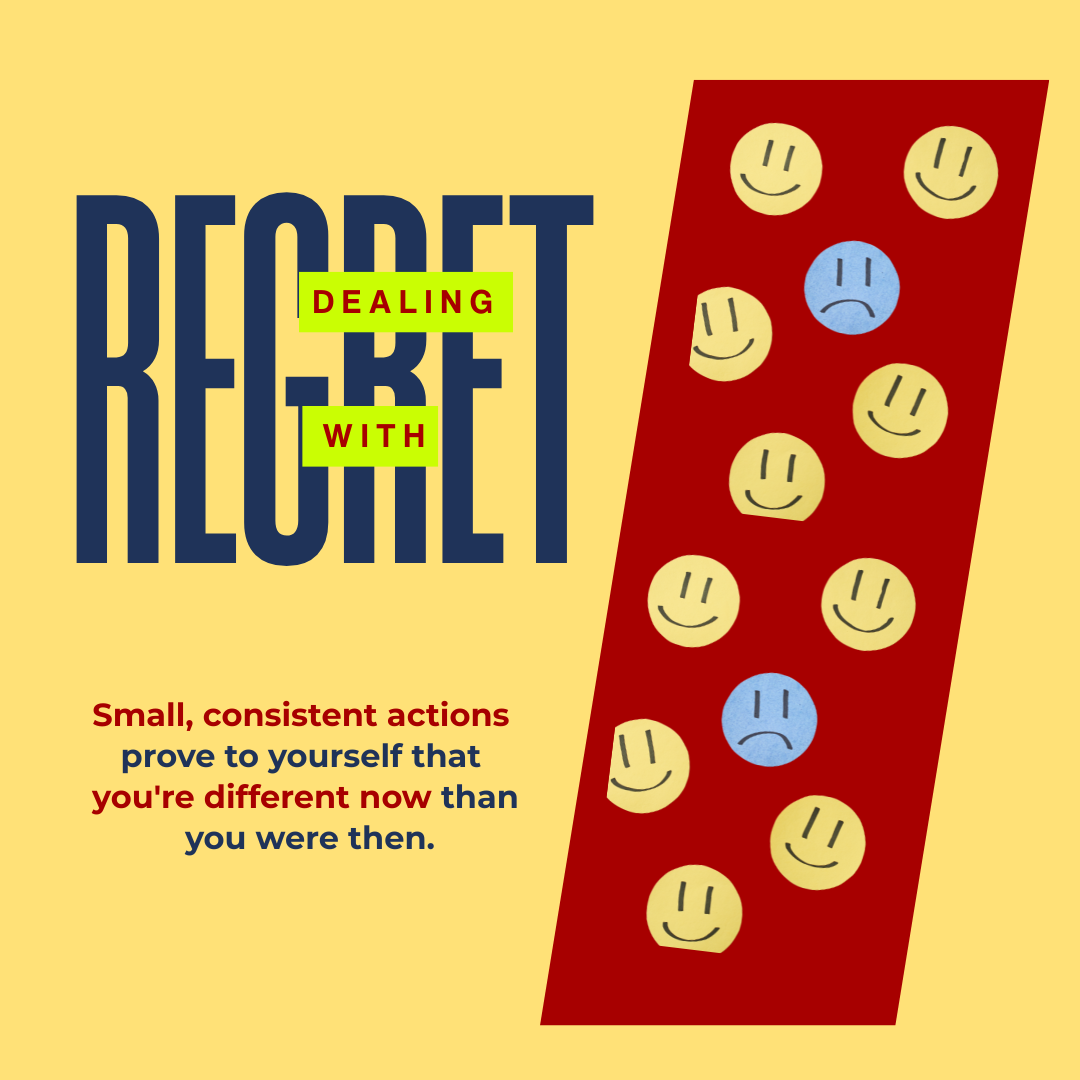
Small, consistent actions prove to yourself that you’re different now than you were then.
This holiday season, if regret shows up at your table, don’t turn it away.
Sit with it briefly, learn from it genuinely, then let it go with grace.
You’re allowed to move forward, even from your biggest mistakes.
That’s not just permission; it’s the path forward.