“When we are no longer able to change a situation, we are challenged to change ourselves.” Victor Frankl
Blog
-
How Good Are You At Asking For Help?
By Ginny Kravitz, Deputy Editor
72 Thank-You Notes
After months of networking and doing all the right things that a professional does when laid off from a 30-year career, Genevieve hit a low
 point. During two painfully quiet weeks waiting for the phone to ring, all she felt was discouraged. Then it happened. In a matter of a few days, six invitations for interviews streamed in along with a solid job offer. Marveling at how things could change so quickly, Genevieve was grateful to see the seeds she had planted finally sprouting.
The very first thing she did after accepting an offer was make a list of people to thank. That list had 72 names on it — that’s 72 people who helped her in some way during her job search. As she set to work writing thank-you notes, Genevieve told me she had “writer’s cramp for a great reason”.
Picturing Genevieve writing all those notes got me thinking about my own list of 11 people who —just within these past two weeks— have helped me in some way with a current project I’m working on. Considering that this list would be longer if the snapshot was of a month vs. two weeks, I’d say I’m not shy about asking for help!
Opening Up To Accepting Help
Rebecca, who completed the Now What?® program earlier this year, recently called to tell me how happy she is with the direction she is
 pursuing and that after going through a period of uncertainty, she has recently made great progress. I asked her what had made the difference in creating this new momentum and without hesitation she answered: “Opening up to accepting help. Accepting that we can’t do it all. You work it out by letting go. Piece by piece, you learn to let go of many things. Opportunities show up. Things fall into place once you start moving.”
My niece Mary Grace, now a sophomore at Villanova University, wrote about this issue in one of her college application essays. Acknowledging that she previously viewed needing help to be an admission of inferiority, Mary Grace states, “Now I consider the art of asking for help not as a sign of weakness, but of self-assurance, maturity, and courage. So at the risk of appearing imperfect, I ask for help anyway.”
Who Can Help You With That?
Rebecca cites opening up to accepting help as the breakthrough from uncertainty to momentum. Mary Grace now considers asking for help an “art”. How good are you at asking for help? If your answer is “not so good,” make it a point to get better.
This Week’s Call to Action:
Within the last 30 days, who has given you some kind of help? Whether it was in large or small ways, appreciate the value of what was offered and apply it well.
Name three people who can help you with a current problem or endeavor. Reach out to them now.
“…I eventually realized that learning comes at least as much
through exposure to and interaction with others’ gifts and knowledge
as it does through individual effort.”
— Mary Grace Mangano -
Today’s Quote: Begin Where You Are
“Everyone who got where he is has had to begin where he was.” Robert Louis Stevenson
-
Have You Found The Entry Point?
by Ginny Kravitz, Deputy Editor
Clarity Takes You There
“If this isn’t it, I trust it will lead there.” I smile when I hear someone I’m coaching say those words. Brenda is at the point of trusting
 the clarity she has received enough to move forward. This is especially significant as she’s been at the same crossroads six times before over the course of her life. Each time Brenda chose what felt like the more predictable path instead of what captured her interest the most. This time she is choosing differently.
At some point in your life and probably more than once — when you’re younger, older, or somewhere between — you’re bound to go through the process of trying to figure it out: the answer to what will make you happy and fulfilled in your work as well as take care of you financially. What typically follows soon after the discovery of what you would like to do is a stream of doubts and worries about how realistic it is and what the chances are of success. You’ll wonder: Is this really it?
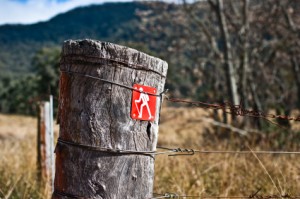
Just how much of the trail must be in view in order for you to know it’s the right direction? What Brenda realizes is that all she needs to solve for right now is the entry point: the trailhead to take that will open up her future.
What’s Enough To Go On?
The reason it made me so happy to hear Brenda’s words is that learning to trust the entry point is a critical life skill that is more important than seeking any one right answer.
Trusting the entry point often involves a leap of some kind. This is different from making impulsive choices that lack staying power. There is a due diligence to perform, a process where you can align your decisions with:
- What’s important to you (needs & values);
- Your disposition and talents (personality, skills & experiences);
- Who you are (interests, passion & purpose);
- Other criteria (situational requirements & your preferences).
While not every idea is meant to be turned into a career or life path, if the idea passes through your due-diligence process and feels right to you, it may be time for you to recognize it as your entry point and step onto the path.
What’s next is what you need to know. What’s “next after next” you don’t need to nail down. The details will work themselves out. When you go for a mountain hike, you look at a map and there are various trailheads from which to choose. You pick the one that you think will give you the best hike. Once you’re out on the trail, you can alter the route if needed.
Trusting Your Entry Point
As you consider what’s next for you, ask yourself: Do I have clarity and have I found my entry point? If not, seek input from others as you conduct your due-diligence process. Am I acting on my clarity and moving forward? If not, identify people who will encourage you and support you to take that bold step.
Trusting the entry point is acting on the clarity you have right now and letting the rest unfold.
“We must walk consciously only part way toward our goal
and then leap in the dark to our success.”
— Henry David Thoreau -
Today’s Quote: Next Step
“Change starts when someone sees the next step.” William Drayton