
The Sunday Scaries Are a Data Point: What Your Dread Is Trying to Tell You
It’s Friday while I am writing this, but I want you to think about today – Sunday.
Toward the end of the day, the light is changing, the weekend is fading, and something shifts in your chest.
You know the feeling – The Sunday Scaries.
That low-grade dread that just keeps rolling in before the work week starts up again.
Everybody jokes about it. There are memes about it.
But almost nobody stops to actually listen to it. And that’s the problem.
Today I want to make the case that your Sunday Scaries aren’t a personal failing you’re supposed to push through and discipline yourself out of. They’re a data point. They have information for you; they’re trying to tell you something important.
The Reframe
Most people treat the Sunday Scaries like the weather. Something that just happens to them, and is something to endure, medicate with wine or Netflix, and shake off with enough coffee Monday morning.
But the Sunday Scaries aren’t weather; they’re a signal. Your nervous system is trying to tell you something about the week you’re walking into, and most of us are so busy numbing it that we never actually decode the message.
If you’re corporately employed, this might look like dreading a specific meeting, a scary conversation with a boss, or a presentation coming up. It might be something bigger – you’re dreading the fact that you’re doing work that no longer fits who you are. That’s a much bigger problem.
If you’re an entrepreneur, the Sunday Scaries are really interesting because you don’t have a boss to blame. This is the business you created. Which is either really useful information — or really uncomfortable information. Usually both.
Either way, the dread is data.
Your job is to assess it and figure out what it’s trying to tell you.
Two Kinds of Dread
When the Sunday Scaries show up, there are really two kinds of dread, and it’s crucial to know the difference.
The first is healthy dread. This is situational. You have a big presentation Monday. A hard conversation you’ve been avoiding. A client you need to fire. A launch you’re behind on. Healthy dread is your brain saying, Hey — pay attention to this specific thing. Once you handle the thing, the dread goes away.
The second is signal dread. This is the one people don’t want to look at. Signal dread is constant. It doesn’t come and go once a month because you have something on the calendar. It’s there all the time. It might have been going on for six months. It doesn’t attach to one deadline or one project; it’s more like the overall Sunday Scaries that take you over like the blob.
Signal dread isn’t telling you to prepare better. It’s telling you something is misaligned. The reason you don’t want to deal with it — the reason you’d rather have more wine or watch Netflix — is because dealing with it actually means changing something. Change is what people hate most.
Three Practices to Read the Signal
Get specific. When you feel the Sunday Scaries roll in, grab a piece of paper and ask: What specifically am I dreading? Specificity is diagnostic. Vague dread stays vague. Named dread becomes actionable — either you handle the thing, or you realize you can’t name one specific thing, which itself is important information.
Check the pattern. If the dread comes and goes once in a while, that’s just healthy dread. But if it’s constant — if it’s been six months of dread — that’s a signal you have to listen to. Something needs to be fixed.
Ask the misalignment question. You’ve got to get really real here. Grab that piece of paper again. Ask yourself: If nothing had to change externally — no logistics, no financial risk, no other people to consider — what about my current life would I choose again on purpose? Whatever you wouldn’t choose again is exactly where the signal dread is coming from.
One of my viewers, Mignon, wrote in during my live Friday Focus and said: “I’m a firm believer that you can tell if you’re in the right job by how you feel on Sunday nights.” Absolutely! If the dread is constant, it’s a message. It’s not about logistics, financial risk, or about what other people would think. It’s a current life choice, and you need to look and see if it’s time to choose again.
The Mindset That Makes It Stick
Here’s what I want you to internalize:
Dread is not the problem. Dread is the messenger.
Listen to the messenger. Don’t shoot it!
The most self-aware people I know don’t have fewer Sunday Scaries than you do. They’ve just stopped treating them as an inconvenience and started treating them as intelligence. It’s intel and information you need to act on, so don’t numb it away.
Your Homework This Weekend
See how you feel on Sunday. I mean really tune in. Grab a piece of paper and ask yourself:
What specifically am I dreading, and what might it be trying to tell me?
Just five minutes. Only honesty.
Because the people building the boldest, most aligned, most sustainable lives and businesses have all figured out to stop ignoring the signals and start reading them. They absorbed the data, and they made the changes those signals were asking for long before the dread had to get any louder.
Change is hard, but you can do it.


 How to Build Visibility as an Entrepreneur
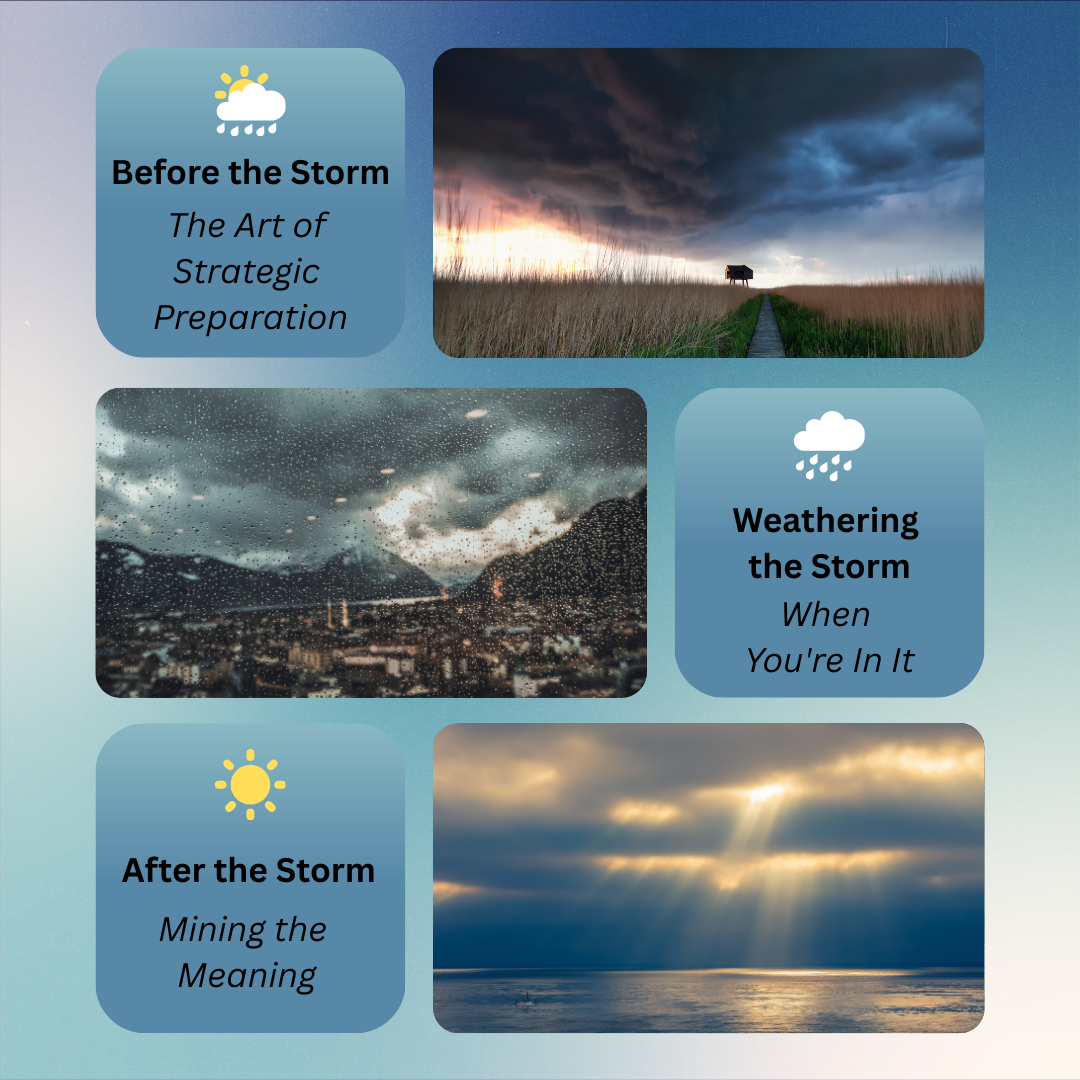 The most important skill for weathering a storm isn’t strength; it’s presence.
 How to Shift Your Beingness