
Author: Laura Berman Fortgang

  • Break Out of the Norms You Set for Yourself

    Break Out of the Norms You Set for Yourself

    Break Out of the Norms You Set for Yourself
    I had to take a forced break from my usual live broadcast and my newsletter topic plan this past week due to my mother being in the hospital.

    Between both my parents, other family members, and one of my children’s childhood spent in hospitals, I’ve been here all too many times.

    HERE is disrupted, in hyper-vigilance, learning on the fly. It’s making important decisions while watching the American healthcare system flail and often fail to meet the needs of those that require care.

    HERE is sitting with loads of time on my hands while I’m bedside to advocate for my loved one’s care, but not having enough brain power to do anything productive or move business forward.

    HERE is going through every full-time job in your mind of what will be required to get your loved one to the next stage of care (or resuming their life) without being able to do anything to prepare because you have no idea when you have to activate a plan or what level of functioning you have to prepare for.

    You can’t know until you know, which makes everything a last minute rush to an invisible finish line.

    Good healthcare workers are heroes. Truly. I’m so grateful for those that truly care and fight alongside me for the care my loved ones need.

    What I want to impart here is a call to action to wake up to your own life and shake yourself out of inertia. As I watch my mother struggle with a watershed moment where she is only likely to get worse and not better, I put forth this message to not let your life pass you by.

    I’m not sharing about this personal challenge for your attention or sympathy. I don’t need it nor want it. I’m sharing to encourage you to shake off whatever is holding you back and take a bold action to move your life forward.

    As hard as it seems, as impossible it appears to reach your desired outcome, as hopeless as your past results may make you feel, do something to break out of the norms you have set for yourself.

    Yes, you have set them for yourself. You’ve accepted certain behaviors from yourself or others, you’ve let circumstances curb your possibilities, you may have even given up.

    An All Too Familiar Place by Laura Berman FortgangSTOP THAT NOW.

    Imagine sitting bedside (maybe some of you have) watching a loved one deteriorate to a shadow of their former selves. Imagine the things they never did and wanted to do.

    The things they didn’t know how to say and never will. The wonderful things they did that they could never repeat again. What would that stir you to do?

    Maybe it’s time to look at your bucket list. Maybe it’s just your to-do list that need a glance where you might find all the items are absurd in the bigger scheme of things.

    Maybe it’s a look at your goals to find out if they’re really yours or better represent things you think you SHOULD do vs. really want to do. Maybe it’s just doing NOTHING and enjoying your life for a while that is the call. I don’t know, but you likely do.

    I have nothing cataclysmic to share about what another round of being bedside is doing for me. Right now, it’s just draining and anxiety producing to not know what I’m preparing for.


    So please, take heed. Break out of your fog. Take the driver’s seat of your life.
  • How to Bounce Back After Disappointment

    How to Bounce Back After Disappointment

    At some point, we all face disappointment.

    Whether you get passed over for a promotion, lose a big client, your new program launch flops, or your business partner bails on you — things don’t always go as we hoped…and frankly, it sucks

    But although feeling let down is perfectly normal, dwelling in disappointment won’t do you any good

    It’s okay to be a little bummed, but you also need to be able to bounce back

    And the key to bouncing back is a little trick called letting go.

    The Buddhists believe that any pain we have is because we’re attached — to an outcome, to a person, to an expectation, etc. So their tradition, it’s all about practicing non-attachment.

    Letting go is easier said than done, but it’s a powerful practice.

    Think about it this way — nothing is permanent anyway. When the trees bloom in the springtime, the beauty is fleeting and followed by blossoms shriveling and falling away.

    The idea is to feel emotions and experiences, be with your feelings, and let it go.

    How does this apply to disappointment?

    When you face disappointment, the level of pain you experience depends on how attached you were to the outcome.

    But you might be thinking to yourself, “Wait, Laura, how am I supposed to achieve my goals if I don’t care about results?”

    I get it; this advice seems counterintuitive for people who are ambitious, looking to make a career change, or eager to grow a business.

    But here’s the thing —

    When you’re working on something, of course you want it to come to be. However, the success journey is a fine dance of duality and rationality.

    If you face disappointment, you’re going to mourn. Allow the feeling, sit with it, and set some parameters. How long are you going to give it?

    That dream job or dream client slipped through your fingers? Give yourself three days to wallow mire, get back up, brush yourself off, and keep going.

    How to bounce back after disappointment by Laura Berman FortgangHere are a few tips that work for me.
    1. Say to the universe or whatever higher power you believe in: This or something better! If one thing doesn’t work out, let it be what clears the path for something meant for you.
    2. Become a student and ask, “What did I learn from this?” Remember, whatever you picked up in this process is valuable, and regret is useless.
    3. Focus on what you do have. Whether than giving all the power to the thing you lost, put your attention on what’s already yours or what you’ve gained or can gain because of the loss.
    4. Stay in action. Movement is your friend and stagnant is an enemy that’s sure to set you back.

    No matter how gut-wrenching it might feel at the time, you’ll get through it and on to bigger and better things. Soon enough, the disappointment will be behind you, and it’ll all work out in the end.

  • How To NOT Quit on Yourself

    How To NOT Quit on Yourself

    When you’re working towards a goal, quitting often seems like the easy way out.

    Everyone wants to throw in the towel sometimes — when the going gets tough, when you hit a hiccup, or when you’re just not feeling up to it.

    Getting up every day, chugging along, and doing what it takes — no matter what — isn’t always easy.

    And sometimes quitting just makes good sense.

    But if you really want something, quitting — on your career, your business, or yourself — isn’t the way to go.

    If you give up now, chances are you’ll kick yourself later. I’ve seen it lead to a lot of regret.

    I’ve even seen quitting become a habit. People do it again and again and never get to where they want to go.

    Far too many disappointments and broken dreams could’ve been avoided, if only they’d learned how to NOT quit, which may sound easier said than done, but it’s actually quite simple.

    There’s only ONE way.

    How To NOT Quit on YourselfTHE key to getting through tough times is to focus on the bigger picture.


    Laser in on something bigger than you.
    What’s the goal?, your mission? and the greater cause behind what you want?

    Here’s what I mean —

    I’m working with a team right now that’s under a lot of pressure. Their industry is taking a hit, they’ve been through rounds of layoffs, and morale is at an all-time low. But this team is playing a crucial role in the organization, so they need to stay on their game and focused on the mission, which is producing work for an important cause. It’s their collective passion for that cause that’s keeping them going while the going is tough.

    So, what’s your personal cause? It may be something different in every scenario.

    If you feel like quitting, look for something bigger.

    Think about it. One of the best ways to get yourself out of a funk is to do something for somebody else.

    If you’ve been around for a while, you may know that I went through a period of severe depression in my 20s. The best thing I did for myself was to begin helping people who were less fortunate, delivering food to individuals who were shut in with illness or old age. It changed the trajectory of my life!

    It’s not all about keeping your nose to the grindstone. Look for the greater meaning in the work itself. If you don’t find it there, seek meaning all around you.

    Hitting your business goals may allow you to give more financially to causes that matter. Changing careers may allow more flexibility in your schedule to volunteer at your kids’ school.

    It doesn’t have to be altruistic. Making that next sale or bonus could fund a girl’s trip to Napa Valley you’ve been craving, or a dreamy backyard makeover, or bump up retirement by a year.

    THE key to getting through tough times is to focus on the bigger game.

  • 4 Ways to Strengthen Your Personal Foundation

    4 Ways to Strengthen Your Personal Foundation

    After last week’s post, my inbox was flooded with questions. Which is always a nice surprise, honestly. It seems I struck a chord.

    Many of you wanted to know more about what it takes to stand strong when something comes along and tries to knock you off your game.

    I’m glad you’re curious!

    All too often, smart, capable, driven people are letting disappointments and setbacks muck up their day, throw them for a loop, and ruin their plans.

    If this is you, I know you’re sick of the disruption.

    The client you hoped to land ghosts you.
    The recruiter for that dream job sends a rejection letter.
    The folks who bought your coaching program’s credit cards are declining.
    Your new VP left you off a “big deal” meeting invite.

    And you’re SO sick of letting it all shake you up. But you don’t know what to do about it.

    4 Ways to Strengthen Your Personal FoundationYou know your personal foundation needs some work, but you don’t know how to go about building a solid one.

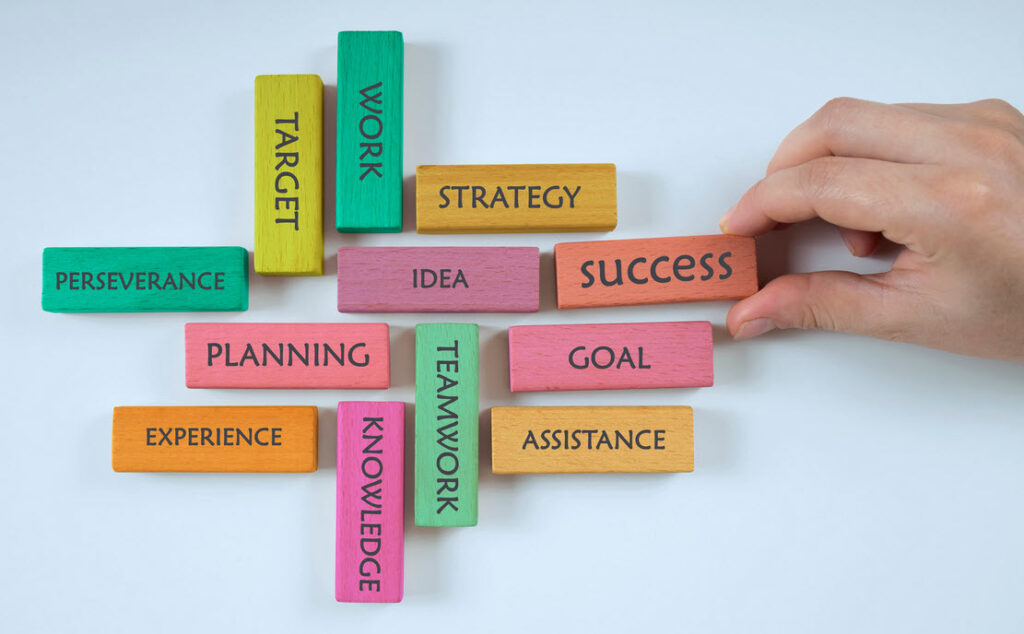
    I get it; you either have it or you don’t. The good news is, once it’s built, it will stand the test of time. Even when it crumbles a little, you’ll know how to piece it back together and pack it down tight.

    Here’s what it’ll take.

    1. Stop taking things personally. That might sound easier said than done, but it can be done. Because — A.) Whatever it is, it’s not about you. And B.) You’re not damaged or broken. You’re learning.
    2. Spend time with yourself. Ideally, learn how to meditate. At the very least, take three to five minutes every day to clear your mind, pause the ruminating, and think about nothing. Don’t make it hard. Start with searching for a guided meditation on YouTube. Tuning into yourself is a great reminder that your foundation is stronger than you might think; you’ve already overcome so much.
    3. Know your triggers. We all have them! We’ve had childhood trauma or negative experiences as an adult, and reminders can pull us into an emotional loop. By identifying those triggers, possibly by working with a therapist, you’ll be able to catch them sooner and avoid the spiral.
    4. Become friends with fear. Why? Because it’s never going away, so you may as well embrace it. You can let it take you over like The Blob in the 1950s horror film or brush it aside like a mosquito bite. Fear is simply trying to protect you from something; learn to listen to its underlying message and use it for good.

    There you have it. Incorporate these four tips into your life and your personal foundation will be stronger than ever. It’ll take work, but it’s so worth it!
  • Is Your FOUNDATION Concrete or Sand?

    Is Your FOUNDATION Concrete or Sand?

    In my work, I talk to people every day with big goals, a wealth of knowledge, and exciting ideas about what to do next in their life, business, or career.

    But accompanying their eagerness, I often detect at least a hint of apprehension
    “Will this next phase go as well as I hope?”
    “Am I up for the challenge?”
    “What if something goes wrong?”

    As they make progress along the road to change, this uneasiness often grows. They’re trying to build something different and better, but it’s not going as planned.

    While it’s true that things never quite go as planned, some folks really seem to falter easily.

    As soon as the wind blows in the wrong direction, everything starts to fall apart.

    “I didn’t get the job! I knew I wasn’t director material.”
    *applies for a lower-level role making $30k less*

    “My boss ignored my idea. Guess it wasn’t so great after all.”
    *keeps even better idea to self*

    “That sales call was a disaster! I’m going to end up on the streets.”
    *spends afternoon in bed reading about scammy promises of passive income*

    “I worked so hard on my email newsletter; hardly anyone read it. What a waste of time!”
    *waits six months to send another email, this time asking people to buy something*

    One moment they’re a go-getter, full of hope and fired up about possibilities. The next, they’re ready to give up or whining about how nothing ever works out for them.

    Their mental well-being and outlook on life are completely circumstantial.

    Why? Because they don’t have a strong personal foundation.

    They’re trying to build on shaky ground. No wonder they’re liable to topple over at any moment!

    So here’s the thing —

    Pushing ahead with building plans, desperately trying to stack the pieces of your dreams — isn’t going to work.

    Is Your FOUNDATION Concrete or Sand?A solid personal foundation is the cornerstone of success.


    When you have a solid foundation in place, you’re less shaken by the bad things that happen. You may have a setback or a rough day, and you may trip or stumble. But when you know your core foundation is concrete, you’re able to brush yourself off, get back up, and keep going.

    No matter the endeavor, building your foundation is THE step that can’t be skipped.

    But when you strike out on your own in the pursuit of building a business, I’ve found that it’s even more critical.

    You need a strong personal foundation AND a strong business foundation. Otherwise, the precariousness of the structure or situation can do you in.

    One sales call went awry?
    ​You need the fortitude to make another and another.

    Nobody read your email newsletter?
    ​Figure out what they want to read and send another and another.

    Your cat threw up on your desk right before your client call?
    ​Wipe it up and keep it moving.

    Found out you need surgery while planning a launch?
    ​Adjust the plan to prioritize your health while keeping your business alive and well.

    When I’m working with my business owner clients, I always look for evidence that they are building their business on shaky ground — and warn them! Because the fallout comes with nasty consequences.

    It typically looks something like this:
    1. Your income is sporadic; you never know what you’re going to make from month to month.
    2. New leads are sparse, so you have no idea where your next client is coming from.
    3. Your mood determines your business-building activities.
    4. Your clients don’t refer to you. They like you ok, but they’re not sending new business your way.
    5. You’re hiding, avoiding business conversations and networking opportunities.

    And it’s all because they don’t have a blueprint for putting the proper infrastructure in place. The foundation is shaky.

    They’re missing stuff like…
    ​Having systems, repeatable processes, and automation in place.
    Packages and programs with compelling offers and clear pricing.
    Plans and scripts for overcoming client objections.

    In other words, they’re flying by the seat of their pants, operating on a whim — stacking assorted building blocks on nothing but sand.

    You simply can’t build a sustainable career or business without a solid foundation.

  • The Neuroscience of Selling

    The Neuroscience of Selling

    I often hear people say they hate selling. It usually sounds something like this —

    “I’d start my own business, but I hate sales. I’m not any good at it…”
    “I’m great at what I do, but I’m bad at selling it. I wish I didn’t have to sell; I hate it!”
    “I hate being sold to, so I hate selling. Nobody likes salespeople; I want people to like me.”

    It always makes me cringe a little bit because — I hate to break it to ya — there’s no way around selling. You can’t avoid it. We’re all selling, all the time.

    Whether you’re selling your services…
    You’re a parent selling your kid on going to bed…, negotiating a raise at work…,
    and trying to get your friends to try a new restaurant…

    You’re selling your ideas, and your point of view.

    But the idea of selling is such a charged thing for people to grapple with. And it all comes down to neuroscience.

    The Neuroscience of SellingWhen you’re the one being sold to, your brain goes into fight or flight mode.

    When you’re the one doing the selling, your brain’s fear of rejection shoots adrenaline into overdrive.

    Our reptilian brain is scrambling for safety, and sales can feel like a threat.

    Personally, when I’m in a situation where someone is trying to sell me something, I want to be in control. It’s my way or the highway. If I want to think about it, my guard is automatically up.

    How do you handle the people you want to sell to?

    The first order of business is to calm your nervous system. Then, think about how you can help the other person get out of fight or flight.

    Think about common objections:
    “I don’t have the time…”,” don’t have the money…”,and  need to go ask my spouse…”

    Don’t go on the offensive and try to convince them to ignore their own defenses. Instead, try this —

    Thank them for sharing their concern with you.

    This will immediately help them feel relieved that they don’t have to fight back.

    Next, use what Dr. David Hawkins calls “green words” (as opposed to the “red words” you want to avoid in a selling scenario). These are the words that invite them to keep talking and keep the lines of communication open.

    The idea is to use the neuroscience of selling to ensure everyone gets their needs met.