
Author: Laura Berman Fortgang

  • Are You Prepped for Year-End?

    Are You Prepped for Year-End?

    We’re heading into the end of the year. How are you feeling about it?

    I don’t know about you, but things tend to get edgy around here.

    People start to become anxious about hitting their goals and preparing for the year ahead — all while caught in the whirlwind of holiday shopping, navigating festivities, and hunkering down for the winter.

    It’s a lot. If you allow it, the anticipation of everything that has to get done can get the best of you.

    I always know it’s coming, so I like to get ahead of things and help my clients get prepped for the coming season. With a little readying, it’s possible to avoid the chaos and overwhelm as you wrap up this year and head into the next.

    Here’s how —

    Are You Prepped for Year-End? by Laura Berman Fortgang1. Purge.
    Get rid of anything that’s no longer serving you. Whether it’s physical or mental clutter, it’s time to let it go. From old holiday decorations you’ve been meaning to toss to old business offers you’ve held onto for too long—into the 2023 trash bin it goes! Keeping things neat, clean, tidy, and clear of baggage lightens your load and helps you feel in control.

    2. Reduce what you tolerate.
    Make a list of the things you’ve been putting up with and start crossing off the worst of it. If you’ve been letting people ignore boundaries, it’s time to reestablish them. If you’ve been putting up with clunky systems in your business that waste your time, it’s time to address that. Don’t walk into 2024 permitting the same old agitations to keep irking you.

    3. Stock up.
    Make sure you have the things you need to endure. You may not need to store food and stack firewood to make it through the winter, but your body is gearing down for a slower, hibernating pace despite your mounting to-do list. What can you have on hand to make the coming months easier?

    If you take the time to prep for year-end now, you’ll see that the most important things will begin to emerge for you. You’ll create the space and ease to focus on finishing up what matters.
  • How to Quiet Your Anxiety So it Doesn’t Get the Best of You

    How to Quiet Your Anxiety So it Doesn’t Get the Best of You

    Over the past few years, you may have noticed anxiety is at an all-time high.

    Dealing with our everyday responsibilities amidst the milieu of a global pandemic, political unrest, economic uncertainty, wars, mass shootings, natural disasters — you name it — isn’t exactly calming to the nervous system.

    But hiding under a rock isn’t the answer. So what do you do?

    As a coach, it’s my job to help clients navigate their career and business moves. The catch is, none of those moves happen in a vacuum.

    If nothing else were going on — to throw a wrench in your plans, impede your decisions, and add stress to the mix — my job would be a piece of cake. But the reality is we’re always going to deal with challenges in our work and life, and the rising prevalence of anxiety has been a big one lately.

    To get a handle on your anxiety so it doesn’t get the best of you, here’s what I suggest —

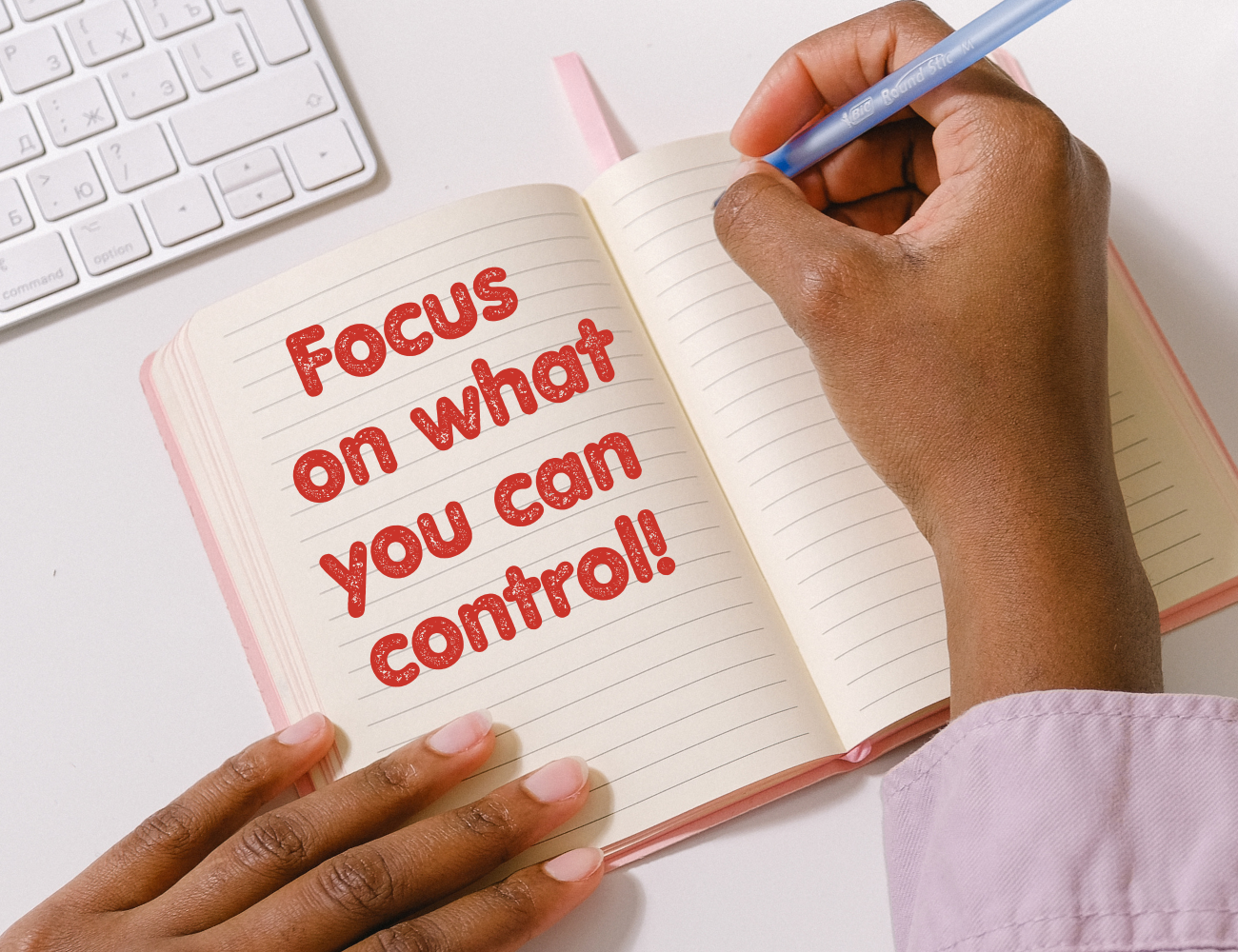
    How to Quiet Your Anxiety So it Doesn't Get the Best of You by Laura Berman Fortgang1. Remember, you can only control the things you can control. When you can’t control what’s happening, you only have control over your reaction to it.

    2. Do things proactively to calm your nervous system. Exercising, meditating, spending time in nature, and hugging the people you love.

    3. Monitor your thoughts. Keep in mind, fear is protective, but it’s not always accurate. Ask yourself if your fears are actually False Evidence Appearing Real. If so, make an effort to stick to the facts.

    4. Know that all worry is about a future that’s not here yet. Why are you projecting the worst that can happen when you really have no clue how it will turn out?

    5. Take action on the things that matter to you. Do one thing instead of nothing. Even if you make a tiny impact, you’ve made the only difference you can make.

    I want you to know you are enough.
    You can only do the best you can.

    I’ll leave you with this: Namaste 🙏

    If you’re unfamiliar with this Hindu term, it means “the divine in me greets the divine in you.”

    When we come from the place of seeing the divine in the people we interact with, seeing the better part of everyone, we will bring about peace in ourselves, in our communities, and spread goodwill.

    The more we focus on what we can control in ourselves and the more we greet the best in others, the more we keep anxiety at bay.

  • Do You Have a Business or a Hobby?

    Do You Have a Business or a Hobby?

    Almost everyone seems to have entrepreneurial dreams these days.

    With remote work becoming the norm, self-employment soaring, and the barrier to entry shrinking, more people are hanging their shingle, claiming to be open for business.

    But just because it’s easier to start a business doesn’t mean it’s easy to find success. All too often, people underestimate the level of commitment it takes.

    You can approach this one of two ways: as a hobbyist or as an actual business owner. You’re either taking this thing seriously or you’re not.

    Are you sincere about building something lucrative and sustainable, or are you just dabbling in a non-committal way?

    The answer may surprise you . . .

    Because you can claim you’re in it to win, but if your results are showing otherwise, it’s time to get honest with yourself.

    Here’s how to tell if your business is really more of a hobby —

    1.  Do You Have a Business or a Hobby? by Laura Berman FortgangYou avoid talking to people. Rather than having a conversation with a potential client, you’d rather hide behind a website or steer clear of networking opportunities.
    2. You don’t follow up. Instead of pursuing business, you leave it to luck.
    3. You keep giving discounts. You’re so worried the prospect will say no (and you’ll have to go out and look for another one) that you won’t stand in your value.
    4. You’re doing it all. Refusing to hire help, you remain chief cook and bottle washer.
    5. You’re inconsistent. You try a little of this and a little of that, but you’re not sticking with anything long enough to make any meaningful progress.

    Hobbies are great, but treating your business like a hobby is no way to reach your goals.

    Here’s what to do instead —

    1. Own it. Put your stake in the ground. Claim it and mean it: “I am a business owner.”
    2. Make it clear. You need to get clear on your value, your offer, and your agreements.
    3. Know your numbers. Reverse engineer your business to determine exactly what it takes to get the results you are targeting.
    4. Identify your SS (your “Special Sauce”). What makes you unique? Know exactly how the value you offer is different from what everyone else is doing.

    If you want to keep tinkering and tiddling around, be my guest. But if you want to own your business, make it work for you, and experience success, you’ll have to take a different approach.

  • Human Beings in the Time of War

    Human Beings in the Time of War

    I’m covering a touchy subject today – and I’m coming to you as a Jewish person.

    Yes, I’m going there: war. Specifically, the Israeli and Hamas situation.

    I’m not a religious person, but I was raised Jewish and identify as Jewish culturally. I believe Israel has a right to exist. That doesn’t mean I agree with all their policies and politics. However, blaming the people of Israel for what’s happening is like blaming the victims of 9/11 for what America does in the Middle East.

    I do agree with what many are saying — that innocent people are caught in the storm, and that is tragic.

    It dawned on me this week as we watched the atrocities happening of an anomaly of being human.

    We teach our children on the playground not to hit or fight over things or bully others because it never leads to a positive outcome.

    In the workplace, coworkers quibble and clash and butt heads — fighting for their spot, vying to get ahead — and we know this only causes more quibbling, clashing, and butting heads. We know cooler heads prevail.

    But what happens to humanity in times of war?

    Human Beings in the Time of War by Laura Berman FortgangWar is grownups using children’s tactics on grownup problems.
    I’m not making light of any of this, but I know we can do better. I invite you to do better. Focus on humanity.

    Remember:
    Everybody bleeds. Everybody hurts. Everybody loves.

    Even if you and your loved ones are not in Israel or Gaza, you may be suffering from heartbreak. It’s painful to witness.

    In times like this — when you feel like you can’t do anything at allthe best thing you can do is evolve. To contribute to an evolution away from hate and toward love.

    As a person with white privilege, who is also part of a hated group (a Jew), I can see where people of color are coming from when they say that being quietly “not racist” is not enough.

    Those of us who are hated need everyone (including ourselves) to stand up and face our own biases, including our unconscious biases whenever they arise.

    How did you react to the news of war? Did you quietly feel like one side or the other “deserved it?” How do you feel about the people who are dying? Why?

    What if someone came into your neighborhood and took your loved ones hostage, killed your children, raped, and pillaged? In Israel, Gaza, Ukraine, and countless other places around the world and throughout history, this has been a reality people face.

    The onus is on all of us to evolve and grow and stand up and face our bias and to love — at home, in your community, at work, in your business, and everywhere you go.

    Let there be peace on earth and let it begin with me.

  • Business Lessons My Latest Hobby Taught Me

    Business Lessons My Latest Hobby Taught Me

    Earlier this year, I discovered a new hobby: Furniture Flipping.

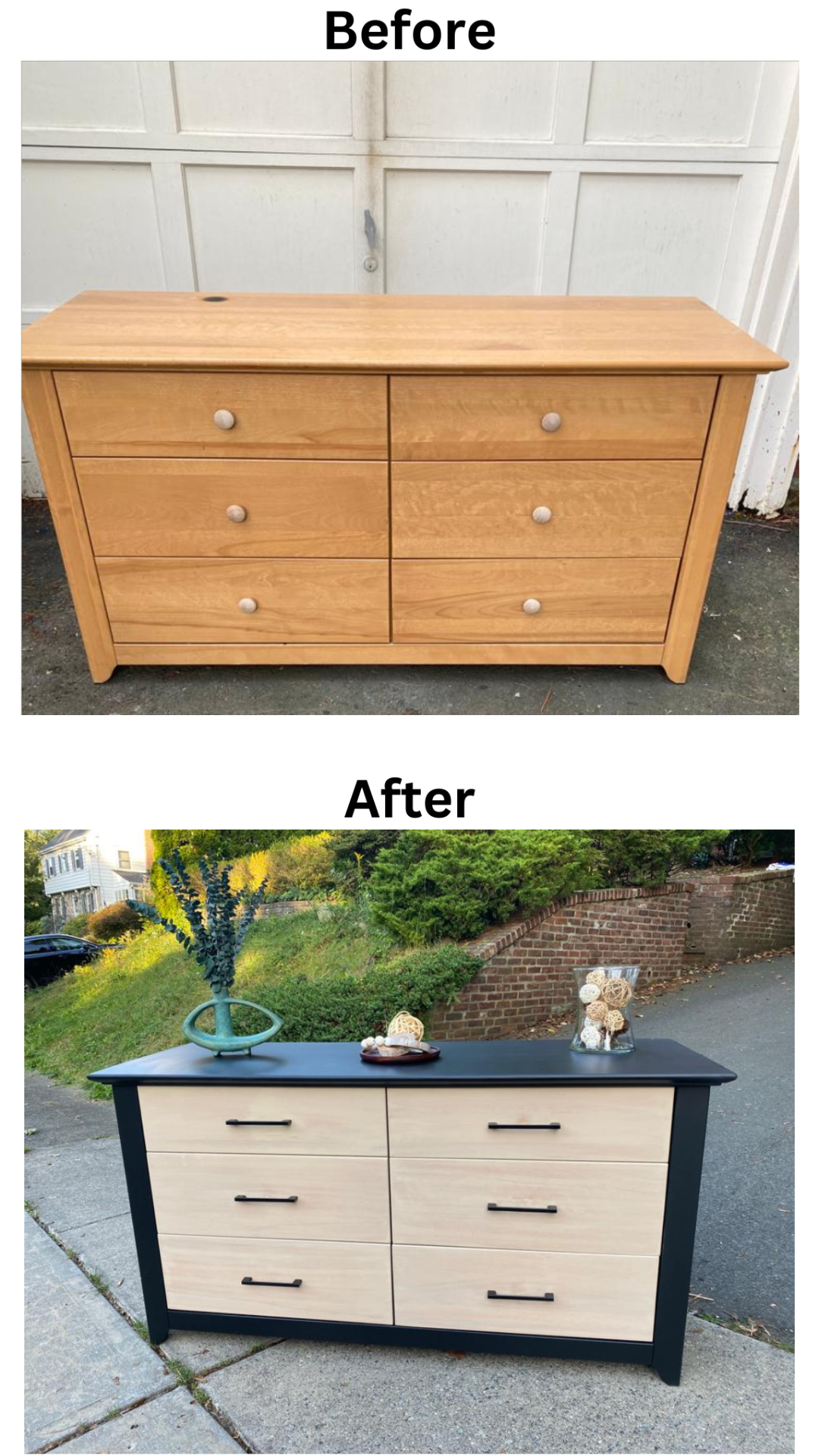
    In case you’ve missed this trend all over social media, it’s when people take tired old vintage, antique, or boring mass-produced furniture and freshen it up with paint, refinishing, and other creative ways to give it some oomph.

    When I was clearing out some of my mom’s things, I found that people weren’t interested in buying outdated pieces — no matter the quality. The reality is, without some sprucing up, too many unloved items end up in the dump.

    Once I started noticing what was hot on the market, I began looking around at my own things with a new perspective. Let’s just say there was room for improvement. I got to work on an antique dresser and fell in love with the results … and the process.

    It turns out, furniture flipping is relaxing, fun, and fulfilling!

    Before I knew it, I’d restored, upcycled, or modernized — and sold! — nine pieces.

    Don’t worry, I’m not shutting down my coaching practice to flip furniture full-time, but I’m having a ton of fun and learning a lot along the way.

    Here are the lessons I’ve picked up so far from this new hobby.

    1. Everything takes longer than you think it will. ​
      ​Whether it’s stripping furniture stains or building a new website for your business, you have to be willing to stick it out and see it through to the end to get the results you want.​

      2. Mistakes are a skill builder. ​
      Business Lessons My Latest Hobby Taught Me by Laura Berman Fortgang​You could be aiming to deliver a perfectly smooth finish on a furniture piece or to deliver a perfectly polished conference talk. In either case, there’s probably room for improvement. Learn from where you went wrong and do better next time. Start reframing mistakes as skill builders, and you’ll benefit from every brush stroke.​

      3. Being flexible is a must. ​
      ​Things don’t always go as planned. When an antique piece you’d hoped to restore turns out to be too damaged to salvage, you may have to pivot, paint it instead, and give it a new life. The same goes for your business. That course you wanted to launch could be more profitable as a one-on-one offer. Being too precious about the original plan could end up costing you.​

      4. Find the joy.​
      ​Sometimes, even with the best intentions, you get in over your head. Maybe you took on a whole bedroom set before noticing the intricate carving and details, or maybe you took on a massive project with unexpected obstacles. You want the outcome, but the work is dragging you down. Stop, take a deep breath, look around, and find the joy again — the peace, fun, satisfaction, or fulfillment. What is it that brought you to this moment and how can you savor it?

    I’m passionate about this hobby and plan to keep it going. As always, I’m growing, evolving, and finding lessons to share with you in everything I do.

  • Is it Time to Change Your M.O.?

    Is it Time to Change Your M.O.?

    We all have a certain m.o.

    And if we let it, that m.o. runs the show.

    Your modus operandi — or m.o. for short — is how you work. It’s the way you approach things, the manner in which you tackle a challenge, and the habits you carry out every day.

    If it’s working for you, great. Keep doing what you do.

    But if you ever hit a snag or you’re continuously hitting snags, and you think it might be time to start doing things a different way, you’re in luck.

    Your m.o. is NOT set in stone.

    That’s a good thing because you’ll need to adjust it to grow.

    But how do you know if it’s time to change your m.o.?

    I was coaching a group of leaders at one of my corporate clients recently, and they were preparing to head into a period of expected growth. Each of them was responsible for heading up a different area of the company, and they knew that things had to change. Operating at “business as usual” wasn’t going to sustain their expansion.

    Is it Time to Change Your M.O.? by Laura Berman Fortgang

    So they had to change their m.o.

    Their operating systems needed an overhaul.

    They had to figure out who would do what, where, why, and how. This required first getting crystal clear on their own role. Every individual needed to identify his/her most valuable contribution, delegate the rest, train their team members, and ensure everything would run smoothly at the next level.

    They had to let go.

    If you’re seeking growth in your business or career, chances are you need to change your m.o. too.

    What’s your most essential contribution?
    How can you focus on that?
    What are you going to do to facilitate the necessary change?

    Because for your business unit or private practice to grow, you have to let go.

    For your skills, impact, and income to get to the next level, you have to let go.

    If your current m.o. is keeping you stuck, it’s time for a change.