
Change
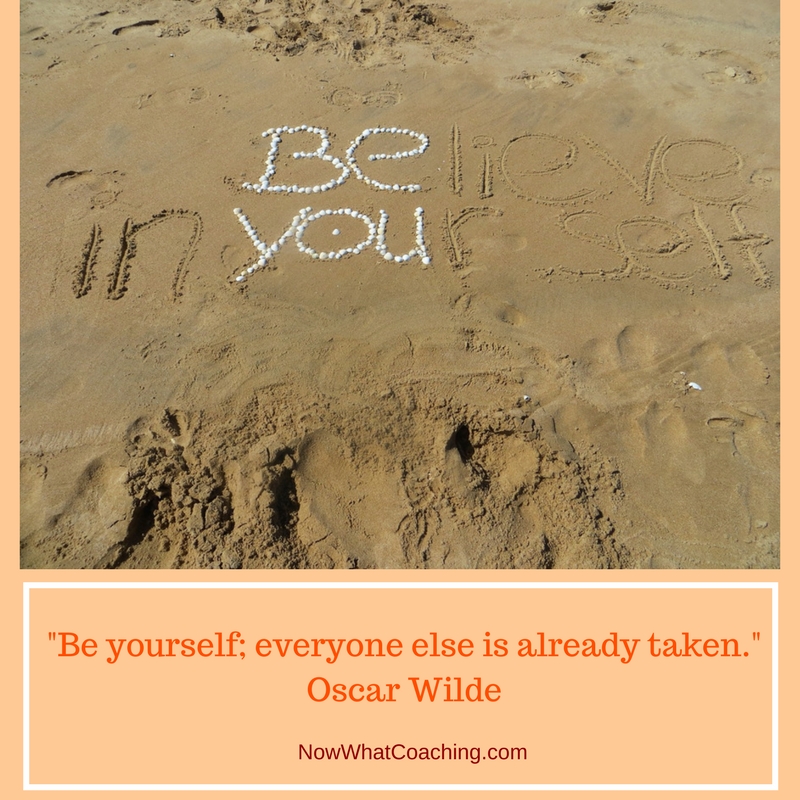
#QuotesToLiveBy: No Scarcity of Opportunity

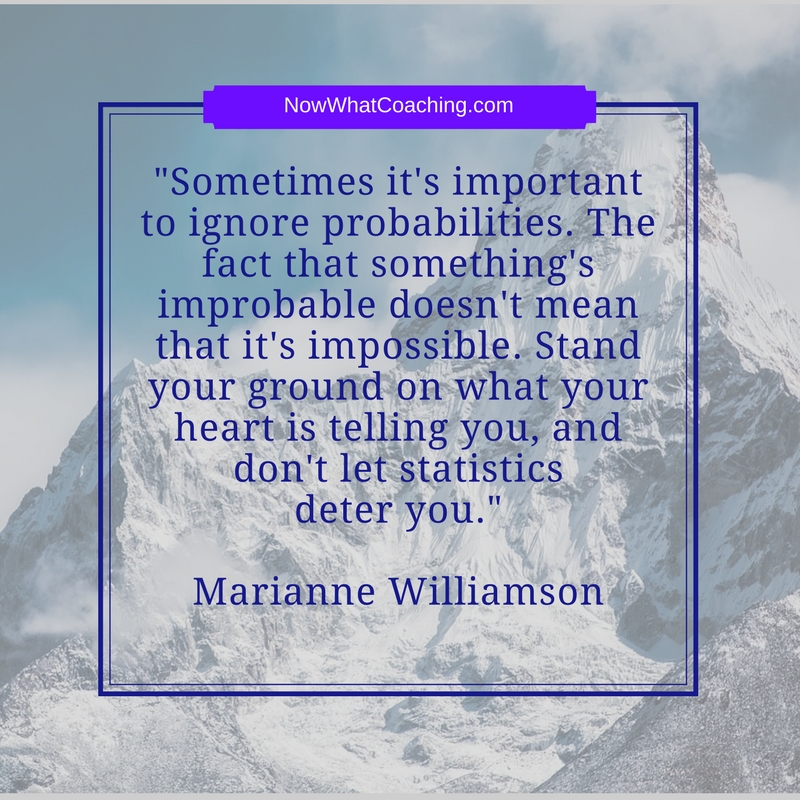
#QuotesToLiveBy: Improbable vs. Impossible
Give Yourself a Gift this Holiday Season
Now is a great time, whether you are employed or unemployed, entrepreneur or employee, to give yourself a little something special by giving your career a boost. Take a few moments between now and the end of the year to set yourself up for a stronger 2018!
 If you are job seeking, January is a great time to apply for a job, so now is the time to prepare to present your best self to your next employer.
#QuotesTo LiveBy: Acronym for Courage

How Might Gratitude Support You?
By Barb Klein
Now What? Facilitator and Deputy Editor
Originally published for Inspired Possibility’s blog
At this time of year gratitude and thankfulness are everywhere. So I have been reflecting on how gratitude serves us, particularly when times are tough.

Gratitude in times of Transition
Transition and change, whether they are wanted or not, are uncomfortable and challenging. They rock our world and throw us into unfamiliar and even more uncertain than usual territory. Recently having gone through a big move, I’ve had a chance to feel this earth-shattering reality, even though I was making a change I very much wanted.
One of the things that kept me grounded throughout the ups and downs of house buying and selling was my daily gratitude practice. Why? Because at times when I was irrationally terrified, it balanced my perspective with a look at the things that were at least all right in my daily life.
It offset the natural human tendency to look at what’s wrong or anticipate the next disaster that might be lurking just around the corner.
When I was filled with excitement, joy, and eager anticipation, gratitude helped me to celebrate and take that in. As much as we have a tendency to notice the “negative,” we also often seem to be conditioned to downplay or dismiss “positive” moments. The pause of appreciative reflection allows us to take in and enjoy these happy moments.
What is Gratitude?
Gratitude is about noticing things we appreciate and coming into relationship with what IS. Sometimes we can even be grateful for fear, anger, or sadness because they reveal something to me that needs to be seen – they uncover a layer of reality.
Gratitude isn’t always about sunshine and rainbows! It also isn’t about jumping over sad, angry or fearful feelings to get to a place of feeling good or looking for the silver lining. But, it can help open us to see beyond what’s right in front of us that may feel all-consuming.
How Can Gratitude Support Me?
So, how might gratitude support you if you are going through a transition? If you’ve recently lost a job or a relationship, and you’re not sure what lies ahead, it might be tough to see or feel anything positive.
But if you were to take a few moments each day to find even the smallest thing to appreciate, it could shift not only your view of life but how you show up in life, to your family, and to the world at large (including to people you might be interviewing with or asking for support).
Research has shown that people who practice gratitude are healthier, have more optimism and happiness, create stronger relationships, and are more generous. These sound like traits of someone I’d want to be around (or hire!) … how about you?
What IS a Gratitude Practice?
What’s a gratitude practice look like? Whatever you want it to! The key is to not make it a big “to do” or one more thing to add to your list of tasks to complete. Find a way to bring in gratitude that feels supportive and nourishing for you. Different things work for different people.
The first step is to slow down enough to even make the inquiry and notice what am I grateful for? If you’re not in the habit of thinking this way or asking yourself that question, it may take a while to shift from your regularly programmed thinking.
Here are some ideas to get you started. Maybe upon waking you reflect on a few things you are grateful for before you even get out of bed; this is a beautiful way to start your day and can really influence how you approach whatever is before you. You might want to keep a gratitude journal and jot down things you appreciate throughout the day.
Perhaps what works for you is an evening reflection before bed. It’s a soothing bedtime routine and a great counter to the all too common thought that often creeps in that says “That day was a waste.” or “Wow, what a horrible day I had!” It doesn’t matter whether you write, mentally note, or speak out loud your gratitude as long as you’ve taken some time to notice and acknowledge it.
Even on some of my most horrible days, I’ve been able to find things that I am truly, honestly grateful for – the cleansing tears that allowed my broken heart to crack open a little bit more and relieved me of having to hold it together; having a pillow to scream into and punch when my anger consumed me; loud music and a good car scream; the friend who made me laugh even when I wanted to cry or the friend who simply sat with me and let me feel what I was feeling.
Don’t know where to get started? How about appreciating having clean air to breathe, fresh running water to drink, sunshine, a roof over your head, a fresh idea, or the beauty of birdsong.
Don’t force it. Begin with what feels true to you. Notice something you truly do appreciate. Then mentally reflect, write it, draw it, paint it, sing it, share it with a loved one… whatever works for you!
If you’d like some practices to support you in cultivating gratitude, you might visit Greater Good In Action, where you will find several simple meditations and exercises to get you started or to enhance an existing practice.
Have fun exploring how gratitude might support you. Please let us know what you discover!!