Tag: career path

  • The Entrepreneurial Roller Coaster: How to Ride It (And Actually Survive)

    The Entrepreneurial Roller Coaster: How to Ride It (And Actually Survive)

    If you’ve ever been on a roller coaster, you know that moment right before the first drop – you grip the bar, your stomach tightens, you take a deep breath, and you wonder what the heck you just got yourself into.

    Welcome to entrepreneurship.

    Except this ride lasts years instead of minutes. There’s no operator doing safety checks. You can’t see the track ahead. And the drops? They’re steeper than anything at Six Flags.

    After 32 years of running my own business, I can tell you this: The roller coaster never really smooths out. You just get better at riding it. That’s what I want to share with you today – how to not just survive the ride, but actually thrive on it.

    Build Your Reserves (Both Kinds)

    First things first: You need cushions for the falls. I’m talking about two types of reserves that most entrepreneurs overlook.

    Financial reserves are the obvious one, but let me be specific. You need at least six months of operating expenses, plus personal savings. Not the optimistic spreadsheet version where everything goes perfectly. You need the realistic version where your biggest client ghosts you or that investor pulls out at the last minute.

    I run my business on a ten-month year. Not because I take two months off, but because I know things will fluctuate and some months will be lean. Building in that buffer keeps me from making decisions out of desperation.

    Here’s what most people miss: Emotional reserves. This is your hobbies, your relationships, exercise, meditation, therapy – whatever fills your tank. The entrepreneurs who burn out aren’t the ones who work hard; they’re the ones who work hard with an empty emotional tank. When you have people you can talk to, activities that restore you, and a life outside your business, you create an emotional cushion that lets you weather the storms.

    You can’t pour from an empty cup, so protect both reserves like your business depends on it because it does.

    On Low Days: Do ONE Thing That Moves the Needle

    There will be days when you wake up convinced you’ll never get another client.
    When the weight of it all feels crushing.
    When you question everything.

    person on roller coasterOn those days, forget your massive to-do list.
    Pick ONE thing that will actually move the needle and do that.

    Not busy work. Not cleaning your desk or organizing files. One meaningful action: Make that scary sales call, have that critical conversation you’ve been avoiding, fix that tech bug that’s been haunting you, send that partnership proposal.

    Here’s the magic: Mood follows action. We’re often waiting for the mood to hit us before we take action. But it works the opposite way. You don’t need to feel motivated to act; you act and the motivation follows. Take the action first, and watch your mood improve.

    After a Win: Attack, Don’t Relax

    This might be the most counterintuitive advice, but it’s critical. Your most dangerous moment isn’t after a failure; it’s after a success.

    You just closed a major client. You just hit your revenue target. Every instinct tells you to take your foot off the gas, to relax a little, to enjoy the moment.

    Don’t.

    Celebrate that evening, absolutely. But the very next day? Double down. Already in a good mood? Take more action. Make another call. Close another client. Do something that makes a difference while you’re riding that high.

    Here’s why: Wins create momentum, open doors, and boost confidence. You’re never more attractive to potential clients, partners, or investors than right after a visible success. Use that fuel. Don’t let it evaporate.

    Know the Difference: Dip or Dead End?

    Not every low point is worth pushing through. Seth Godin talks about “The Dip,” that valley between starting something and mastering it where most people quit. Winners push through strategic dips because there’s something valuable on the other side.

    But dead ends are different. A dead end is when the market fundamentally doesn’t want what you’re selling, when the economics will never work, when there’s nothing pointing to it coming back.

    The hard part? They feel the same in the moment.

    That’s why you need trusted advisors – friends, coaches, mentors – who can help you see clearly. People who will tell you the truth when you need to hear it because it’s really hard for us to know the difference between a dip and a dead end when we’re the ones on the ride.

    Hold On Tight

    The ride is terrifying.
    The ride is exhilarating.
    For those of us crazy enough to strap in, it leads to something incredible: freedom.

    You get better at riding it.
    You build your reserves.
    You take action when you’re low.
    You attack when you’re high.
    You surround yourself with people who help you know when to push through and when to pivot.

    Buckle up, buttercup.
    This is what you signed up for, and it’s worth every twist and turn.

  • How to Stop Imposter Syndrome in Its Tracks

    How to Stop Imposter Syndrome in Its Tracks

    Do you ever feel like an imposter?

    Are you sometimes afraid that someone’s going to discover you have no idea what you’re doing — that you’re not the expert you proclaim to be, you’re not as skilled as you’ve made yourself out to be, and you’re not quite qualified to be in the position you’ve found yourself in?

    Maybe you’re worried that you don’t measure up somehow, so it makes you feel like you’re pretending to be someone you’re not.

    Here’s what this looks like.

    Them: We’d like to interview you [for a dream job]!
    You: Maybe they didn’t notice I don’t have enough experience.

    Them: Congratulations! We’d like to offer you the [dream] job.
    You: I’ll surely be fired by Tuesday, once they figure out I’m a fraud.

    Them: We’ve selected your proposal to speak at the next conference.
    You: Oh no! I’m probably going to make a fool out of myself.

    Them: I’m looking for a coach, and I’d love to work with you.
    You: But what if I can’t help you get results, and you tell everyone I’m a con?

    I’m not a doctor, but as a Master Certified Credentialed Coach with 30 years of experience, I can confidently assess what’s happening here.

    Imposter Syndrome

    Don’t worry; it’s not fatal to your career or success.

    Most people struggle with it from time to time, and it’s entirely “treatable.”

    If you feel like your Imposter Syndrome is flaring up, here’s what I suggest you do —

    1. How to Stop Imposter Syndrome in its Tracks by Laura Berman FortgangPause and accept what’s happening. No sense in ignoring the symptoms. Denying it only makes things worse by trying to overcompensate.
    2. Learn to recognize your triggers (comparisons, someone else’s recent success) and how you respond, so you can head it off at the pass. Before you go into a full-on panic, tell yourself, “This is just imposter syndrome flaring up again. Nothing alarming. You can do this.”
    3. Notice your self-talk. As soon as you start beating yourself up, STOP. It may sound easier said than done, but you can tell yourself “no.” No more negative self-talk; you’re not listening.
    4. Ask yourself what success looks like. Are you trying to measure up to a perfect ideal? Scratch that and aim for progress instead.
    5. Keep learning. The best way to keep Imposter Syndrome at bay is to continue seeking out new knowledge and ways of doing things, evolving, and growing your skill set.
    6. Celebrate wins! I can’t say enough about this. Remind your brain that you’re doing good things.

    Do this again and again, every time Imposter Syndrome starts to creep up, and you’ll start experiencing it less and less.

    Don’t get caught up in calling yourself an expert. Instead of thinking of yourself as someone who’s supposed to know everything, think of yourself as someone who makes it your business to learn everything you can about your particular topic of choice.

    You’re not an imposter, so keep showing up as the best of who you are. You’ve got this!

  • The Power of Pumpkin Spice

    The Power of Pumpkin Spice

    Fall is just around the corner again, and you know what that means — it’s pumpkin spice season!

    I know … you’re either rolling your eyes, giddy with excitement, or couldn’t care less. But stick with me here, because we should all be paying attention.

    Love it or hate it, there’s no denying the POWER of pumpkin spice.

    I kid you not — studies have found that Americans are spending over half a BILLION dollars on pumpkin spice stuff every year. Buying up everything from Starbucks lattes to scented trash bags, industry insiders call it the “pumpkin spice economy.”

    Sure, it may seem like things have gotten out of hand, and seeing the hype start in mid-August is a pet peeve of mine. Personally, I’m a fan of pumpkin spice, and I’m an even bigger fan of pumpkin spice as a marketing phenomenon.

    Marketers have NAILED this. Here’s how —
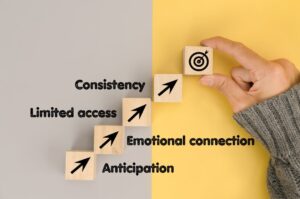
      1. The Power of Pumpkin Spice by Laura Berman FortgangBuilding anticipation: Those of us who are fans of the rich, fragrant flavor and scent crave our first annual sip or whiff.
      2. Creating emotional connection: It’s become interwoven with the coziness of the season, like a warm sweater, crackling fires, and family holiday gatherings.
      3. Making a limited-time offer: Not being able to order it year-round makes it special. Consumers hurry to buy while they can, as much as they can.
      4. Establishing consistency: We know this thing is coming down the pike every year and have come to rely on it.

    How can you translate these lessons into your business or career?

    Anticipation: Talk about what you’re brewing up; create intrigue. Developing a new program? Offer hints along the way. Working on an exciting project? Let others know you can’t wait to share. Before long, people will be on the lookout for whatever you have going on and want in on it.

    Emotional connection: Make sure people associate your work with something deeper than a commodity. You don’t just offer accounting services, but peace of mind. Not just coaching, but clarity and inspiration.

    Limited access: Scarcity encourages people to take action. Offer a limited number of one-on-one coaching opportunities. Focus on projects that make the greatest impact rather than spreading yourself thin.

    Consistency: Let people know what to expect from you, so they can look forward to your upcoming podcast episode, newsletter, program launch, or presentation at the next industry conference — and depend on you showing up.

    I’d love to know how you’re going to spice things up this fall. Hit reply and share.

  • How to Deal with Difficult People

    How to Deal with Difficult People

    Let’s face it; people can be difficult.

    Even if you consider yourself a people person, dealing with various needs, personalities, priorities, and quirks can be challenging.

    There’s always going to be conflict.

    Whether it’s a tough client, boss, or coworker, your overall success and happiness ultimately depend on how well you’re able to navigate that relationship.

    The good news – it’s not as hard as you might think — as long as you keep these three tips in mind:

    Tip #1: In any given situation, you have two realities:
    1. The facts and 2. The interpretation of the facts.
    We are not always going to agree on the interpretation. Here is an example:

    How to Deal with Difficult People by Laura Berman Fortgang

    Person A: This stinks! I was planning to go to an arts festival; my day is ruined!

    Person B: How wonderful! My lawn needed this, and now I can curl up with a good book.

    We all view facts differently. When you’re dealing with a difficult person or situation, you have to remember — there’s what happened, and there’s what each person thinks about what happened. Once you’ve considered this, it’s easier to resolve any friction.

    Tip #2: Follow Stephen Covey’s advice to begin with the end in mind. (That’s habit #2 in his blockbuster book, The 7 Habits of Highly Effective People.)

    People don’t like drama because they’re afraid they’ll get stuck in whatever nastiness ensues.

    When you find yourself in conflict, focus on what you want to get out of it. What’s your goal? What do you want to resolve? Keep your eye on the prize, and stay focused on moving forward.

    Tip#3: Avoid the word “you” unless it’s used in a positive light.

    Saying “you” in the heat of conflict triggers an inflammatory response. People feel blamed and berated, and they don’t like it one bit.

    Instead, frame the conversation with the word “I.” I hear you,  understand,  see we have a difference of opinion, and I want you to know I want to resolve this to your satisfaction.

    This keeps the other person off the defensive and out of “fight or flight” mode. It allows for a reasonable conversation and coming to a resolution.

    These three tips will make a big difference, and the more you use them, the more you’re able to build rapport and trust, even with the most difficult people. The next time a conflict arises, you can build on the successful outcome you created the last time. Before you know it, that person no longer ruffles your feathers because you know how to deal with them.

    Remember: The customer isn’t always right. Your boss isn’t always right. And that overbearing coworker isn’t always right.

    You don’t have to let difficult people walk all over you. It’s okay to disappoint people, agree to disagree, and move on. You’ll have more respect for yourself, garner more respect, and win in the end.

  • If Work is Your Identity

    If Work is Your Identity

    For some people, work is their identity. It’s how they measure their worth, and that works for them. It gets a bad rap, but there’s nothing inherently wrong with deriving meaning from the work you’re called to do.

    Being driven by your goals can serve you quite well … until it doesn’t!

    Let’s face it —

    You’re never going to succeed by sitting on your laurels.

    Establishing yourself is going to come with some late nights, missed birthday parties, and sacrifice.

    But there’s a limit to how much good it does you to burn the WiFi at both ends and stay glued to your phone.

    Making your identity all about work is likely costing you, even more than you know.

    If you’re thinking of yourself as “Ms. CPA Extraordinaire” or “The best SAHM Return to Work Career Coach” or “my company’s next SVP of Marketing” 24/7/365, you might want to take a breather every now and then.

    If your family and friends are constantly teasing you or complaining about your job, it can be frustrating … but they might have a point.

    If Work is Your Identity by Laura Berman Fortgang“All you ever do is work.”

    “You always cancel on us.”

    “When are you ever gonna take a vacation?”

    There’s a good chance you’ve let workaholism creep in and take over.

    Here’s the thing —

    Even if you love what you do…

    Even if you think doing more of it is your ticket to ride…

    What got you here won’t necessarily get you to the next level.

    Instead, you may hit a brick wall of disappointment.

    Ignoring the voices – both internal and external – that say you’re working too much is a sure way to burnout.

    Ignoring your personal desires and the people around you, putting everything off to a later date, means something is missing.

    Maybe it’s time to reexamine what’s driving you.

    Why are you making your identity about work? Look for the origin.

    Did you make a vow to yourself to succeed at all costs?
    Is being rewarded at work fulfilling a personal need?
    Is work your source for love, acceptance, and self-worth?

    What happens is work gives us all something good, but if something’s missing, that hit can become an addiction like anything else.

    Once you’re aware of this, the hard part starts — lowering your standards. Yikes!

    Once you know what’s lacking, you can start practicing acceptance of yourself without adhering to the highest standards.

    If your identity is all about work and it’s COSTING you, this is what you need to do. It won’t be easy, but it’ll be worth it.

    Because here’s the kicker: Eventually, you will achieve MORE by doing LESS.

  • 4 Ways to Strengthen Your Personal Foundation

    4 Ways to Strengthen Your Personal Foundation

    After last week’s post, my inbox was flooded with questions. Which is always a nice surprise, honestly. It seems I struck a chord.

    Many of you wanted to know more about what it takes to stand strong when something comes along and tries to knock you off your game.

    I’m glad you’re curious!

    All too often, smart, capable, driven people are letting disappointments and setbacks muck up their day, throw them for a loop, and ruin their plans.

    If this is you, I know you’re sick of the disruption.

    The client you hoped to land ghosts you.
    The recruiter for that dream job sends a rejection letter.
    The folks who bought your coaching program’s credit cards are declining.
    Your new VP left you off a “big deal” meeting invite.

    And you’re SO sick of letting it all shake you up. But you don’t know what to do about it.

    4 Ways to Strengthen Your Personal FoundationYou know your personal foundation needs some work, but you don’t know how to go about building a solid one.

    I get it; you either have it or you don’t. The good news is, once it’s built, it will stand the test of time. Even when it crumbles a little, you’ll know how to piece it back together and pack it down tight.

    Here’s what it’ll take.

    1. Stop taking things personally. That might sound easier said than done, but it can be done. Because — A.) Whatever it is, it’s not about you. And B.) You’re not damaged or broken. You’re learning.
    2. Spend time with yourself. Ideally, learn how to meditate. At the very least, take three to five minutes every day to clear your mind, pause the ruminating, and think about nothing. Don’t make it hard. Start with searching for a guided meditation on YouTube. Tuning into yourself is a great reminder that your foundation is stronger than you might think; you’ve already overcome so much.
    3. Know your triggers. We all have them! We’ve had childhood trauma or negative experiences as an adult, and reminders can pull us into an emotional loop. By identifying those triggers, possibly by working with a therapist, you’ll be able to catch them sooner and avoid the spiral.
    4. Become friends with fear. Why? Because it’s never going away, so you may as well embrace it. You can let it take you over like The Blob in the 1950s horror film or brush it aside like a mosquito bite. Fear is simply trying to protect you from something; learn to listen to its underlying message and use it for good.

    There you have it. Incorporate these four tips into your life and your personal foundation will be stronger than ever. It’ll take work, but it’s so worth it!